
Introduction
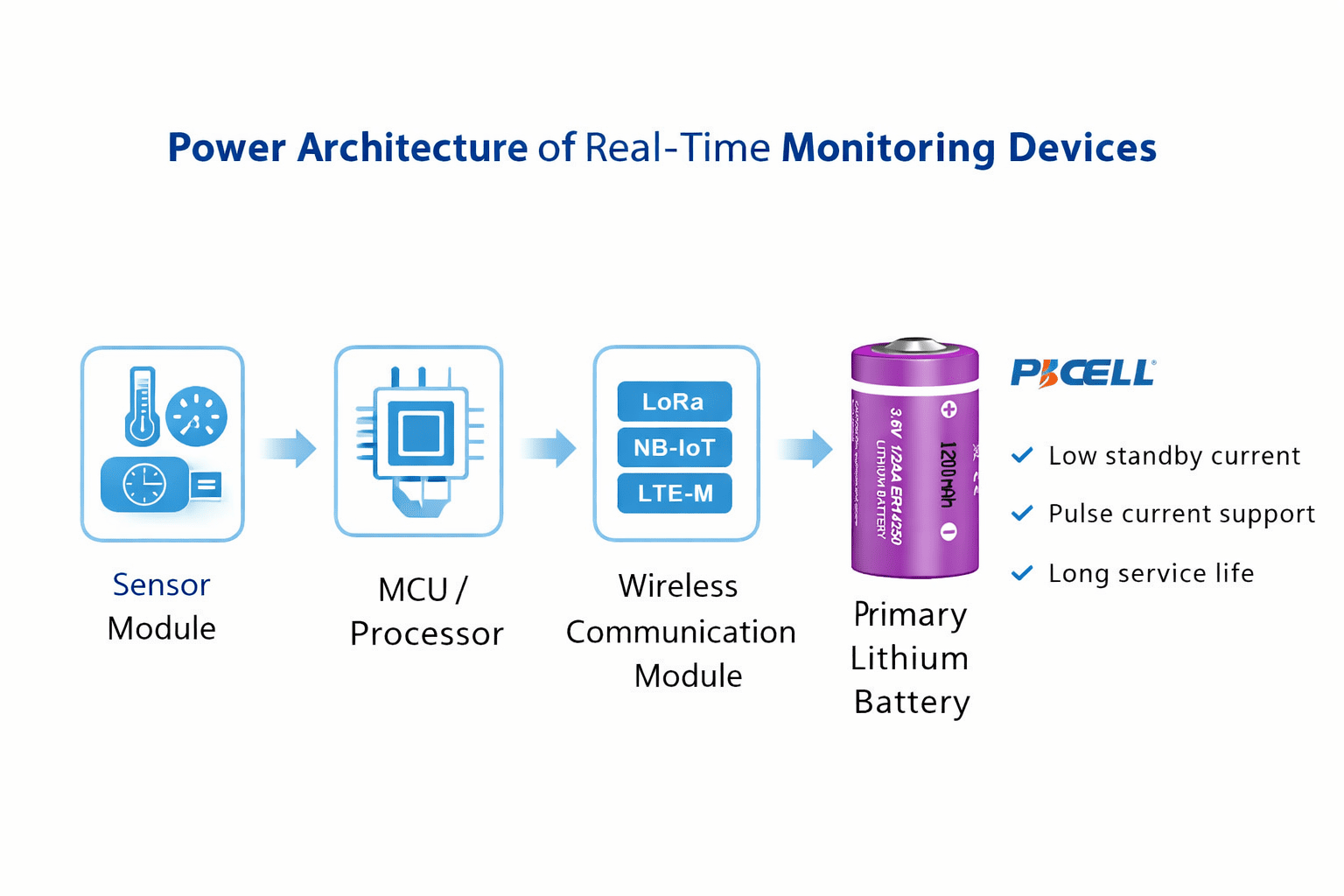
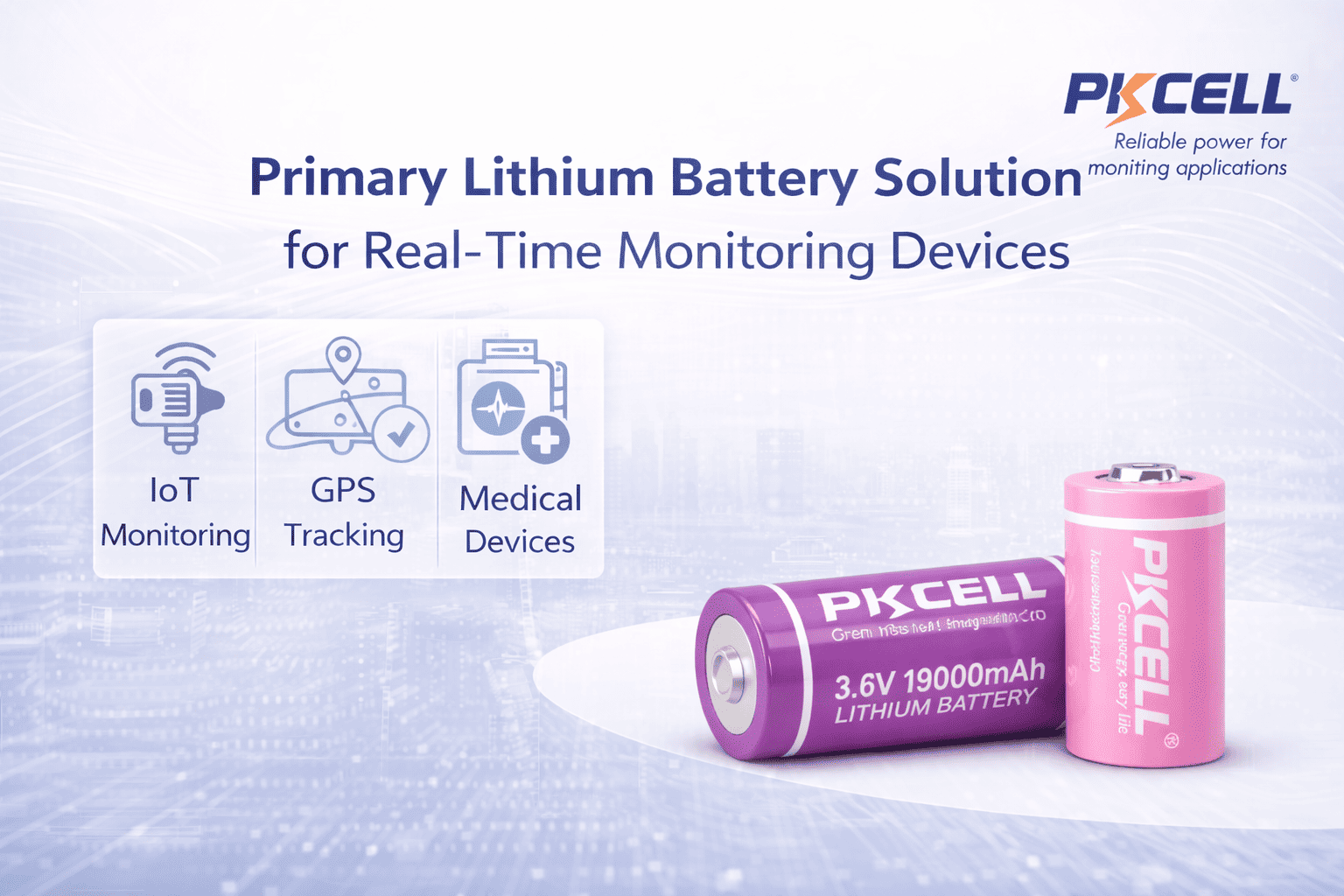
Real-time dynamic monitoring devices are widely deployed across IoT infrastructure, logistics tracking systems, industrial sensing networks, agricultural monitoring platforms, and portable medical electronics, many of which operate in remote or maintenance-limited environments.
Battery replacement is often difficult and expensive for these devices. Primary lithium batteries—especially Li-SOCl₂ chemistry—have therefore become one of the most widely adopted energy solutions.
Power Challenges in Real-Time Monitoring Devices
Maintenance difficulty: One of the most common challenges is long-term unattended deployment. Devices installed inside underground infrastructure, logistics containers, outdoor sensing stations, or grain storage facilities are expected to operate reliably for several years without maintenance access.
Long-time Standby and Short Burst: GPS trackers and IoT monitoring nodes normally remain in sleep mode for extended periods but require short bursts of high current during signal transmission. Hybrid solutions combining Li-SOCl₂ batteries with pulse capacitors are widely used to support this behavior.
Wide Temperature Situation: Monitoring systems deployed in cold-chain logistics, agriculture storage facilities, or outdoor infrastructure must remain stable across temperature extremes ranging from −40°C to +85°C.
Compact Design: Applications such as medical sensing devices often require batteries that maintain stable voltage output within limited installation space, making compact lithium batteries such as CR123A suitable choices.
Why Primary Lithium Batteries Are Ideal for Monitoring Devices
1. Unique balance between lifetime, stability, and environmental adaptability: LiSoCl2 batteries’ ultra-low self-discharge rate allows monitoring equipment to remain operational for years even when transmission intervals are relatively long.
2. High energy density: Li-SOCl₂ chemistry enables significantly longer deployment cycles while reducing maintenance frequency across distributed sensor networks.
3. Temperature adaptability: Monitoring equipment installed outdoors or inside refrigerated logistics environments benefits from stable discharge behavior even under sub-zero conditions.
4. Stable output voltage throughout most of the discharge cycle also helps ensure consistent sensor accuracy and communication reliability in precision monitoring systems.
Recommended PKCELL Battery Models for Monitoring Applications
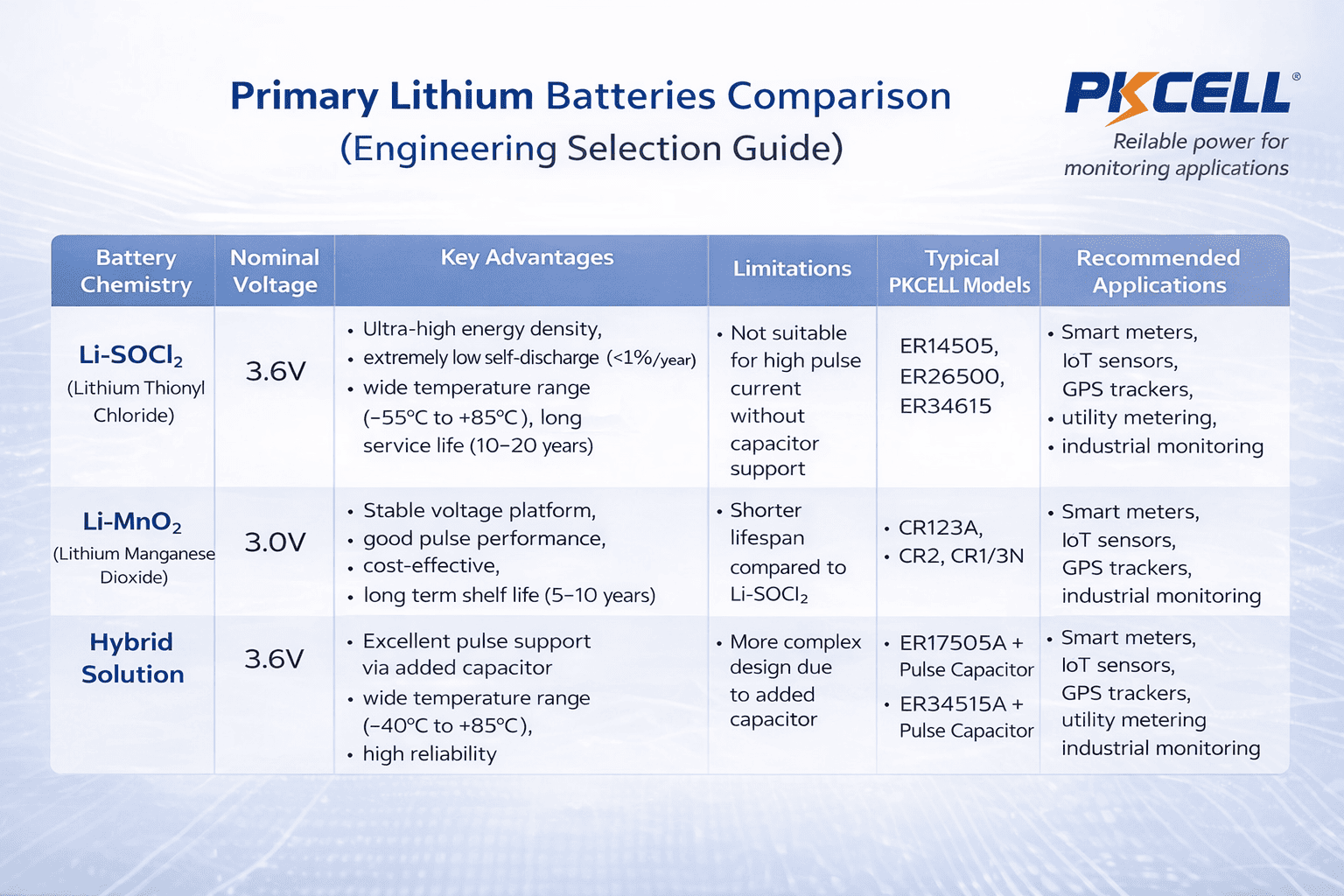
Different monitoring devices require different battery configurations depending on transmission behavior, installation conditions, and lifetime targets. The table below summarizes typical selections used in real deployments.
|
Application |
Recommended Model |
Key Advantage |
|
IoT monitoring sensors |
ER34615 |
long service life |
|
cold-chain monitoring devices |
ER26500 |
low-temperature stability |
|
grain monitoring systems |
ER34615 |
maintenance-free deployment |
|
GPS asset tracking devices |
ER18505 + capacitor |
pulse current support |
|
portable medical monitoring devices |
CR123A |
compact structure |
Typical Application Examples in Monitoring Systems
Primary lithium batteries are widely used across multiple real-time monitoring scenarios where long service life and environmental stability are critical.
Smart parking monitoring sensors are typically installed underground with limited maintenance access. Long-life ER34615 batteries are commonly selected to ensure multi-year operation reliability.
Solution reference:
https://www.pkcellpower.com/smart-parking-sensors/
Cold-chain monitoring equipment must maintain continuous performance across low-temperature logistics environments. ER26500 batteries provide stable discharge characteristics that support reliable long-distance transport monitoring.
Solution reference:
https://www.pkcellpower.com/cold-chain-monitoring/
Grain storage monitoring systems operate in remote agricultural infrastructure exposed to humidity and temperature variation. ER34615 batteries help extend monitoring lifetime while reducing maintenance frequency.
Solution reference:
https://www.pkcellpower.com/reliable-lisocl2-battery-solution-for-grain-monitoring-equipment-in-australia/
GPS tracking devices used in fleet management and asset monitoring require batteries capable of supporting long standby periods with periodic transmission bursts. ER18505 batteries combined with pulse capacitors are widely applied in these deployments.
Portable medical monitoring devices such as wearable sensors and diagnostic equipment require compact batteries with stable voltage output and dependable performance. CR123A lithium batteries are frequently selected for these applications.
How to Choose the Right Battery for Monitoring Devices
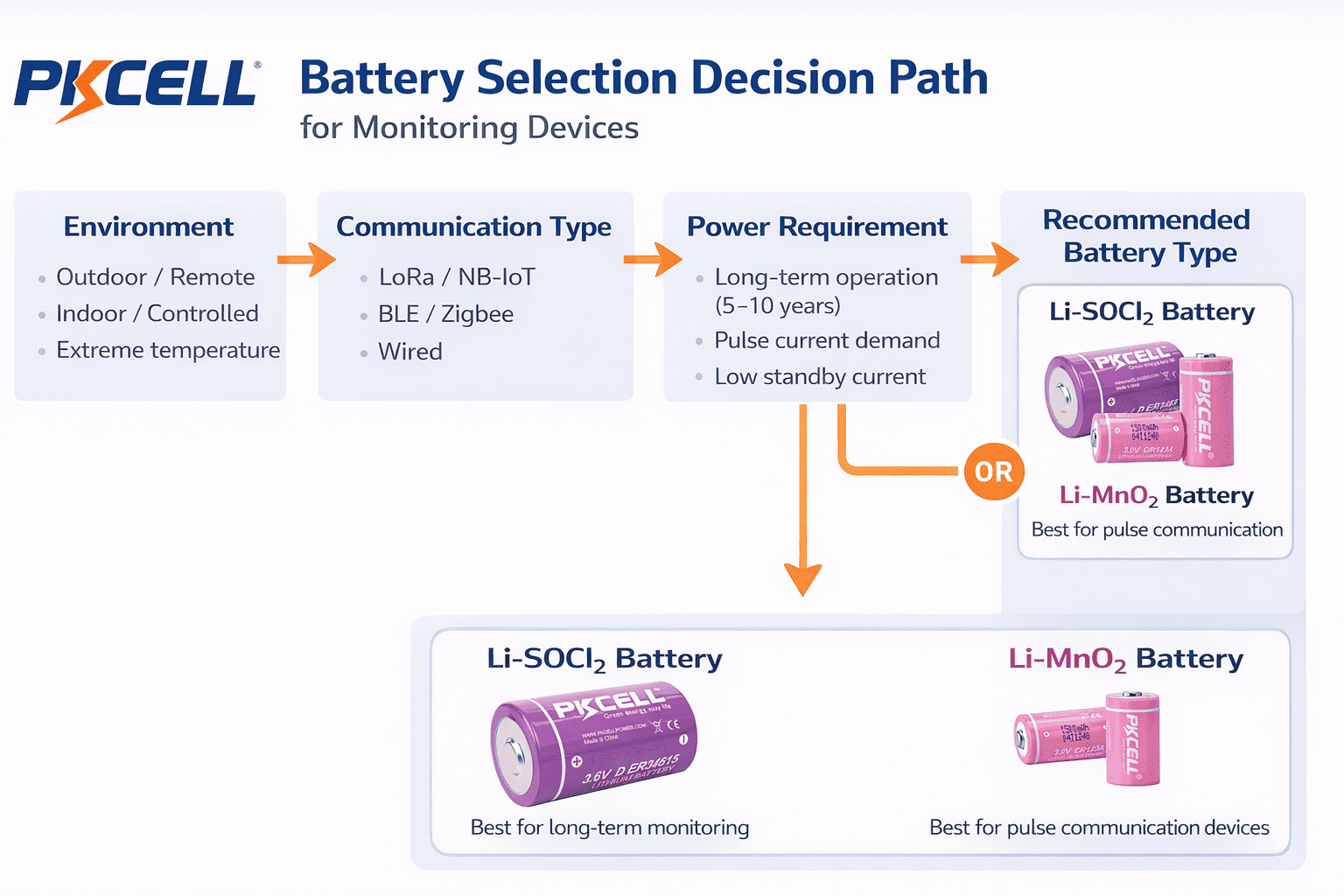
Engineers typically evaluate monitoring device battery selection based on several key parameters:
-
operating temperature range
-
transmission interval frequency
-
expected deployment lifetime
-
peak pulse current requirement
-
available installation space
Matching these factors with battery chemistry characteristics helps ensure stable long-term monitoring system operation.
Engineering Battery Selection Parameter Table
The following table summarizes practical selection logic used in monitoring device power system design.
|
Parameter |
Recommended Strategy |
|
temperature below −20°C |
select Li-SOCl₂ chemistry |
|
high pulse transmission load |
add pulse capacitor support |
|
deployment lifetime above 5 years |
choose ER34615 |
|
medium-capacity compact device |
choose ER26500 |
|
space-limited monitoring electronics |
choose CR123A |
Monitoring Device Battery Lifetime Estimation Example
Battery lifetime estimation is an important step during monitoring device power system design. A typical IoT monitoring configuration includes low standby current combined with periodic transmission activity.
Example configuration:
-
transmission interval: every 30 minutes
-
standby current: 8 μA
-
pulse current: 120 mA
Under this operating profile, an ER34615 Li-SOCl₂ battery can typically support approximately 6–8 years of operation depending on environmental conditions and communication frequency. This makes it one of the most widely selected batteries for long-life infrastructure monitoring deployments.
Why Li-SOCl₂ Batteries Are Preferred Over Other Battery Types
Different battery chemistries behave very differently under monitoring-device operating conditions. The comparison below explains why Li-SOCl₂ batteries are commonly selected for long-life sensing applications.
|
Battery Type |
Limitation in Monitoring Applications |
|
alkaline battery |
short service life |
|
Li-ion battery |
high self-discharge |
|
Li-MnO₂ battery |
lower capacity for multi-year deployment |
Because monitoring systems often operate unattended for extended periods, Li-SOCl₂ chemistry provides the most reliable balance between lifetime, temperature performance, and maintenance cost.
Why Device Manufacturers Choose PKCELL Monitoring Battery Solutions
With global certifications like UN38.3, CE, UL and MSDS, PKCELL supports battery stability through long-term lithium battery manufacturing experience and stable global delivery capability.
Engineering support is available for customized battery pack integration, pulse capacitor configuration, and application-specific lifetime optimization. These services help improve monitoring device deployment stability across industrial, logistics, and infrastructure environments.
Frequently Asked Questions About Monitoring Device Batteries
What battery is best for IoT monitoring devices?
Li-SOCl₂ batteries such as ER34615 are widely used because they support multi-year deployment with extremely low self-discharge rates and stable voltage output.
Can primary lithium batteries support GPS tracking devices?
Yes. Primary lithium batteries combined with pulse capacitors can handle both low standby consumption and periodic transmission peak current requirements.
How long can a monitoring device battery last?
Depending on transmission interval and environmental conditions, Li-SOCl₂ batteries typically support 5 to 10 years of operation in remote monitoring deployments.
Are primary lithium batteries suitable for cold-chain monitoring systems?
Yes. Li-SOCl₂ batteries can operate reliably at temperatures as low as −40°C, making them ideal for refrigerated logistics monitoring applications.
Are lithium primary batteries safe for portable medical monitoring devices?
Compact lithium batteries such as CR123A are widely used in portable medical monitoring electronics due to their stable voltage platform and reliable long-term performance.
Post time: Apr-14-2026