

Введение
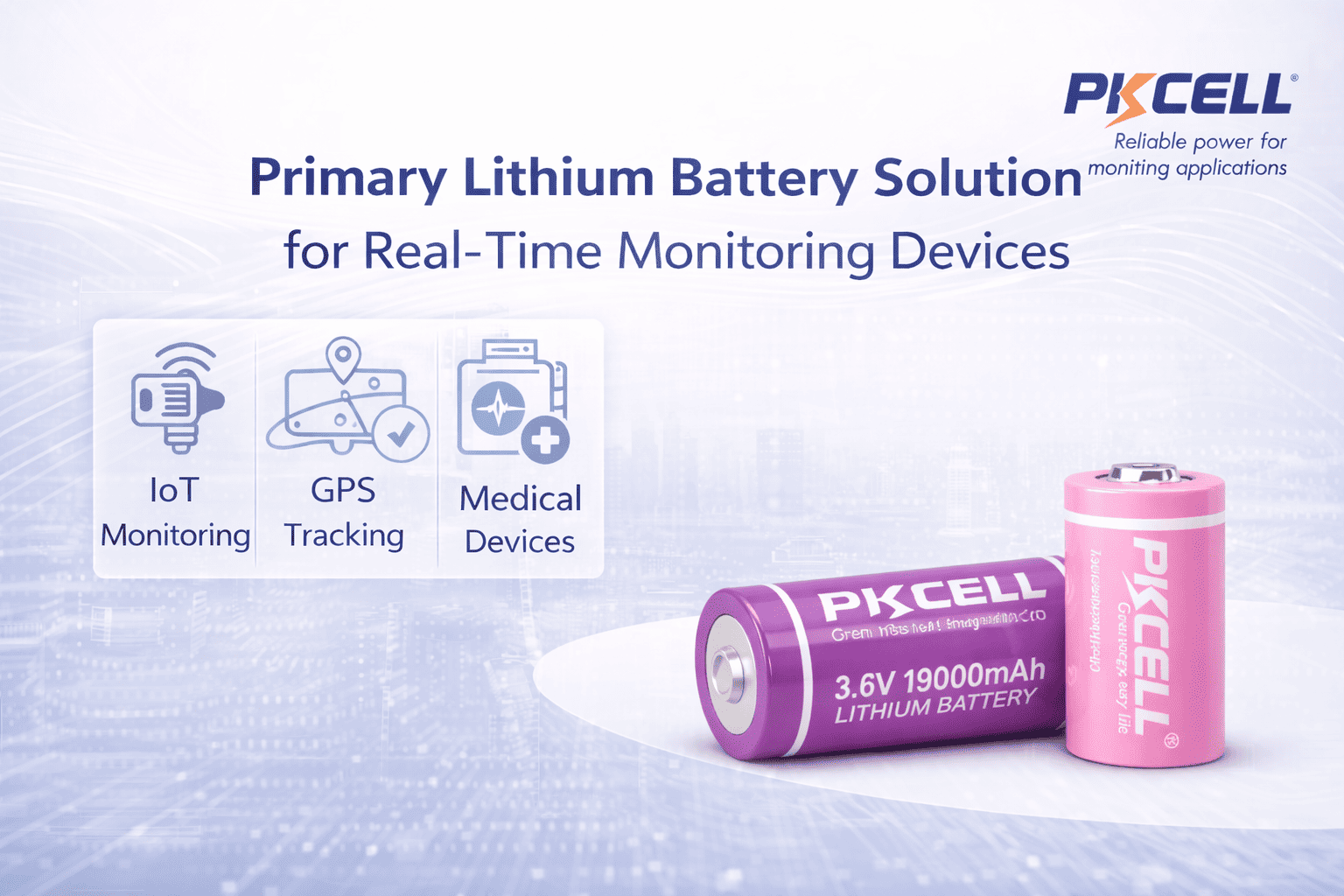
Устройства динамического мониторинга в реальном времени широко используются в инфраструктуре Интернета вещей, системах отслеживания логистики, промышленных сенсорных сетях, сельскохозяйственных платформах мониторинга и портативной медицинской электронике, многие из которых работают в удаленных условиях или в условиях ограниченных возможностей технического обслуживания.
Замена батарей в этих устройствах часто бывает сложной и дорогостоящей. Поэтому первичные литиевые батареи, особенно с использованием технологии Li-SOCl₂, стали одним из наиболее распространенных решений в области энергоснабжения.
Проблемы энергопотребления в устройствах мониторинга в реальном времени
Сложности с техническим обслуживанием: Одна из наиболее распространенных проблем — длительное использование в автономном режиме. Предполагается, что устройства, установленные внутри подземной инфраструктуры, логистических контейнеров, наружных станций мониторинга или зернохранилищ, будут надежно работать в течение нескольких лет без доступа для технического обслуживания.
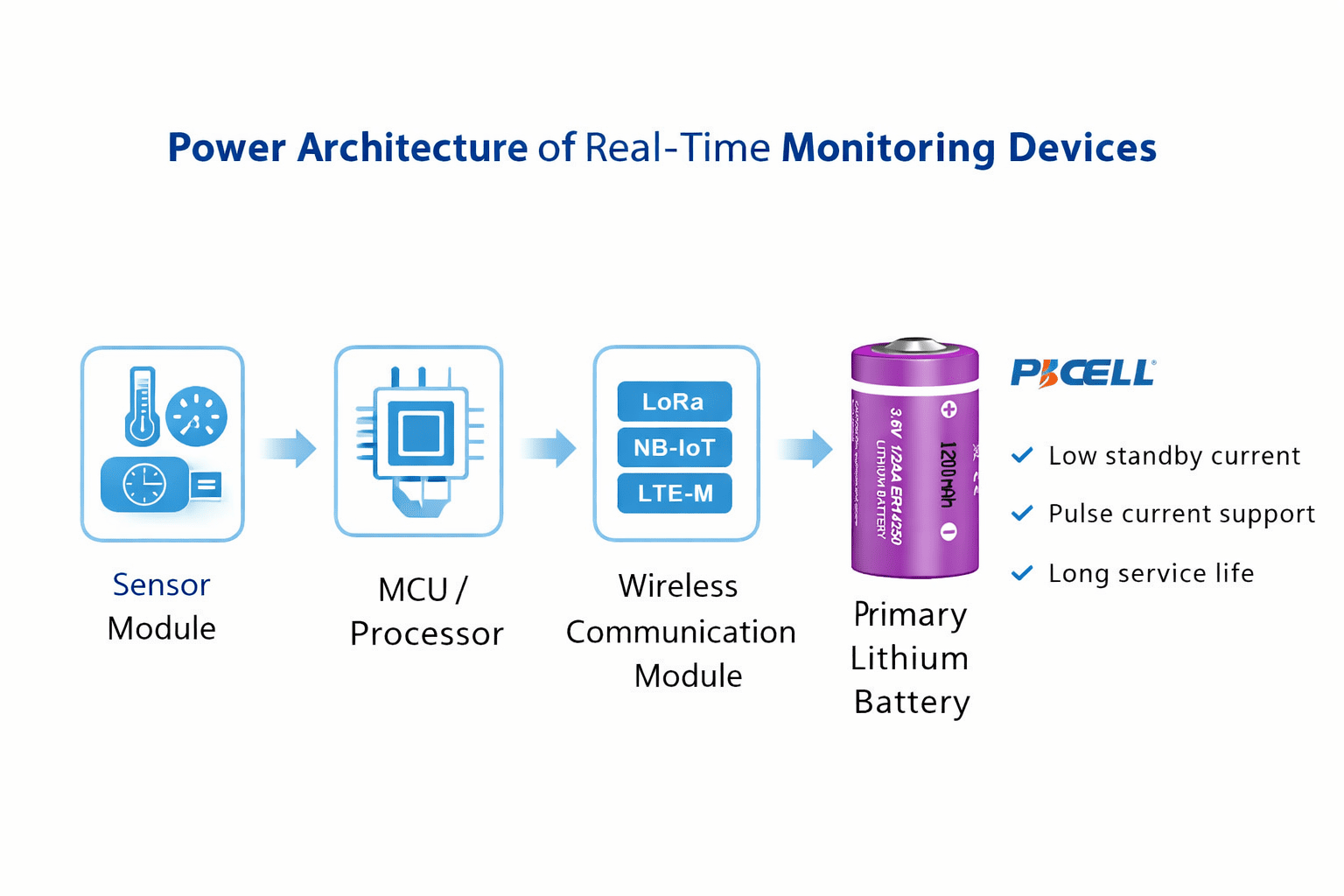
Длительное время работы в режиме ожидания и короткие импульсы: GPS-трекеры и узлы мониторинга IoT обычно остаются в спящем режиме в течение длительных периодов времени, но требуют коротких импульсов высокого тока во время передачи сигнала. Для обеспечения такого режима широко используются гибридные решения, сочетающие литий-сернокислотные батареи с импульсными конденсаторами.
Широкий диапазон температур: Системы мониторинга, используемые в логистике холодовой цепи, на складах сельскохозяйственной продукции или в наружной инфраструктуре, должны сохранять стабильность при экстремальных температурах от −40°C до +85°C.
Компактная конструкция: В таких областях применения, как медицинские датчики, часто требуются батареи, поддерживающие стабильное выходное напряжение в условиях ограниченного пространства, поэтому компактные литиевые батареи, такие как CR123A, являются подходящим выбором.
Почему первичные литиевые батареи идеально подходят для устройств мониторинга
1. Уникальный баланс между сроком службы, стабильностью и адаптивностью к окружающей среде: сверхнизкий уровень саморазряда литий-соляно-хлоридных батарей позволяет мониторинговому оборудованию оставаться работоспособным в течение многих лет даже при относительно длительных интервалах передачи данных.
2. Высокая плотность энергии: химия Li-SOCl₂ позволяет значительно увеличить циклы развертывания при одновременном снижении частоты технического обслуживания в распределенных сенсорных сетях.
3. Адаптивность к температуре: Оборудование для мониторинга, установленное на открытом воздухе или внутри холодильных логистических помещений, отличается стабильным режимом разряда даже при отрицательных температурах.
4. Стабильное выходное напряжение на протяжении большей части цикла разряда также способствует обеспечению постоянной точности датчика и надежности связи в системах прецизионного мониторинга.
Рекомендуемые модели батарей PKCELL для систем мониторинга
Для разных устройств мониторинга требуются разные конфигурации батарей в зависимости от характера передачи данных, условий установки и целевого срока службы. В таблице ниже приведены типичные варианты, используемые в реальных условиях эксплуатации.
| Приложение | Рекомендуемая модель | Ключевое преимущество |
| Датчики мониторинга IoT | ER34615 | длительный срок службы |
| устройства для мониторинга холодовой цепи | ER26500 | низкотемпературная стабильность |
| системы мониторинга зерна | ER34615 | развертывание без необходимости технического обслуживания |
| GPS-устройства для отслеживания активов | ER18505 + конденсатор | поддержка импульсного тока |
| портативные медицинские устройства мониторинга | CR123A | компактная структура |
Типичные примеры применения в системах мониторинга
Первичные литий-ионные батареи широко используются в различных сценариях мониторинга в режиме реального времени, где критически важны длительный срок службы и стабильность в условиях окружающей среды.
Датчики интеллектуального мониторинга парковки обычно устанавливаются под землей, что ограничивает доступ для технического обслуживания. Для обеспечения надежной работы в течение многих лет обычно выбираются долговечные батареи ER34615.
Справочное решение:
https://www.pkcellpower.com/smart-parking-sensors/
Оборудование для мониторинга холодовой цепи должно обеспечивать непрерывную работу в условиях низких температур в логистических средах. Аккумуляторы ER26500 обеспечивают стабильные характеристики разряда, что позволяет осуществлять надежный мониторинг при транспортировке на большие расстояния.
Справочное решение:
https://www.pkcellpower.com/cold-chain-monitoring/
Системы мониторинга зернохранилищ работают в удаленных сельскохозяйственных районах, подверженных колебаниям влажности и температуры. Батареи ER34615 помогают продлить срок службы систем мониторинга и снизить частоту технического обслуживания.
Справочное решение:
https://www.pkcellpower.com/reliable-lisocl2-battery-solution-for-grain-monitoring-equipment-in-australia/
Для GPS-трекеров, используемых в системах управления автопарком и мониторинга активов, требуются батареи, способные обеспечивать длительное время работы в режиме ожидания с периодическими импульсными перебоями в передаче данных. В таких системах широко применяются батареи ER18505 в сочетании с импульсными конденсаторами.
Для портативных медицинских устройств мониторинга, таких как носимые датчики и диагностическое оборудование, требуются компактные батареи со стабильным выходным напряжением и надежной работой. Для таких применений часто выбирают литиевые батареи CR123A.
Как выбрать подходящую батарею для устройств мониторинга
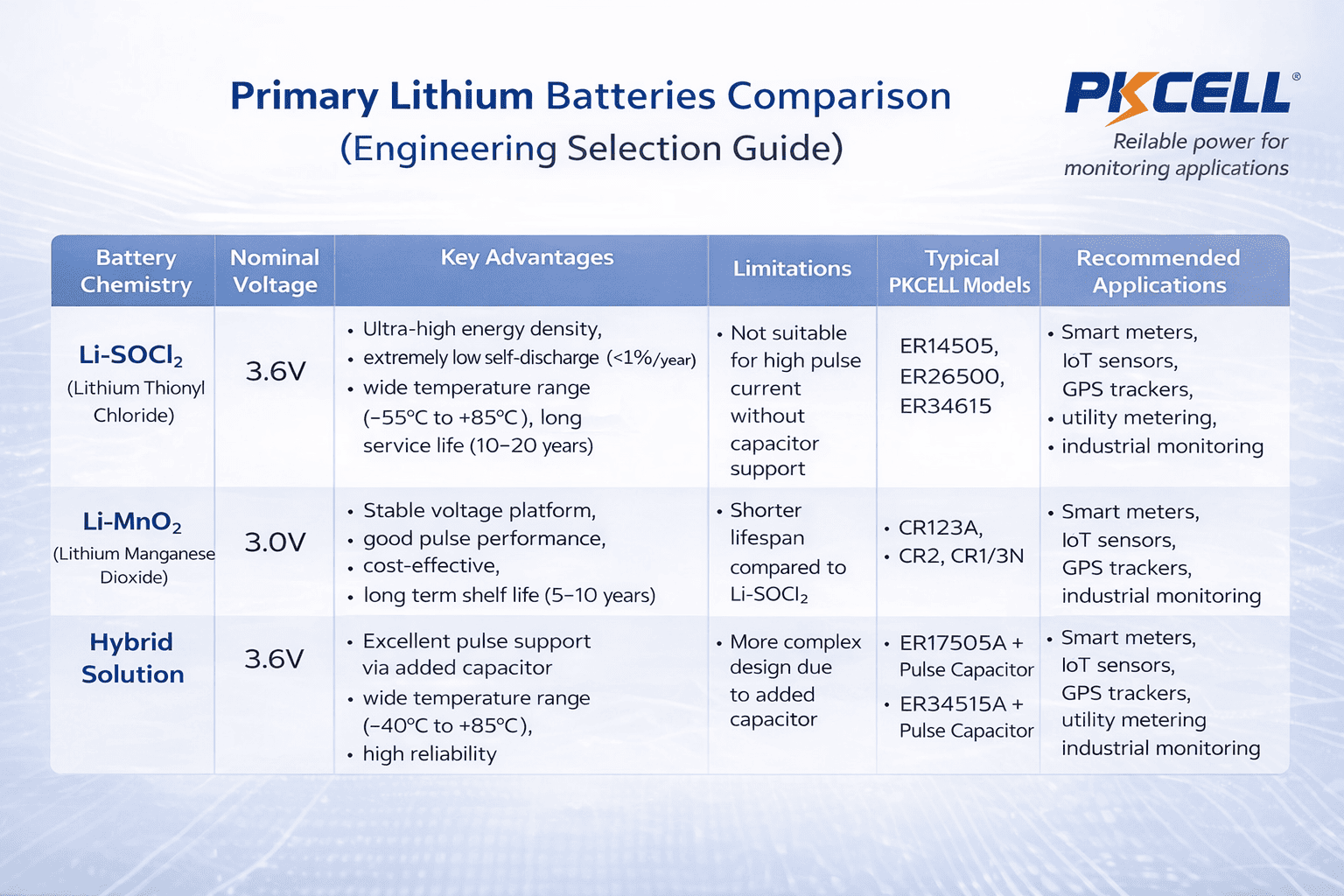
Как правило, инженеры оценивают выбор батареи для мониторингового устройства на основе нескольких ключевых параметров:
-
диапазон рабочих температур
-
частота интервала передачи
-
ожидаемый срок службы развертывания
-
пиковое требование к импульсному току
-
доступное место для установки
Сопоставление этих факторов с характеристиками химического состава батареи помогает обеспечить стабильную работу системы мониторинга в течение длительного времени.
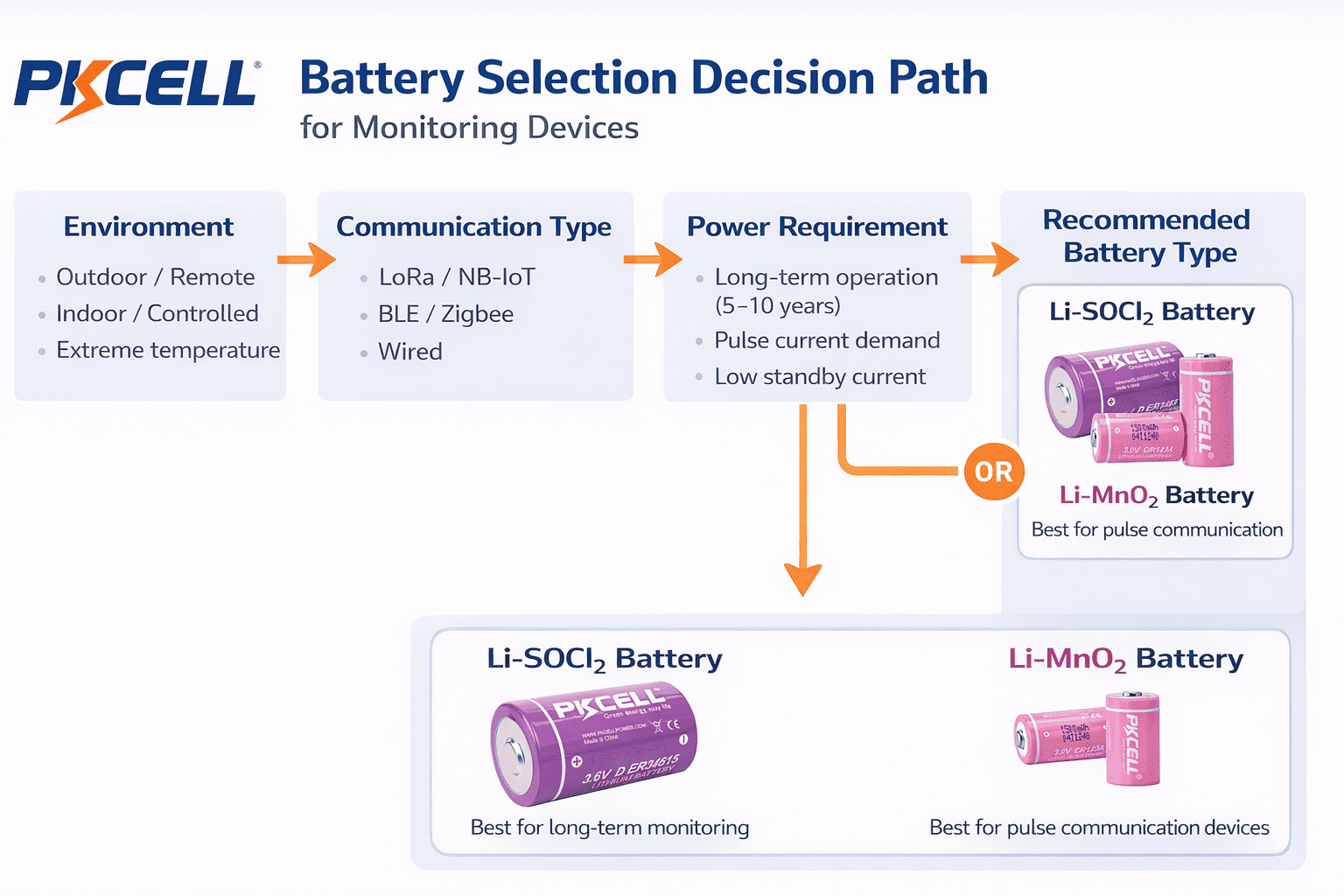
Таблица параметров выбора инженерных батарей
В приведенной ниже таблице обобщена практическая логика выбора, используемая при проектировании систем электропитания устройств мониторинга.
| Параметр | Рекомендуемая стратегия |
| температура ниже −20°C | выберите химию Li-SOCl₂ |
| высокая импульсная нагрузка передачи | добавить поддержку импульсного конденсатора |
| Срок службы развертывания более 5 лет | выберите ER34615 |
| компактное устройство средней емкости | выберите ER26500 |
| электроника для мониторинга в условиях ограниченного пространства | выберите CR123A |
Пример оценки срока службы батареи устройства мониторинга
Оценка срока службы батареи является важным этапом при проектировании системы питания устройств мониторинга. Типичная конфигурация мониторинга IoT включает низкий ток в режиме ожидания в сочетании с периодической передачей данных.
Пример конфигурации:
-
Интервал передачи: каждые 30 минут
-
Ток в режиме ожидания: 8 мкА
-
Импульсный ток: 120 мА
При таком режиме работы литий-сернокислотная батарея ER34615 Li-SOCl₂ обычно обеспечивает примерно 6–8 лет эксплуатации в зависимости от условий окружающей среды и частоты связи. Это делает ее одной из наиболее часто выбираемых батарей для развертывания систем мониторинга инфраструктуры с длительным сроком службы.
Почему литий-сернокислотные батареи предпочтительнее других типов батарей
Различные химические составы батарей ведут себя совершенно по-разному в условиях эксплуатации контрольных устройств. Приведенное ниже сравнение объясняет, почему литий-серно-хлоридные батареи (Li-SOCl₂) часто выбирают для длительных сенсорных применений.
| Тип батареи | Ограничения в приложениях мониторинга |
| щелочная батарея | короткий срок службы |
| Литий-ионный аккумулятор | высокий саморазряд |
| Литий-марганцево-оксидный аккумулятор | более низкая пропускная способность для многолетнего развертывания |
Поскольку системы мониторинга часто работают без присмотра в течение длительных периодов времени, химический состав Li-SOCl₂ обеспечивает наиболее надежный баланс между сроком службы, температурными характеристиками и затратами на техническое обслуживание.
Почему производители устройств выбирают решения PKCELL для мониторинга батарей?
Обладая международными сертификатами, такими как UN38.3, CE, UL и MSDS,PKCELLПоддерживает стабильность работы батарей благодаря многолетнему опыту производства литий-ионных аккумуляторов и стабильным возможностям глобальных поставок.
Доступна инженерная поддержка по вопросам интеграции аккумуляторных батарей по индивидуальному заказу, настройки импульсных конденсаторов и оптимизации срока службы в зависимости от конкретного применения. Эти услуги помогают повысить стабильность работы устройств мониторинга в промышленных, логистических и инфраструктурных средах.
Свяжитесь с нами сегодня, чтобы получить ценовое предложение.
Часто задаваемые вопросы о батареях для устройств мониторинга
Какая батарея лучше всего подходит для устройств мониторинга IoT?
Литий-сернокислотные аккумуляторы, такие как ER34615, широко используются, поскольку они обеспечивают многолетнюю эксплуатацию с чрезвычайно низким уровнем саморазряда и стабильным выходным напряжением.
Могут ли первичные литиевые батареи использоваться в устройствах GPS-слежения?
Да. Первичные литиевые батареи в сочетании с импульсными конденсаторами могут обеспечивать как низкое энергопотребление в режиме ожидания, так и периодические пиковые токовые нагрузки при передаче данных.
Как долго может работать батарея устройства мониторинга?
В зависимости от интервала передачи данных и условий окружающей среды, литий-серно-хлоридные батареи обычно обеспечивают от 5 до 10 лет работы в системах дистанционного мониторинга.
Подходят ли первичные литиевые батареи для систем мониторинга холодовой цепи?
Да. Литий-серно-хлоридные (Li-SOCl₂) батареи могут надежно работать при температурах до −40 °C, что делает их идеальными для мониторинга в системах рефрижераторной логистики.
Безопасны ли литиевые первичные батареи для портативных медицинских устройств мониторинга?
Компактные литиевые батареи, такие как CR123A, широко используются в портативной медицинской электронике благодаря стабильному напряжению и надежной долговременной работе.
Дата публикации: 14 апреля 2026 г.


