
ER17335 1S2P Battery Pack for a Fuel Nozzle Reader in Israel
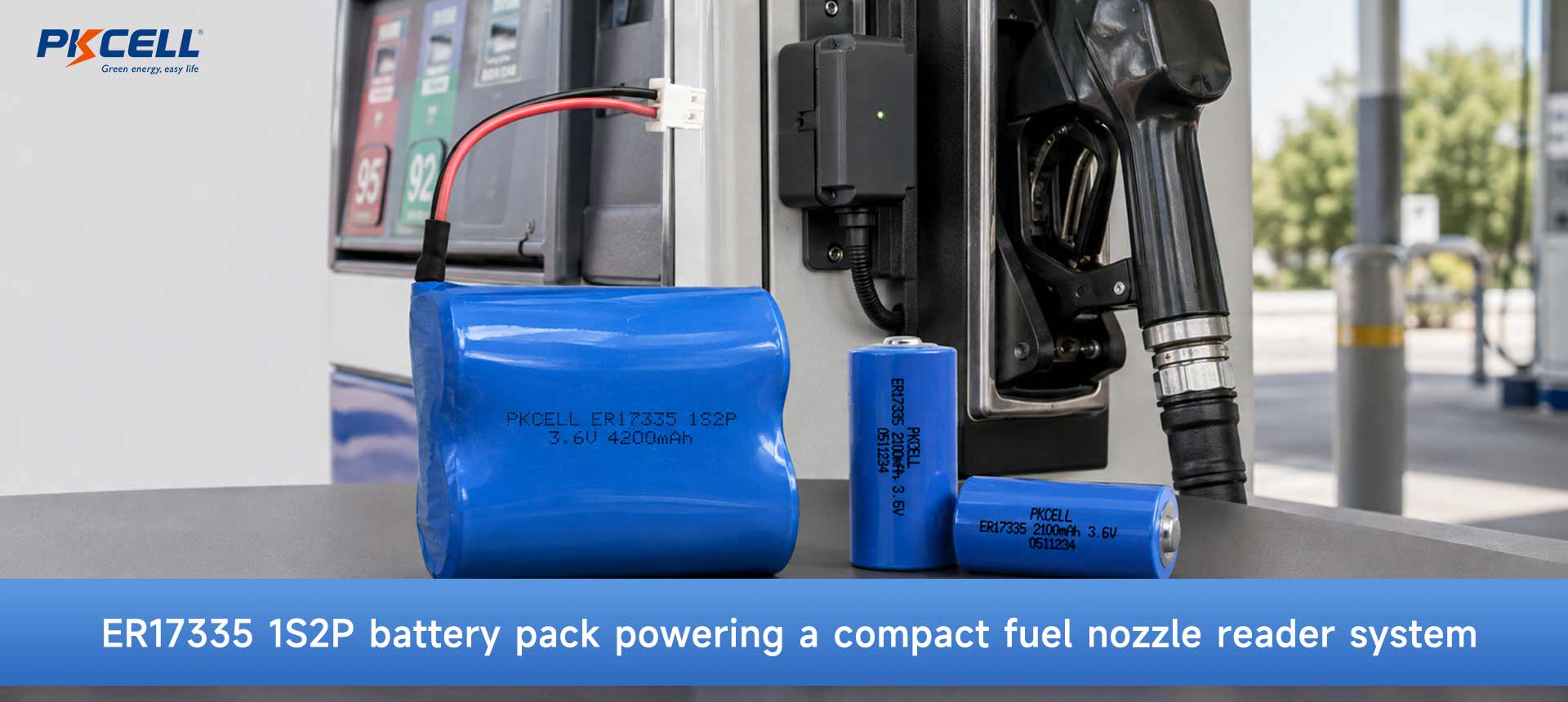
PKCELL customized a compact 3.6V ER17335 1S2P lithium thionyl chloride battery pack with wires and a connector for a Nano Nozzle Reader designed for fuel‑station monitoring.
Background / Challenge
A customer in Israel was developing a compact Nano Nozzle Reader for use at fuel stations. Installed in or near a fuel dispenser nozzle, the device was designed to identify, monitor, or transmit fueling‑related information.
The outdoor installation environment created several battery challenges. The device required dependable power over an extended operating period, but the available installation space was limited. Frequent battery replacement would also increase maintenance effort at deployed fuel stations.
Customer requirements
- Compact battery‑pack dimensions
- Long operating life with minimal maintenance
- Stable voltage throughout the discharge period
- Low self‑discharge during long‑term deployment
- Reliable performance under changing outdoor conditions
- Pre‑assembled wires and a matching connector
- Secure construction for industrial equipment
Balancing operating life and installation space
A larger battery can increase available energy, but it may not fit inside a compact nozzle reader. A smaller battery may simplify the mechanical design but require more frequent replacement.
The solution therefore needed to preserve the device's 3.6V requirement while increasing capacity within the available enclosure space and providing a secure connection to the electronics.
Solution
After evaluating the device structure and power requirements, PKCELL recommended a customized ER17335 1S2P Li‑SOCl₂ battery pack.
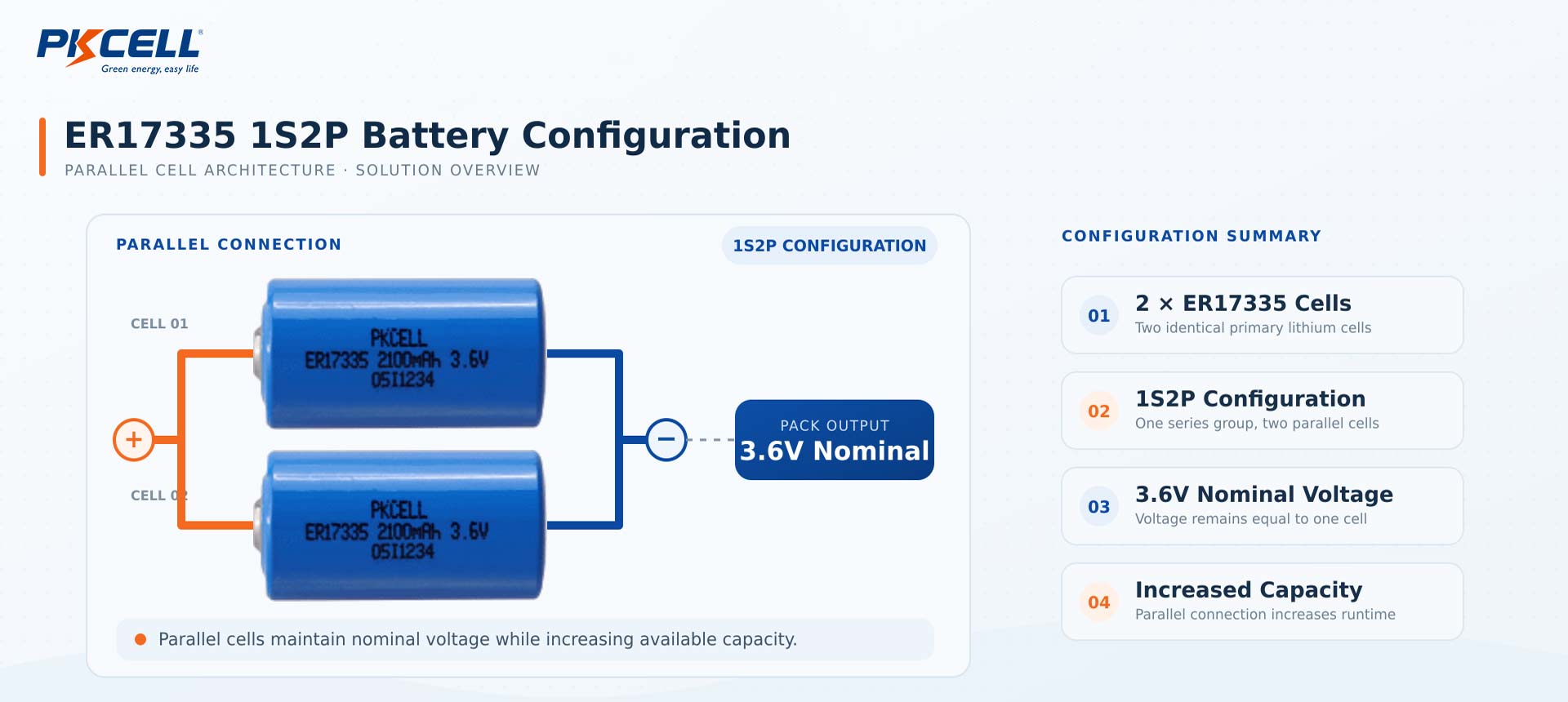
The pack uses two ER17335 cells connected in parallel. This configuration maintains the required 3.6V nominal voltage while providing more capacity than a single ER17335 cell, helping extend the reader's operating time.
The 1S2P configuration combines two compact ER17335 cells to increase available capacity without changing the device's required 3.6V operating voltage.
Why ER17335 was selected
Long‑term energy supply
Li‑SOCl₂ chemistry offers high energy density and low self‑discharge for equipment expected to operate for extended periods.
Stable nominal voltage
The ER17335 provides a stable 3.6V nominal output suited to low‑power industrial monitoring electronics.
Compact cylindrical format
The cell format supports battery‑pack integration where enclosure dimensions are limited.
Reduced maintenance
Increased capacity and low self‑discharge can help reduce the frequency of battery replacement in deployed equipment.
Customized wire, connector, and pack construction
PKCELL supplied the battery pack with customized wires and a matching connector. Wire length, connector type, polarity, insulation, and pack structure were produced according to the customer's device interface and installation requirements.
Appropriate insulation and packaging materials were also incorporated to improve mechanical stability and reduce the risk of short circuits during transportation, installation, and operation.
Application benefits
- Extended operating time for the fuel nozzle reader
- Stable power for data reading and communication functions
- Reduced battery‑replacement frequency
- Simplified installation through pre‑assembled wiring
- Improved mechanical integration in a compact enclosure
- Lower long‑term maintenance requirements
Why PKCELL?
This project required a battery pack designed around both electrical and mechanical requirements. PKCELL evaluated the operating voltage, desired runtime, device dimensions, wiring, connector, insulation, and installation method before recommending the final configuration.
Cell selection
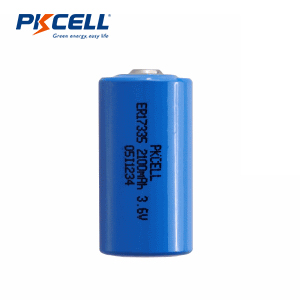
ER17335 Li‑SOCl₂ cells were selected for their compact format, stable voltage, energy density, and low self‑discharge.
Pack configuration
Two cells were connected in a 1S2P arrangement to maintain 3.6V while increasing available capacity.
Device integration
The wire, connector, polarity, insulation, labeling, and packaging could be adapted to the reader's installation requirements.
Important fuel‑station safety consideration
Fuel dispensers may be installed in regulated or potentially hazardous locations. Battery selection and pack insulation alone do not establish approval for use in such an environment.
The complete device, enclosure, electrical design, connector system, and battery assembly should be evaluated against the applicable safety, intrinsic‑safety, transport, and local regulatory requirements before commercial deployment.
Flexible customization for industrial devices
PKCELL can further customize pack capacity, wire length, connector type, insulation, polarity, labeling, and packaging according to different monitoring devices and project requirements.
Related Products