

Across global utility networks, smart water, electricity, gas, and heat meters now form the connective tissue of modern grid management — and behind every reliable meter sits a battery quietly carrying the entire device through harsh field conditions for years on end. Engineers who design these meters increasingly look beyond familiar alkaline chemistries toward lithium thionyl chloride alternatives, with High Quality ER26500 Smart Meter Battery Factories emerging as the preferred partners for long-life deployments. Yet the rationale behind this shift is rarely about brand preference. Instead, it reflects a series of hard engineering questions that alkaline batteries simply cannot answer at the level modern metering demands. The following five questions, framed in the way a meter R&D engineer might actually pose them, reveal why the industry has moved in this direction.
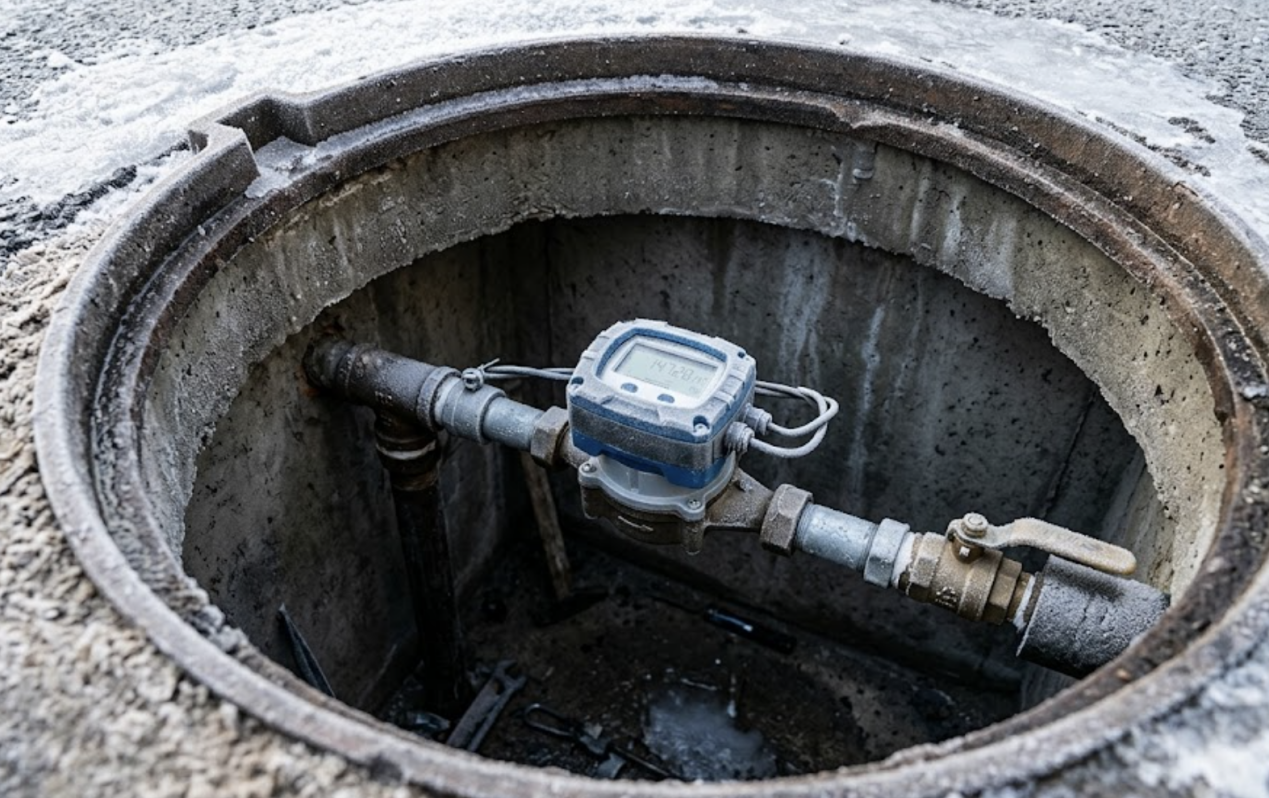
Question 1 — At Minus 30 Degrees Celsius, Why Does an Alkaline Battery Lose Half Its Voltage While ER26500 Holds Steady?
Field reports from northern water utilities tell a familiar story. On the coldest nights of winter, alkaline-powered meters sometimes fail to boot during their scheduled wake cycle. The root cause lies in the electrolyte itself. As temperature drops, alkaline electrolyte viscosity rises sharply, ion mobility collapses, and internal resistance climbs to the point where the cell can no longer support load current. By minus 20 degrees Celsius, many alkaline cells deliver less than half of their nominal voltage under load.
Lithium thionyl chloride chemistry behaves differently. Even at minus 40 degrees Celsius, an ER26500 cell continues to deliver voltage close to its rated 3.6 volts. The ER26500 product from Shenzhen Pkcell Battery Co., Ltd. specifies an operating range of minus 40 to plus 85 degrees Celsius, which directly maps to the real-world thermal envelope of outdoor electricity meters and underground water meter pits. For engineers designing meters bound for Scandinavia, Canada, or northern China, that range is not a marketing point but a baseline requirement.
Question 2 — Why Does Voltage Plateau Stability Matter More Than Initial Capacity for NB-IoT Meter Communication?
Smart meters rarely fail because they run out of energy. More often, they fail because supply voltage drifts below the minimum threshold required by their NB-IoT or LoRa transmission modules. Once that threshold is crossed, the module resets, the uplink fails, and the utility loses its data window for that billing cycle.
This is where the discharge curve shape becomes decisive. Alkaline cells follow a sloping discharge profile, sliding gradually from 1.5 volts down toward 0.9 volts across their service life. Communication reliability degrades long before the cell is officially “empty.” ER26500 cells, by contrast, hold a flat plateau at 3.6 volts across the vast majority of their discharge window, dropping sharply only at end-of-life. Therefore, transmission modules see consistent supply voltage for nearly the entire operational period. PKCell’s ER26500 product reflects this electrochemical behavior, which explains why metering engineers increasingly specify it for NB-IoT-equipped designs where transmission reliability outranks raw capacity numbers.
Question 3 — Over a 10-Year Service Window, How Much Capacity Does Self-Discharge Quietly Erode?
Self-discharge is one of the most underestimated failure modes in metering applications. A typical water or gas meter spends more than ninety percent of its life in standby mode, drawing only microamperes. Under such conditions, the cell’s intrinsic self-discharge rate, rather than its operating load, determines how much usable energy survives to year ten.
Alkaline batteries lose roughly five to ten percent of their capacity annually through self-discharge alone. After a decade, the theoretical residual capacity approaches zero even if the device drew almost no current. Lithium thionyl chloride cells, on the other hand, exhibit annual self-discharge rates below one percent, retaining over eighty percent of their original capacity after ten years. The energy density gap reinforces this advantage further. Alkaline chemistry delivers roughly 100 watt-hours per kilogram, while ER26500 reaches approximately 430 watt-hours per kilogram. As a result, the same physical footprint can support a substantially longer service window. PKCell offers the ER26500 in single-cell 9,000 mAh form and in a 1S2P 17,000 mAh pack configuration, which gives meter designers a practical lever to match capacity directly to their projected duty cycle.
Question 4 — When Meter Manufacturers Demand a 20-Year Design Life, What Pack-Level Engineering Makes That Possible?
A twenty-year design life is not delivered by the cell alone. Connector corrosion, spot weld fatigue, insulation aging, and seal integrity all influence whether a pack actually survives two full decades in the field. Many failures attributed to “battery end-of-life” actually originate at the pack interface rather than within the cell itself.
The 1S2P parallel architecture used in the PKCell ER26500 17,000 mAh pack illustrates how pack engineering extends single-cell capability. By placing two cells in parallel without altering the voltage platform, the configuration doubles available capacity while introducing a measure of redundancy. Beyond the topology, manufacturing details determine longevity: laser welding produces consistent low-impedance joints, sealed enclosures protect against moisture ingress in underground meter pits, and leak-resistant electrolyte structures contain any internal pressure shifts across the temperature range. Each of these process choices, often invisible on a datasheet, is what separates a pack that lasts twenty years from one that quietly fades at year seven.
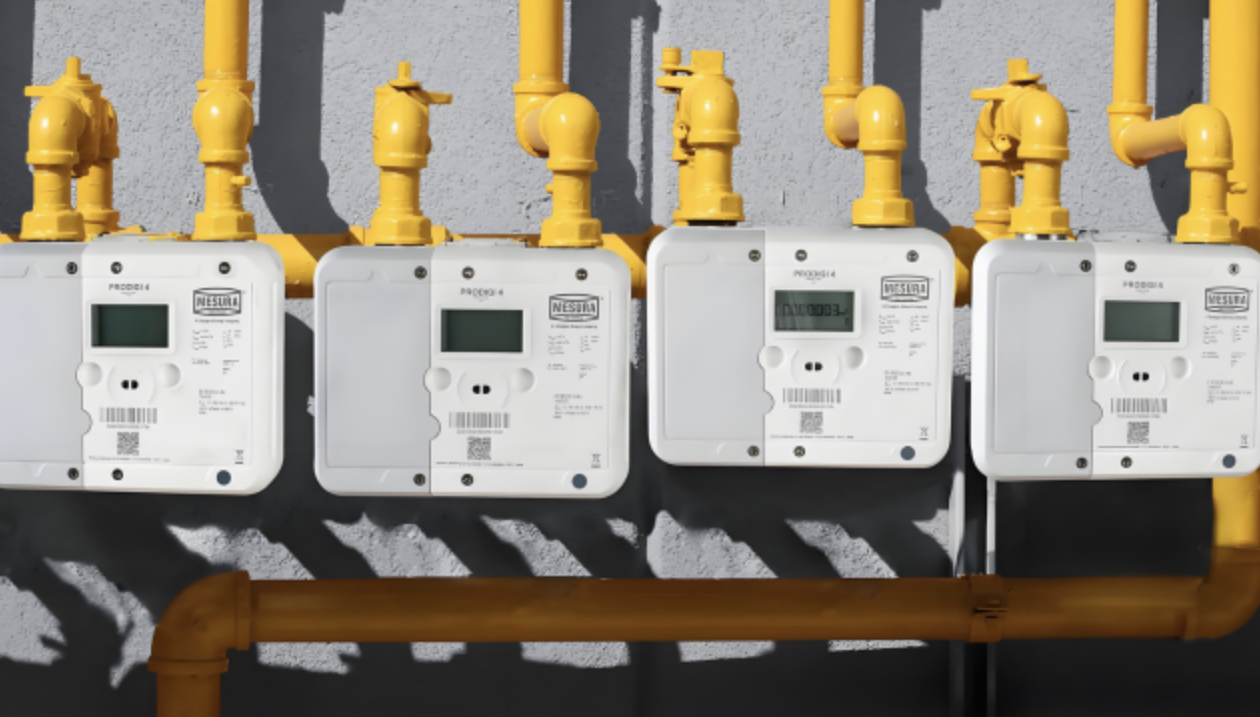
Question 5 — Beyond the Cell, What Certifications and Pack Customization Should Engineers Demand From a Smart Meter Battery Factory?
Global metering deployments require batteries that clear a defined certification stack before they can be shipped. UN38.3 governs transport safety, IEC 60086 sets primary battery performance standards, and UL 1642 addresses cell-level safety. Suppliers who hold certifications only at the cell level — but cannot produce corresponding documentation at the pack level — introduce hidden costs at the customs and qualification stages.
PKCell (Shenzhen Pkcell Battery Co., Ltd.) maintains UL, CB, IEC, and UN38.3 certifications spanning both cell and pack levels, which streamlines export qualification for meter manufacturers serving Europe, North America, and the Middle East. Customization capability matters equally. Real metering projects rarely accept a standard pack as-is; they require specific connector types, defined harness lengths, custom enclosure markings, and sometimes vent structures matched to the meter housing. A factory’s willingness and ability to handle these details often determines whether a design enters production on schedule or slips by months.
The Long-Life Selection Checklist — Translating the Five Questions Into a Procurement Tool
The five questions above translate naturally into a checklist that R&D and procurement teams can apply jointly during supplier evaluation. Cold-start voltage performance, voltage plateau duration, annual self-discharge rate, pack-level certification coverage, and factory customization responsiveness — these five dimensions capture most of what actually matters in a twenty-year metering application.
When measured against this checklist, the contrast between standard alkaline solutions and a dedicated ER26500 supplier becomes practical rather than theoretical. Alkaline chemistry serves consumer electronics well, but it was never engineered for two decades of unattended outdoor service. Lithium thionyl chloride, paired with disciplined pack engineering, was. For meter engineers calibrating their next platform decision, the ER26500 product family and dedicated metering power solutions from Shenzhen Pkcell Battery Co., Ltd. offer a reference baseline against which other suppliers can be measured. Additional product specifications, certification documents, and customization workflows are available at https://www.pkcellpower.com/.
Post time: Jun-08-2026


