

Last updated: June 3 2026 | For consumers, engineers, distributors and OEM buyers choosing D size batteries.
Quick Answer
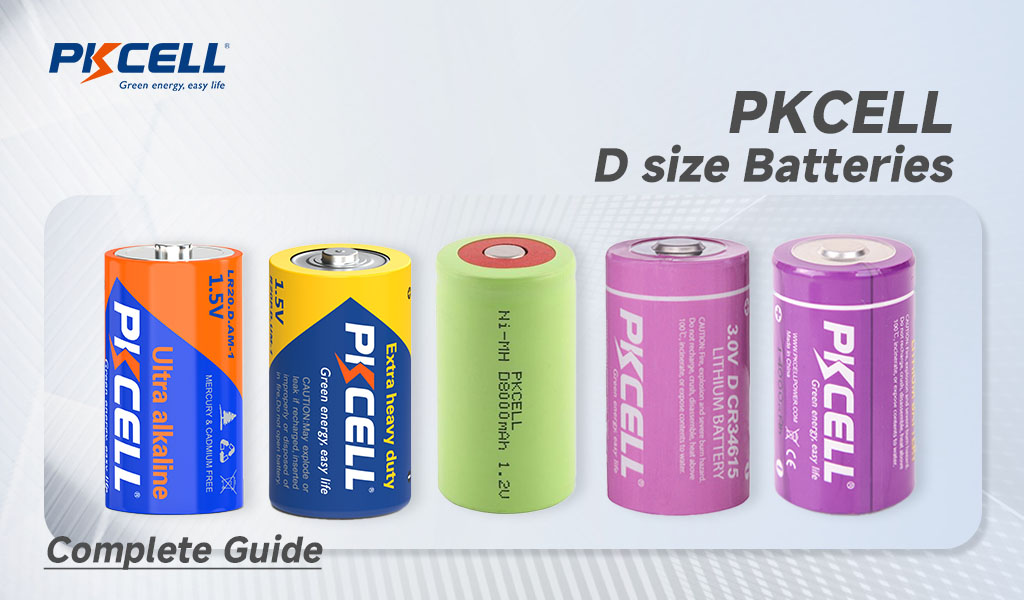
A D cell battery, also called a D battery or R20 battery, is a large cylindrical battery commonly used in flashlights, lanterns, radios, toys, medical devices, emergency equipment and industrial products. Most alkaline D batteries provide 1.5V, while rechargeable NiMH D batteries usually provide about 1.2V.
The main reason to choose a D battery is runtime. Compared with AA, AAA and C batteries, D cells are larger and can store more energy, making them suitable for devices that need long-lasting power or higher current support.
Best practice: Choose a D battery by size, voltage, chemistry, runtime, shelf life and device current demand. Do not choose only by price or brand. Always follow the device manufacturer’s battery specification.
What Is a D Cell Battery?
A D cell battery is a standardized cylindrical dry cell battery size. It is larger than AAA, AA and C batteries and is designed for devices that need longer runtime or more stored energy. In many markets, D batteries may also be labeled as R20, LR20, UM-1 or Mono cells depending on chemistry and regional naming.
D batteries are available in several chemistries, including zinc-carbon, alkaline, lithium and rechargeable NiMH. The same D size does not always mean the same performance, because chemistry affects voltage behavior, capacity, shelf life, leakage resistance and high-drain capability.
D Battery Size, Voltage and Basic Specifications
Main Types of D Cell Batteries
D batteries are available in different chemistries. The best choice depends on how often the device is used, how much current it draws, storage conditions and whether rechargeability matters.
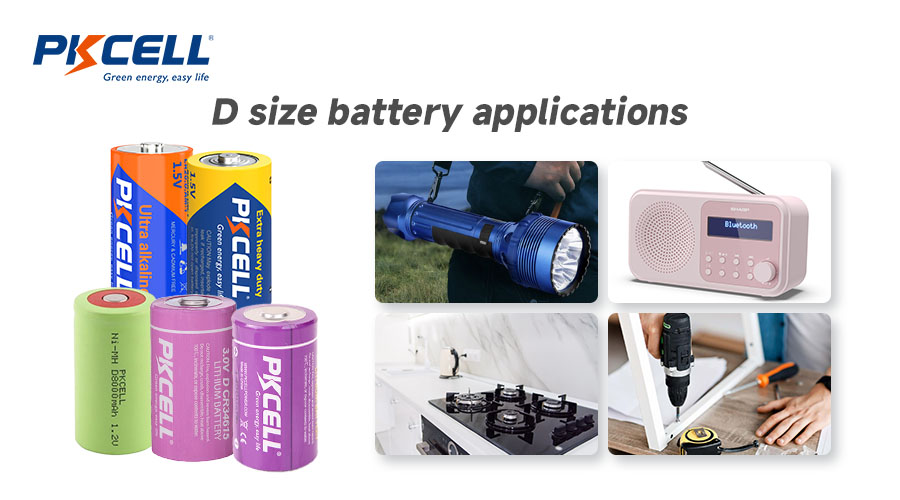
D Battery Applications
Alkaline D vs Rechargeable D Batteries
One of the most common buying questions is whether to choose disposable alkaline D batteries or rechargeable D batteries. The answer depends on usage frequency.
Choose Alkaline D Batteries If
- The device is used occasionally.
- You need long shelf life for emergency storage.
- You want a simple 1.5V drop-in replacement.
- The device does not justify the cost of rechargeable batteries and chargers.
- You are buying batteries for general household, retail or distributor use.
Choose Rechargeable D Batteries If
- The device is used frequently.
- You want to reduce repeated battery purchases.
- You need a reusable option for toys, lights, radios or equipment used often.
- The device supports rechargeable D batteries.
- You can manage charging and storage correctly.
D Battery vs AA, AAA and C Batteries
D batteries are larger than AA, AAA and C batteries. In common alkaline chemistry, they may all provide 1.5V, but the larger D size can provide much longer runtime because it contains more active material.
Can You Replace D Batteries With AA or C Batteries?
Sometimes people use AA-to-D or C-to-D adapters, but this should be done carefully. Even if the voltage is similar, smaller cells usually have much lower capacity and may not support the current demand of a device designed for D batteries.
Recommendation: Use the battery size specified by the device manufacturer. Adapters may work for low-drain devices, but they can cause short runtime or poor performance in high-drain equipment.
How to Choose the Right D Battery
OEM and Bulk D Battery Sourcing Checklist
For distributors, brands and OEM buyers, D battery sourcing should consider more than price. Battery leakage, shelf life, packaging, consistency and export documentation can affect customer satisfaction and long-term supply reliability.
For Business Buyers, Check
- D battery type: R20P, LR20, NiMH rechargeable, USB-C rechargeable or lithium D.
- Voltage and device compatibility.
- Capacity, shelf life and leakage resistance.
- Target application: flashlight, radio, toy, emergency device or industrial equipment.
- Packaging: bulk, shrink wrap, blister card, retail pack or private label.
- Documents: MSDS, RoHS, CE, transport documents or market-specific compliance files where required.
- MOQ, lead time, factory capacity and long-term model availability.
Safety and Storage Tips for D Batteries
- Install D batteries according to the correct polarity.
- Do not mix old and new batteries in the same device.
- Do not mix alkaline, zinc-carbon, lithium and rechargeable batteries in one device.
- Remove batteries from devices that will not be used for a long time.
- Store batteries in a cool, dry place away from heat and moisture.
- Do not short-circuit, recharge, open, crush or heat non-rechargeable D batteries.
- Recycle used batteries according to local regulations.
Why Choose PKCELL D Batteries?
Need D Batteries for Bulk, OEM or Distributor Supply?
PKCELL supplies D size batteries for flashlights, radios, toys, emergency devices, household products, industrial equipment and OEM applications. Product options include D/R20P zinc-carbon batteries, D/LR20 alkaline batteries, D NiMH rechargeable batteries and D USB-C rechargeable lithium batteries.
For business buyers, PKCELL can support low MOQ, OEM service, packaging options, stable supply, quality control and export documentation.
Best fit: bulk D batteries, private label packaging, distributor supply, emergency equipment batteries, flashlight batteries and OEM device battery sourcing.
FAQ
Conclusion
D cell batteries are large cylindrical batteries designed for devices that need long runtime and reliable portable power. While many D batteries share a similar physical size, their chemistry and performance can vary significantly. Alkaline D batteries are a strong general-purpose choice, zinc-carbon D batteries are economical for low-power devices, and rechargeable D batteries are useful for frequent-use applications.
For OEM buyers and distributors, the best D battery choice depends on voltage, chemistry, runtime, shelf life, packaging, compliance documentation and long-term supply stability. PKCELL can support multiple D battery types for retail, industrial and OEM applications.
Post time: Jun-25-2025


