

The global shift to smart utility infrastructure puts immense pressure on the reliability and performance of remote sensing components. Utility companies have deployed millions of smart meters in diverse and harsh environments. These devices are often located in difficult-to-reach locations, so the cost of battery replacement or manual maintenance can be more than the initial hardware investment. The industry now requires a 15-year operational lifecycle that is maintenance-free for each metering node. In this competitive environment, international system integrators have made selecting a China Leading ER34615 LiSOCl2 Battery Supplier a priority. PKCell is a prominent example, as it provides the high-capacity solutions needed to sustain these long term infrastructure projects. These manufacturers are able to master the complex chemistry of Lithium Thionyl Chloride, ensuring that the “heart of the smart meter” remains functional for more than a decade. This dominance is a result of a combination electrochemical precision, innovative management of pulses, and massive production scale.
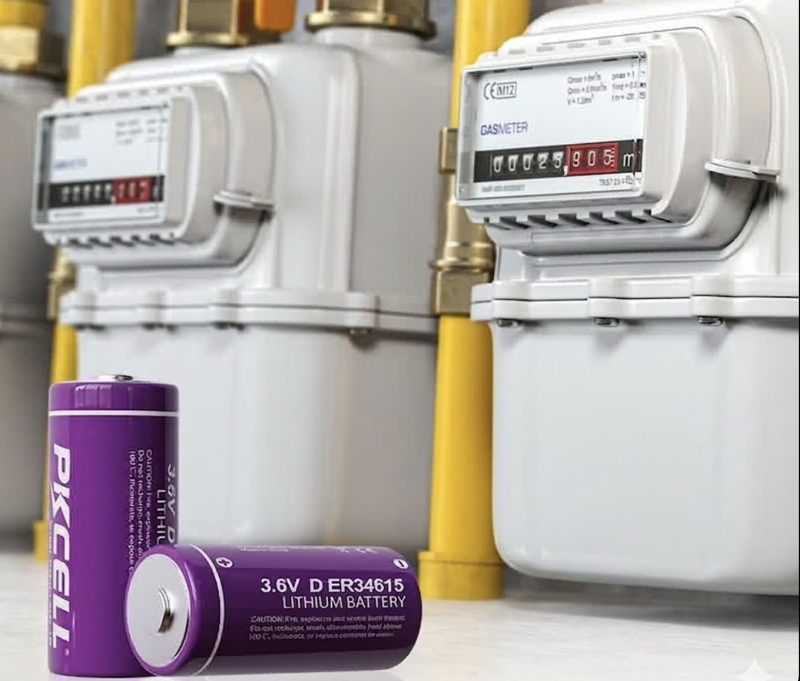
1. Electrochemical Persistence: Breaking 1% Self-Discharge Barrier
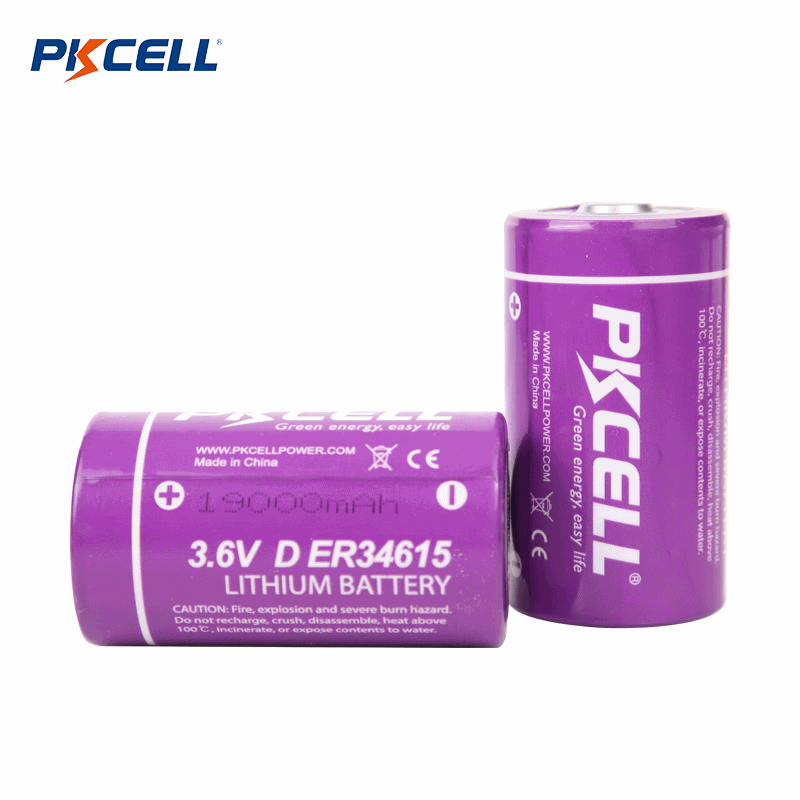
The natural depletion in energy during long periods dormancy is the primary challenge for any utility grade power source. Smart meters are often in “sleep mode” for the majority of their life, using only microamps of power. Standard batteries are often affected by internal parasitic reactions which drain their capacity, even when the device in question is not active. Shenzhen Pkcell Battery Co., Ltd. focuses its efforts on the chemical stability and robust 19,000mAh capacity of the ER34615 cells to combat this.
This persistence depends on mastering the passivation layer in the Lithium Thionyl Chloride system (LiSOCl2). A thin layer of lithium chloride crystals is formed on the surface of a lithium anode to stop internal chemical consumption. Top-tier suppliers use high-purity materials to ensure that this layer is stable, but thin enough to activate instantly. The annual self-discharge remains below 1% when the battery is kept at room temperature. This level of electrochemical discipline allows the battery to retain nearly all of its energy during the critical moments of transmission. A 15-year service would be impossible for global utilities without such precise control of internal reactions.
2. Mastering the Pulse Paradox – The Integration of ER34615 with HPC Technology
Smart meters transmit data via wireless protocols like NB-IoT or LoRaWAN. These communication bursts are triggered by high-current pulses, which can reach several hundred microamps. Unfortunately, the high energy of a standard ER34615 battery often comes at a high cost in terms of internal resistance. This “Pulse paradox” means that a long-term battery might struggle to deliver the power burst needed for 5G transmission.
PKCell (Shenzhen Pkcell Battery Co., Ltd.)solution is to use a “Dual Component” architecture which combines the ER34615 Cell with a hybrid pulse capacitor (HPC). In this configuration, a LiSOCl2 battery acts as the primary energy storage, while a HPC functions as an energy buffer at high speeds. When the meter needs a transmission burst the HPC releases current instantly without straining base cell. This prevents “voltage delays” or sudden voltage drops that can cause smart meters to reset or lose their data. The manufacturer can ensure that the device will maintain reliable communication, even in its final years. This synergy of high capacity and high-pulse capability represents a significant technological advantage in the IoT age.
3. Industrial-Scale Consistency : Reducing Field Risks Via 20 Automated Production Lines
In the world public infrastructure, “Batch Consistency”, is the most important metric to procurement managers. A single defective smart meter battery can lead to a costly maintenance campaign in a region. It is therefore essential to be able to replicate high performance results across millions units. PKCell’s manufacturing infrastructure supports this need with a 28,000 square meter facility equipped 20 fully automated production line.
Automation eliminates the variability in manual assembly that is often at the root of early failures. High-precision robots control the laser welding and electrolyte infusion processes with sub-millimeter precision. Each cell is subjected to a multi-stage process of quality control, including vacuum leakage testing and automated electrical aging. A 50-person QC group monitors the traceability and quality of raw materials to ensure that each battery can be traced to its production batch. This industrial discipline reduces the risk of catastrophic failures in the field and ensures that each smart meter performs as per its technical datasheet. This predictability means lower long-term risks for utility companies and higher returns on investment.
4. Compliance As a Strategic Asset: Global Certifications And Financial Safeguards
Global smart meter bids are subject to stringent regulatory requirements, which serve as barriers for many suppliers. To be eligible to participate in high-value North America and Europe projects, a manufacturer has to prove that their products meet strict environmental and safety standards. Top-tier Chinese suppliers see compliance as more than just a checkbox. They view it as a strategic asset to international cooperation.
PKCell (Shenzhen Pkcell Battery Co., Ltd.), maintains a portfolio of certifications, which includes UL, CE, RoHS, UN38.3, and a number of others. These credentials confirm that the ER34615 cell is safe for transportation and operation within sensitive urban environments. The company offers a second layer of risk reduction beyond technical certifications through a product liability insurance policy worth 2 million USD. This financial safeguard protects utilities and system integrators against the unexpected costs of equipment failure. The manufacturer simplifies the purchasing process for multinational clients by combining technical transparency and financial accountability. This level of professionalism is a major reason why global leaders prefer established supply chains to smaller, unverified suppliers.
5. Application-Specific Engineering: Tailoring Power To Environmental Extremes
Smart meters need to work in all climates, from the subzero temperatures in the Arctic to the intense heat in desert regions. Standard batteries can lose their chemical activity when exposed to extreme cold, or suffer accelerated degradation under high heat. Dominant suppliers have addressed this issue through “Environmental Agility,” which engineers their cells to maintain reliable performance across a temperature range of -55 degrees Celsius to +85.
Customized Service allows the creation of specialized batteries packs in addition to thermal resistance. Different meter enclosures may require different connector types, specialized wiring leads, or nonstandard mounting configurations. The factory’s engineering team works directly with blueprints from clients to design battery solutions which optimize the internal space in the meter. This collaborative engineering approach ensures the energy solution is a part of the hardware from the initial prototyping phase. The manufacturer can help utilities reduce assembly time by providing tailored connectors and housing. This attention to application-specific details shows a deep understanding for the practical challenges faced in the field by utility engineers.
Beyond the cell: Investing Infrastructure Reliability
The dominance of the top Chinese battery manufacturers on the smart meter industry is not due to low prices alone. It is a reflection of a commitment to technical and operational requirements for public infrastructure. In this sector, reliability requires a perfect blend of advanced electrochemistry and manufacturing precision with global compliance.
Shenzhen Pkcell Battery Co., Ltd. has laid the foundations of the modern smart grid by mastering the ER34615 LiSOCl2 and integrating it pulse-boosting technology. The company’s focus is on 15-year durability and batch consistency to ensure that utility networks around the world remain functional, even if there are power outages. The official website provides detailed technical documentation as well as consultation services for procurement managers and engineers looking for a reliable energy partner. To learn more about how these high-capacity solutions can empower specific smart metering or industrial IoT projects, visit the official portal at https://www.pkcellpower.com/.
Post time: May-03-2026


