

The rapid expansion of Internet of Things (IoT), has sparked a silent revolution within industrial design. As billions of devices are deployed across smart cities, remote fields, and deep sea research sites, demand for autonomous power is at a critical tipping-point. These devices need energy sources that can function without maintenance for many decades. The industry has shifted from focusing on energy capacity to “functional power density.” PKCell is a Reliable High Energy Density Primary Lithium Battery Supplier in this changing landscape. It bridges the gap between theoretical and real-world chemistry. The company has achieved new technical milestones for electrochemical stability. This enables the next-generation of “fit and forget” technology. This transition marks an important shift from being a supplier of components to becoming a strategic architect for advanced power solutions.

Redefining Milestone: From Simple Power Reliability to Functional Power Capacity
The battery industry has measured its success for years by milliampere hours (mAh). In the context of industrial sensing and smart utility meters, high capacity is not enough to guarantee performance. A battery with a high energy density will be useless if it suffers significant self-discharge during long periods of inactivity. The true milestone for modern manufacturers is to achieve chemical stability, which ensures that power is available when needed, even if it has been stored for a decade.
Shenzhen Pkcell Battery Co., Ltd. addresses this challenge by optimizing its internal chemistry in its Lithium Thionyl Chloride and Lithium Manganese Dioxide systems. The factory uses high-purity raw materials and specialized electrolyte formulas to produce cells with a self-discharge of less than 1% per year at room temperature. This level of stability helps prevent the early onset passivation. Passivation is a common problem where a resistive film forms on the anode of the lithium and blocks current flow. By minimizing the chemical inhibitors, manufacturers can ensure a 15-year reliable operational life for critical infrastructure. These functional milestones enable engineers to design devices that can be used in extreme environments, where battery replacement is physically impossible or economically unfeasible.
The ER+HPC Synergy: Solving High-Pulse Paradox
Modern IoT protocols, such as NB-IoT and LoRa, create a unique power paradox. These systems need a very low background voltage to maintain their internal clocks, but they also require massive surges of current for data transmission. While a standard LiSOCl2 is excellent for long-term storage of energy, it struggles to deliver high-current pulses with minimal voltage drop. This “voltage-delay” can cause an electronic device to reset, or even fail its transmission cycle.
PKCell (Shenzhen Pkcell Battery Co. Ltd.) uses its hybrid power architecture ER+HPC to solve this structural contradiction. The difference between a standard ER and an ER+HPC configuration can be substantial. A standalone bobbin type ER cell is optimized to handle low continuous drain – typically handling background currents of the microamperes range with ease – but its internal structure isn’t designed for sharp current spikes required by NB-IoT and LoRa transmissions bursts. When a standard ER-cell is asked to deliver a high-current pulse, the voltage can drop by 0.3 to 0.5 volts, which is enough to trigger a device restart or missed transmission. In extreme cases, the device’s service life can be reduced from 10 to 15 years to just 5 to 7 because each failed transmission forces it into a retry loop that accelerates the overall drain. The ER+HPC configuration solves this problem directly: the Hybrid Pulse Capacitor is designed to store and release peak energy for transmission bursts only, reducing the voltage drop to less than 0.1 volts. Meanwhile, the base ER cells continue to operate within their optimal low-current window. The ER cell ages according to its design, the device communicates correctly, and the 10-to-15-year life expectancy is still achievable. HPCs maintain high operating voltages and low internal resistances across a wide range of temperatures, unlike traditional capacitors. This ensures that this performance advantage is maintained in extreme field environments. The result is a device that maintains a compact design while maintaining the communication reliability and operational durability that standalone cells can’t provide.
Structural Innovation: From Raw Cells To Intelligent Customized Battery Packs
The “one size fits all” approach to battery acquisition has become obsolete as industrial hardware becomes smaller and more specialized. Modern enclosures are often characterized by irregular internal geometries, and strict thermal requirements. Customized Primary Lithium Battery Packs have become a vital OEM service. This service level goes beyond the sale and delivery of individual cells to integrated, intelligent power module.
The engineering team at PKCell manages the complexity of this project through a comprehensive workflow from design to delivery. Engineers create structural housings using Computer-Aided Design software to optimize space and protect from mechanical shock. The integration of specialized Printed Circuit Board Assemblies adds an extra layer of intelligence to power packs. These circuits monitor voltages, prevent over-discharge and manage load balancing among hybrid components. The manufacturer can reduce the R&D burden for the client by delivering a fully-tested, plug-and play assembly. This structural innovation ensures the battery is not a limiting component in device design, but an enabling one that accelerates time to market.
Validating Reliability Through Automated Precision At Scale
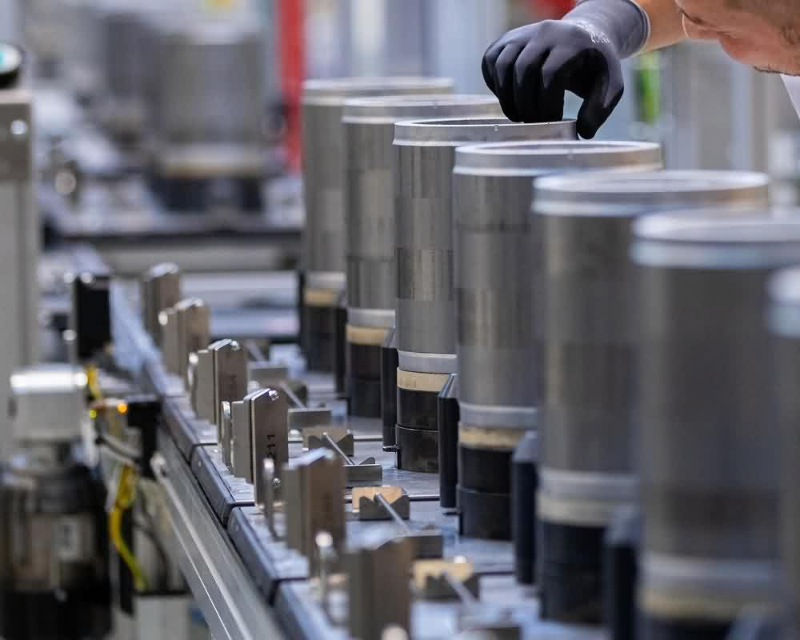
Innovation requires a solid manufacturing foundation to ensure that each unit performs as intended. In the battery industry batch inconsistency can be the biggest enemy to reliability. Even a minor error in the electrode coating or laser weld can cause premature failures in the field. Shenzhen Pkcell Battery Co., Ltd. has a 28,000 square meter facility with 20 fully automated lines to mitigate these risks.
Automation is crucial to achieving new milestones for power density. High-precision robots handle delicate assembly of internal parts, ensuring uniform chemical dispersion and structural integrity. This robotic precision eliminates variables associated with manual work, leading to extremely tight tolerance levels across millions units. A dedicated 50-person team of quality control oversees the multi-stage auditing. Each cell is tested for voltage, internal resistance and leakage prior to entering a battery pack assembly. This commitment to manufacturing discipline creates the “infrastructure for trust” required for massive global deployments. The power density claims are consistent across 150+ countries by adhering to international standards like UL, CE and UN38.3.
Beyond Product: Case Studies in Extreme Industrial Environments
The final validation of battery performance is done in the field, not the laboratory. Primary lithium batteries are often exposed to the harshest conditions on Earth. Case studies from different sectors demonstrate how these power solutions maintain integrity under duress. In oceanographic sensors that operate at sub-zero temperatures, the batteries are required to resist electrolyte freeze and maintain voltage stability even under high hydrostatic force. In smart gas meters in desert environments, on the other hand, the cells are required to withstand high temperatures without accelerating their own discharge.
PKCell (Shenzhen Pkcell Battery Co., Ltd.), documents these successes in order to provide with a technical blueprint for potential partners . These real-world cases demonstrate the practical ROI that comes with choosing a reliable supplier. The company’s confidence is reflected in not only its technical specifications but also in a defect-rate below 0.01%, and a leakage-rate of less than one in 10,000 units. These figures are maintained consistently over production batches that serve 150+ countries. When a procurement manager reviews these case studies they see more than technical data. They see a track-record of operational continuity in mission critical applications.
Partnering to the Future of Autonomous Connectivity
The future of industrial IoT is dependent on the ability of providing reliable, high-density energy that matches the lifetime of the silicon it supports. The energy foundation needs to be more sophisticated as devices become smarter, more connected and more intelligent. The process of achieving new milestones for power density is a continuous one, requiring technical refinement and manufacturing expertise.
Shenzhen Pkcell Battery Co., Ltd. is at the forefront of this revolution, combining hybrid chemistry and a flexible customization service. The company focuses on functional reliability and automated accuracy to provide the essential energy solutions needed for an autonomous world. A collaborative partnership is the best way for engineers and procurement leaders to push the limits of IoT innovation. To explore the full portfolio of primary lithium solutions, download technical datasheets, or request a custom battery pack consultation, visit the official portal at https://www.pkcellpower.com/.
Post time: May-01-2026


