

Battery Power for Flood Monitoring Sensors: What Happens When Water Levels Rise?
Flood monitoring sensors can spend weeks or months observing relatively stable water conditions. When heavy rainfall causes rivers, drainage channels or urban waterways to rise, however, these devices may suddenly need to collect and report information much more frequently.
For environmental monitoring equipment manufacturers and municipal infrastructure providers, the challenge is not simply keeping sensors powered during normal conditions. It is ensuring that sufficient energy remains available when monitoring becomes most important.
As flood early warning networks expand into remote and infrastructure-limited locations, primary lithium batteries offer a power option for selected low-power monitoring devices where regular charging and maintenance are difficult.
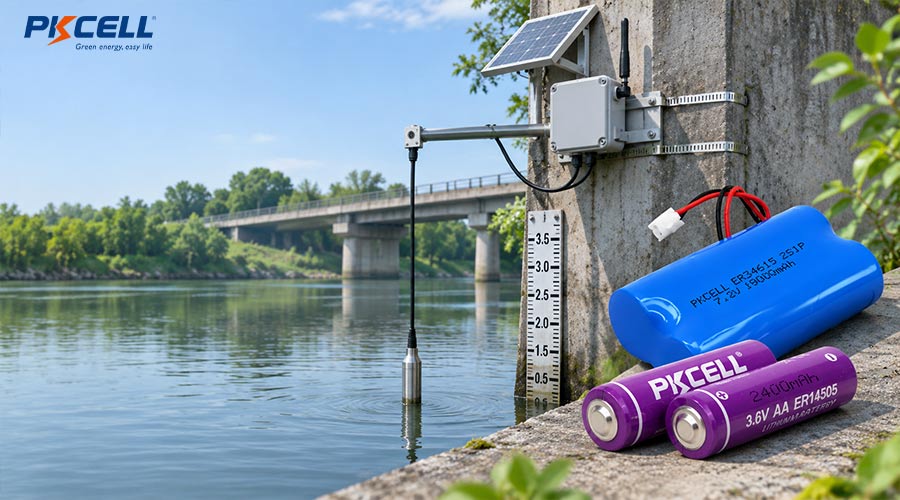
Why Flood Monitoring Creates a Different Battery Demand
Unlike electronic devices that follow a relatively predictable daily routine, flood monitoring equipment responds to changing environmental conditions. Its operating requirements may vary significantly between dry weather, heavy rainfall and prolonged flooding.
A monitoring station located near a river or drainage channel may report water levels at regular intervals under normal conditions. Once a predefined threshold is reached, some systems switch to more frequent measurements and alerts, depending on their configuration.
Flood monitoring devices need a power supply that supports routine observation while retaining sufficient energy for periods of intensified monitoring.
This makes battery availability during exceptional events an important purchasing consideration, particularly for equipment installed far from reliable electrical infrastructure.
Where Battery-Powered Flood Monitoring Sensors Are Used
River and Stream Monitoring
Remote water level stations help authorities observe changes in rivers, streams and upstream catchment areas. Battery-powered sensor nodes can provide additional monitoring coverage in locations where connecting to the electrical grid is impractical.
Urban Drainage and Underpass Monitoring
Municipalities can use water level sensors around drainage channels, low-lying roads and underpasses to identify developing flood conditions. These installations may support road management, drainage inspections and emergency response decisions.
Rural and Agricultural Flood Monitoring
Farms, irrigation networks and rural communities may require monitoring equipment across geographically dispersed locations. Independent battery-powered devices can help reduce dependence on local electrical infrastructure.
Industrial Sites and Critical Infrastructure
Industrial facilities, transport corridors and utility operators may deploy water level monitoring equipment around flood-prone areas. These devices can provide additional situational information when access to the site becomes restricted.
Related applications, including water quality monitoring and pipeline leak detection, are discussed in our guide to
primary lithium batteries for water monitoring equipment.
What Changes When Water Levels Rise?
Flood monitoring is not necessarily a continuous high-demand activity. Instead, many systems are configured to change their monitoring behavior according to environmental conditions.
For equipment providers, understanding these operational stages helps identify where additional battery reserves may be required.
| Monitoring Stage | Typical Device Activity | Power Consideration |
|---|---|---|
| Normal conditions | Routine measurements and periodic reporting | Long-term energy availability |
| Rising water levels | More frequent observation and data updates | Additional energy consumption |
| Flood warning | Threshold-based alerts and continued communication | Reliable power during critical operating periods |
| Prolonged flooding | Extended monitoring with potentially restricted site access | Sufficient operating reserve |
| Post-flood recovery | Continued observation, inspection and maintenance | Remaining battery life and replacement planning |
Actual reporting behavior depends on the sensor, communication system and monitoring strategy. A project that budgets energy only for normal weather conditions may underestimate the requirements of an extended flood event.
Why Primary Lithium Batteries Are Considered for Remote Flood Sensors
Flood monitoring networks may include numerous unattended devices installed along waterways, roads and drainage infrastructure. Visiting every monitoring point to recharge or replace batteries can create significant maintenance demands.
For compatible low-power devices,
lithium thionyl chloride (Li-SOCl2) batteries
can offer several practical advantages:
- Low self-discharge: Suitable for consideration in devices that spend extended periods in standby.
- Independent operation: No routine charging infrastructure is required for the battery itself.
- Multiple battery formats: Supports different equipment sizes and installation requirements.
- Flexible integration: Cells and customized assemblies can be evaluated for different monitoring device designs.
Primary lithium batteries are not suitable for every flood monitoring station. Equipment operating continuously at higher power levels may be better served by mains power, solar charging or rechargeable battery systems. The power architecture should reflect the actual monitoring requirements.
Primary Lithium Battery Solutions for Flood Monitoring Equipment
Different monitoring devices may require different battery configurations. PKCELL provides cylindrical primary lithium cells and customized battery assemblies that can be evaluated according to the equipment’s operating pattern and installation requirements.
ER14505 Li-SOCl2 Battery
A compact cylindrical battery option for selected low-power environmental sensor nodes where installation space is limited.
ER + HPC Battery Packs
Battery configurations for evaluation in connected monitoring equipment that combines long standby periods with intermittent communication demands.
ER34615 2S1P Battery Pack
A higher-voltage primary lithium battery assembly that may be considered for compatible remote monitoring instruments with larger installation space.
Customized Primary Lithium Battery Packs
Project-specific battery assemblies can be discussed when standard cells do not match the required configuration, enclosure or connection method.
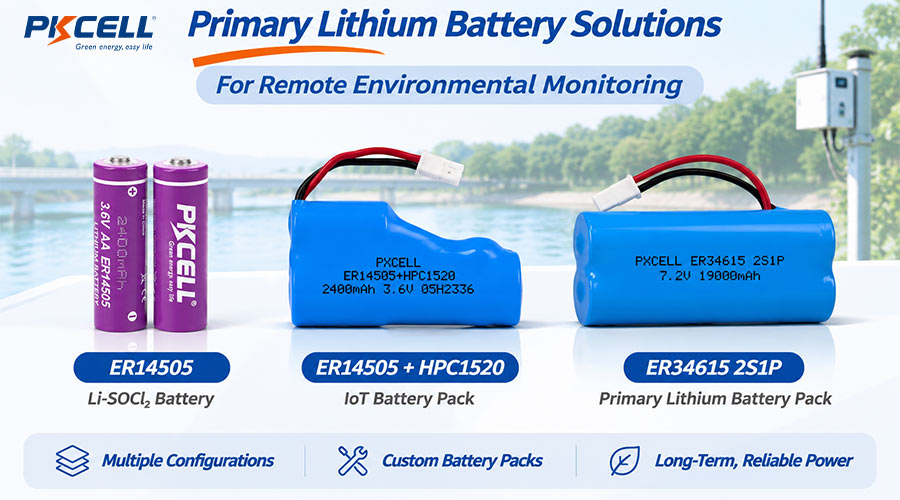
These products represent potential battery options rather than universal replacements for existing flood monitoring equipment. Compatibility must be confirmed for each device.
Developing Flood Monitoring Equipment?
Discuss your environmental monitoring application, installation requirements and expected order volume with PKCELL. Our team can help identify primary lithium battery options for your project.
Battery Procurement Considerations for Flood Monitoring Networks
For system integrators and equipment manufacturers, battery procurement extends beyond the initial purchase price. A distributed flood monitoring network may remain in service for years, requiring consistent product availability and a practical maintenance strategy.
Installation and Maintenance Accessibility
Monitoring equipment located beside remote waterways or drainage infrastructure may be difficult to reach during adverse weather. Battery replacement schedules should therefore consider site accessibility and seasonal flood risks.
Product Consistency Across Multiple Sites
Using approved battery configurations across compatible monitoring devices can simplify spare-part management, installation training and future procurement. Product documentation and batch traceability are important considerations for larger deployments.
Battery Availability Before Flood Seasons
Organizations operating in regions with seasonal flooding may benefit from planning battery replenishment and equipment inspections before periods of elevated risk. This can reduce the need for urgent maintenance when monitoring coverage is particularly important.
Outdoor Equipment Integration
Battery assemblies must be compatible with the monitoring device’s enclosure, wiring and environmental protection requirements. A battery’s operating characteristics alone do not establish whether the complete monitoring station is protected against water ingress.
PKCELL’s
customized outdoor utility monitoring battery case
provides an example of how battery configuration and mechanical integration can influence the development of connected infrastructure equipment.
The Growing Role of Distributed Flood Monitoring
Flood risk management increasingly combines conventional monitoring stations with additional connected sensors. Rather than depending exclusively on a limited number of observation points, monitoring networks can incorporate smaller devices at locations where localized water level information is valuable.
For battery suppliers, this creates opportunities beyond supplying individual cells. Equipment manufacturers may also require project-specific assemblies, consistent documentation, replacement availability and long-term sourcing support.
Battery-powered sensors are only one component of a flood early warning system. Reliable communications, appropriate sensor placement, data interpretation and effective emergency procedures remain essential to the overall monitoring strategy.
Frequently Asked Questions
Can flood monitoring sensors operate without mains electricity?
Yes. Some flood monitoring sensors are designed for independent operation using primary batteries or solar-powered rechargeable systems. The appropriate solution depends on the device’s energy requirements and installation conditions.
Do flood monitoring sensors consume more energy during flooding?
They can. Devices configured to increase measurement frequency, send additional alerts or communicate more often during rising water conditions may consume more energy than during normal monitoring.
Can Li-SOCl2 batteries be used in outdoor water level sensors?
Li-SOCl2 batteries can be considered for compatible low-power water level sensors. The complete equipment must provide appropriate environmental protection, and battery suitability must be confirmed against its operating requirements.
Can PKCELL provide customized batteries for environmental monitoring equipment?
PKCELL offers primary lithium battery pack customization, including different configurations and connection arrangements, subject to project requirements and feasibility evaluation.
Conclusion
The value of a flood monitoring sensor is not determined solely by how long it operates under normal conditions, but also by its ability to remain available during periods of increased monitoring demand.
For monitoring equipment manufacturers and infrastructure providers, choosing a suitable battery solution involves balancing routine operation, emergency energy reserves, maintenance accessibility and long-term procurement needs.
Explore PKCELL’s primary lithium battery solutions or contact our team for product and quotation information for your next environmental monitoring project.
Post time: Nov-25-2026


