

Electronic toys and interactive devices do more than move or make sounds. They respond to buttons, recognize inputs, play audio, illuminate indicators, and remember selected settings. Each function creates a different demand on the device’s power source.
For toy manufacturers, battery selection is part of the product design process. The battery must match the intended voltage, electrical load, available space, operating pattern, and expected storage conditions. Primary lithium batteries can be suitable for selected electronic toys and low-power interactive functions when the device is designed for the relevant cell format and chemistry.
This guide explains how batteries support interactive functions, how toy electronics influence power requirements, and what OEM teams should validate before choosing a battery for a new product.
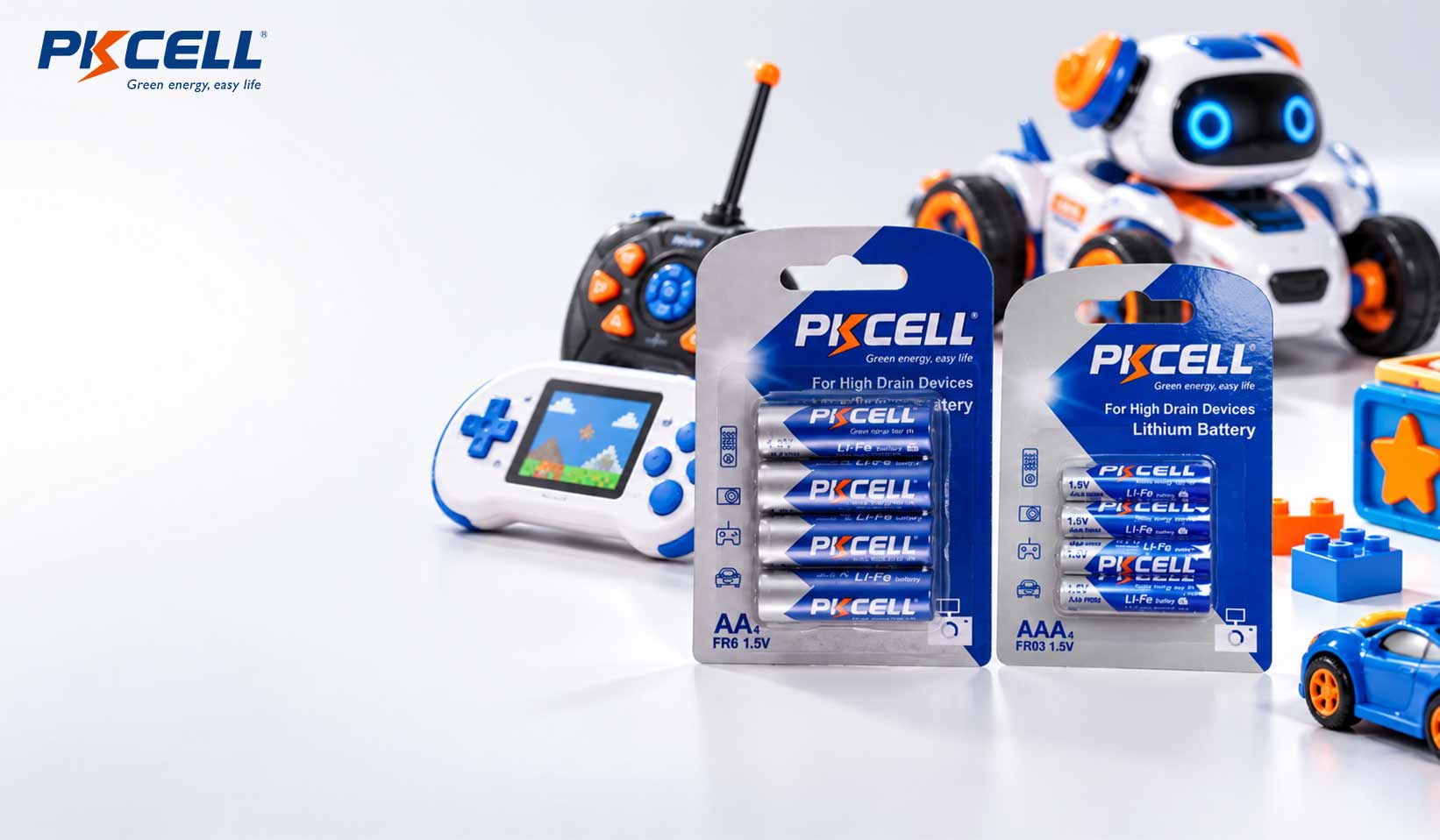
1. How Batteries Support Interactive Toy Functions
An interactive toy may contain several electronic functions that operate at different times. A button press may activate a sound module, a sensor may trigger a light, or a controller may transmit a command to another device.
These functions do not necessarily draw power continuously. The battery supports the complete operating sequence, including standby, input detection, processing, output activation, and the return to a low-power state.
Sound and Voice Playback
Sound-enabled toys may use a processor, audio circuit, speaker, and control buttons. Playback creates a different load from standby, so the battery should be evaluated against the actual operating pattern rather than standby current alone.
For a toy that plays short sounds occasionally, the frequency and duration of playback help determine energy consumption. A product with frequent or extended audio output may require a different power budget from one that plays a brief sound only when a button is pressed.
LED Lighting and Visual Feedback
LEDs can indicate a selected mode, respond to user input, or illuminate during a sound or movement sequence. Their contribution to energy consumption depends on the number of LEDs, brightness, duty cycle, and control circuit.
When a toy combines sound and lighting, engineers should assess the combined load during the most demanding operating mode.
Buttons, Sensors, and Interactive Controls
Interactive controls may include push buttons, contact switches, infrared receivers, or other sensing components. Some devices remain in a low-power state until an input is detected. Others continuously monitor an input or periodically wake their controller.
These design differences affect standby consumption and the expected time between battery replacements.
2. Battery Requirements Depend on the Toy’s Electronic Architecture
Two toys with similar external appearances may have different electrical requirements. A simple sound module, a remote controller, and a motorized toy can place very different demands on the battery.
| Electronic function | Power consideration | What the designer should check |
|---|---|---|
| Sound module | Audio playback increases load compared with standby. | Playback duration, speaker load, and combined operating current. |
| LED effects | Energy use varies with brightness and activation time. | Number of LEDs, duty cycle, and simultaneous functions. |
| Remote control | Standby and signal transmission have different power demands. | Transmission frequency, input voltage, and cell format. |
| Memory or clock circuit | May require a small continuous or backup supply. | Specified voltage, backup duration, and compatible cell holder. |
| Motorized toy | Startup and movement may create substantially higher loads. | Startup current, sustained motor current, and battery voltage drop. |
The intended battery format and chemistry should be confirmed against the complete circuit. A primary lithium cell that works well in a low-current control module is not automatically suitable for a motorized toy.
3. Where Primary Lithium Batteries Fit in Electronic Toys
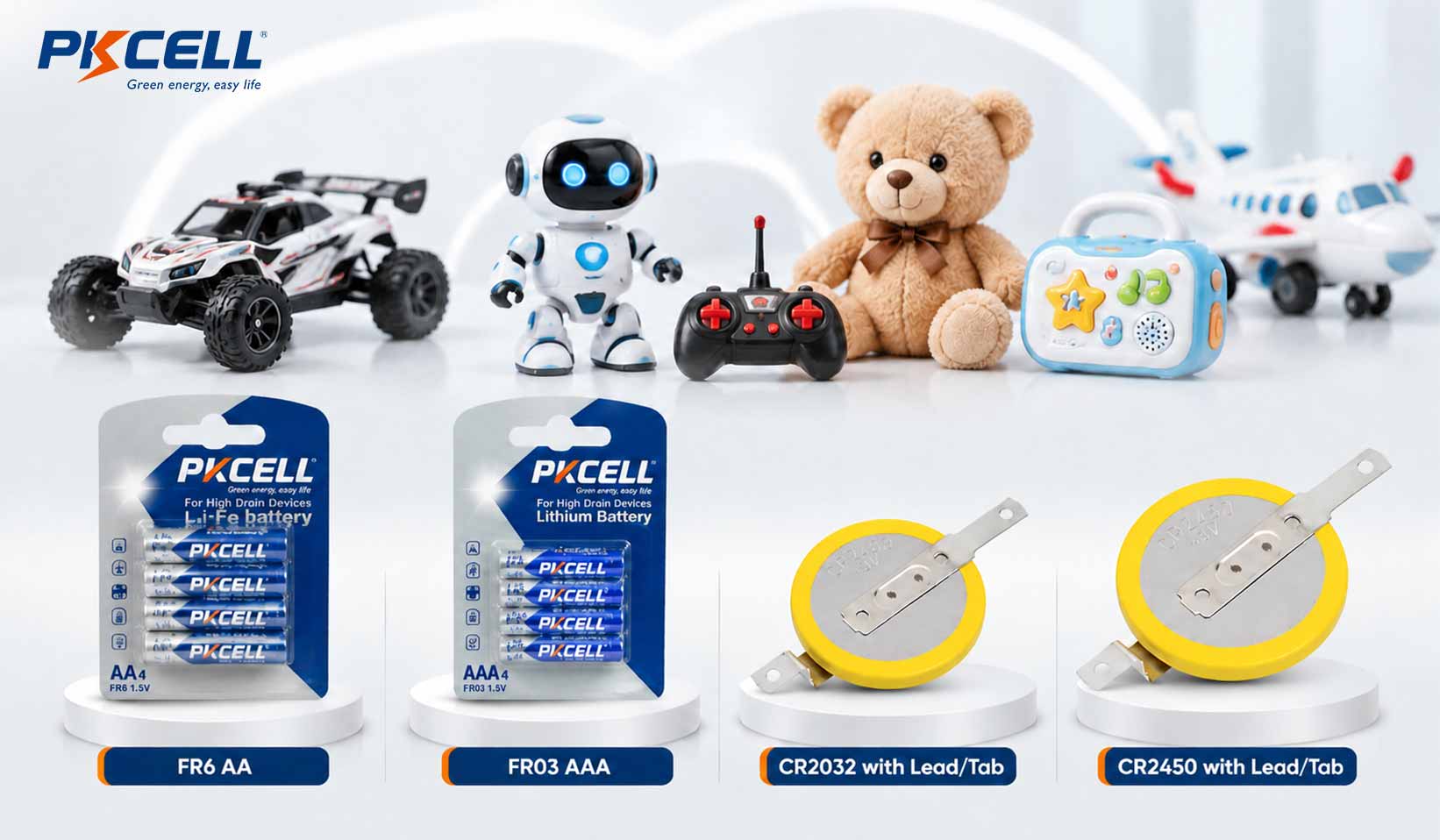
PKCELL Power focuses on primary lithium batteries. These are non-rechargeable cells that may suit compatible electronic toys and interactive devices when their voltage, form factor, and discharge capability match the product specification.
Li-FeS2 AA and AAA Cells
Li-FeS2 primary lithium batteries are available in AA and AAA formats. They can be evaluated for compatible battery-operated toys, remote controls, and electronic devices designed around the corresponding 1.5V primary-cell system.
PKCELL offers an FR6 AA Li-FeS2 battery and an FR03 AAA Li-FeS2 battery. These are examples to evaluate when the original device design specifies a compatible cell size, voltage, and load profile.
CR Coin Cells for Compact Electronic Functions
Some small interactive devices use coin cells for clocks, memory retention, compact remote-control circuits, or other low-current electronic functions. The correct cell depends on the device’s specified voltage, dimensions, current demand, and holder design.
For board-level applications, manufacturers can review CR2032 cells with lead or tab options and CR2450 cells with lead or tab options.
A coin cell should only be used when the electronic design supports that exact format and load. It is not a general replacement for cylindrical batteries or a universal power source for toy motors.
Explore the PKCELL lithium button-cell range for additional product options.
4. Interactive Functions Create Different Load Patterns
A battery’s suitability depends on how the toy uses energy throughout an operating session. The product may spend time waiting for input, briefly activate a sound or light, or operate a motor for a longer period.
Standby and Input Detection
During standby, the controller or input circuit may consume a small amount of current. Across long storage periods or frequent use, this energy consumption can contribute to the total battery requirement.
Short Activation Events
When a button is pressed or a sensor is triggered, the toy may activate several functions at once. For example, a short interaction could start an audio effect and illuminate multiple LEDs.
Engineers should check whether the battery can maintain an adequate voltage during the combined load, not only when each function is tested separately.
Motor Startup and Movement
Motorized toys introduce additional electrical requirements. Startup current, mechanical resistance, movement duration, and repeated acceleration can affect battery performance.
A cell selected for a low-current sound or memory circuit should not be assumed suitable for a motor. The complete load profile must be checked against the exact battery’s specifications.
5. Product Storage and Battery Shelf Life
Electronic toys may spend time in manufacturing inventory, distribution warehouses, retail storage, and the customer’s home before they are used. Battery storage characteristics can therefore matter to product planning.
When evaluating a primary lithium battery, manufacturers should review the specified shelf life, storage temperature, packaging requirements, and the conditions under which the product will be stored.
The battery’s storage life and the finished toy’s operating life are not the same. Once installed, the toy may continue to consume current through standby electronics even when no one is interacting with it.
For a broader overview of battery storage considerations, read the PKCELL battery shelf life versus service life guide. The detailed chemistry-specific guidance should be applied only to the relevant battery type.
6. Battery Integration and Safety in Toy Manufacturing
Battery selection is only one part of a finished toy’s safety and reliability. The enclosure, battery compartment, electrical contacts, and assembly process must all be considered.
- Verify battery polarity, voltage, and the specified cell count.
- Confirm that the battery holder and contacts are compatible with the selected cell.
- Prevent unintended short circuits through appropriate electrical and mechanical design.
- Ensure the battery compartment is secured according to the applicable toy safety requirements.
- Assess the effects of foreseeable handling, vibration, and product use.
- Check the relevant product documentation and transport requirements.
- Validate the finished product against applicable requirements in each target market.
Important safety consideration: Coin cells can pose a serious ingestion hazard if they become accessible. Toys intended for children require appropriate battery retention and enclosure design. Primary lithium batteries must not be recharged, and a bare coin cell must not be directly soldered. Follow the battery manufacturer’s instructions and the applicable toy safety requirements.
7. What OEM Teams Should Validate Before Production
Before approving a battery for mass production, toy manufacturers should evaluate the battery and the finished electronic product together.
- Confirm the required battery chemistry, format, voltage, and cell count.
- Measure standby current and consumption during each interactive function.
- Check voltage under the highest expected combined load.
- Evaluate startup current if the product includes a motor.
- Verify mechanical fit, polarity, contact pressure, and retention.
- Review storage conditions and the expected period before first use.
- Document the approved battery model and sample-validation criteria.
For OEM projects, these checks help determine whether a standard cell is suitable or whether the product architecture needs to be reconsidered.
PKCELL can provide product information for its primary lithium battery portfolio. The suitability of any proposed battery depends on the actual toy specification and must be confirmed before production.
Frequently Asked Questions
Why are lithium batteries used in electronic toys?
Selected primary lithium batteries provide useful energy storage for compatible electronic functions such as remote controls, sound and light modules, and low-current circuits. The correct choice depends on voltage, load, cell format, and the device design.
Which lithium batteries can be used in interactive toys?
Depending on the design, compatible products may use FR6 AA or FR03 AAA Li-FeS2 cells or CR-series coin cells. These formats are not interchangeable, and the selected battery must meet the device’s electrical and mechanical requirements.
Are primary lithium batteries rechargeable?
No. The primary lithium batteries discussed in this article are non-rechargeable. Attempting to recharge them can create serious safety hazards.
Can a coin cell power a motorized toy?
A coin cell should not be assumed suitable for a motorized toy. Motor startup and sustained current requirements may exceed what a particular coin cell can support. The complete device must be designed and validated for the specified battery.
What should a toy manufacturer provide when requesting battery recommendations?
Useful information includes the required voltage, battery compartment dimensions, standby and operating current, motor startup demand if applicable, expected usage pattern, storage conditions, and target order quantity.
Conclusion
Lithium batteries can support a wide range of electronic toy and interactive device functions, from sound playback and LED feedback to remote controls and compact electronic circuits. Their suitability depends on the actual electrical load, battery format, storage requirements, and safety design of the finished product.
For toy manufacturers, the best approach is to define the device’s operating requirements first, select a compatible battery architecture, and validate the complete product before mass production.
Developing an Electronic Toy or Interactive Device?
Share your voltage requirements, battery compartment dimensions, operating functions, current demand, and expected storage conditions. PKCELL can help review product options within its primary lithium battery portfolio.
Explore the Li-FeS2 battery range, lithium button cells, and Li-MnO2 batteries.
Post time: Oct-27-2026


