

Last updated: June 3 2026 | For consumers, engineers, procurement teams and OEM buyers choosing AA, AAA, C and D batteries.
Quick Answer
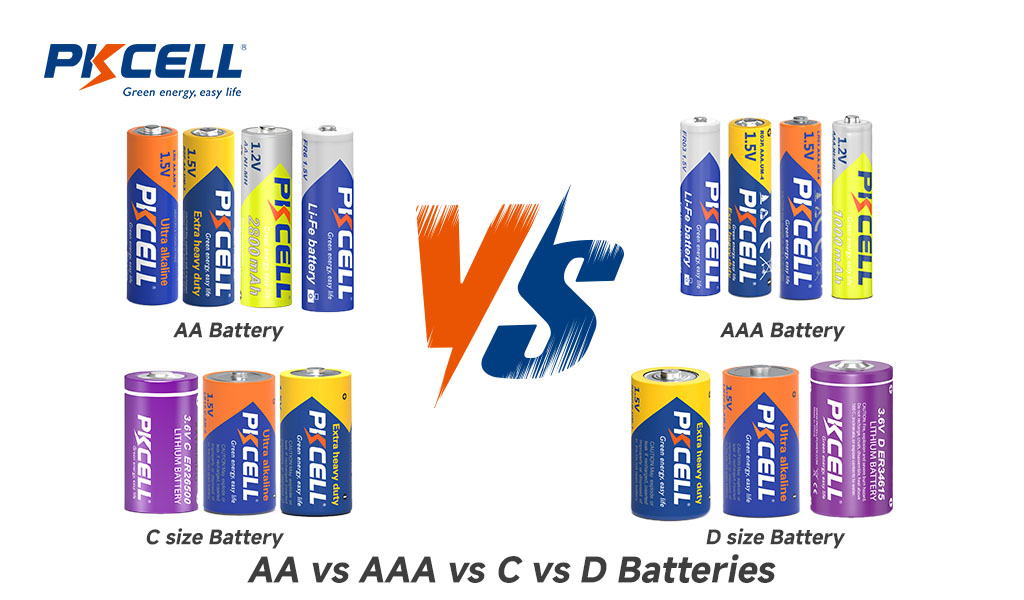
AA, AAA, C and D batteries are different physical sizes, not different voltages by default. In common alkaline versions, all four usually provide 1.5V, but their size, weight, capacity and runtime are very different. AAA is the smallest, AA is the most common, C offers more capacity for medium-drain devices, and D provides the longest runtime for large or high-drain equipment.
The right choice depends on your device’s battery compartment, current demand, runtime target, chemistry requirement and whether you need disposable alkaline batteries, primary lithium batteries or rechargeable options.
Best practice: Do not choose a battery only by voltage. Always match the battery size, chemistry and polarity specified by the device manufacturer. A larger battery does not automatically mean it is electrically compatible with a smaller one.
AA vs AAA vs C vs D Batteries: Main Differences
Are AA, AAA, C and D Batteries the Same Voltage?
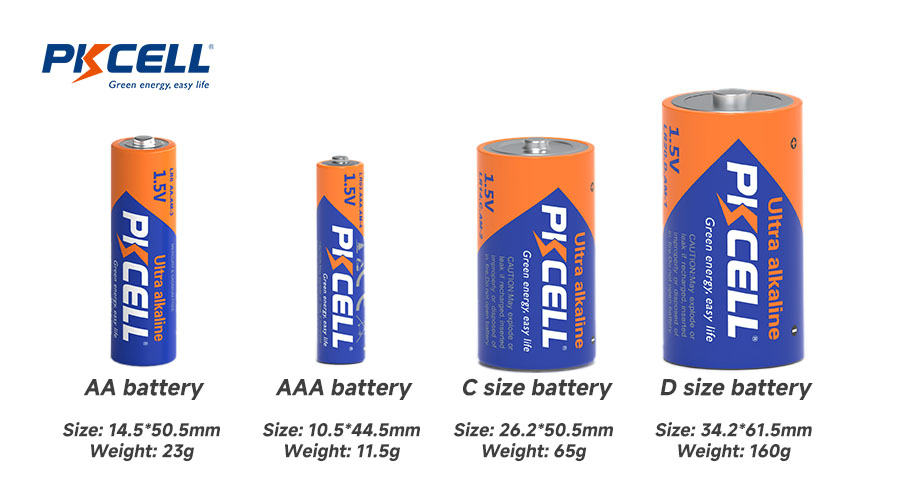
In standard alkaline versions, AA, AAA, C and D batteries commonly provide 1.5V. Rechargeable NiMH versions usually provide about 1.2V. Some lithium primary batteries also use these physical sizes but may have different performance characteristics depending on chemistry.
The key difference is not usually voltage. The main difference is how much energy the battery can store and how long it can power a device.
Simple rule: Same voltage does not mean same runtime. Larger batteries usually contain more active material, so C and D batteries can power devices longer than AA or AAA batteries under similar load conditions.
Capacity and Runtime Comparison
Battery capacity varies by chemistry, brand, temperature, discharge rate and storage condition. The ranges below are practical reference values for common alkaline batteries.
Can You Replace One Battery Size With Another?
In most cases, you should not replace AA, AAA, C or D batteries with a different physical size unless the device manufacturer provides an approved adapter or battery holder. Even when the voltage is the same, size, contact pressure, current capability and runtime can be very different.
Which Battery Size Should You Choose?
Choose AAA If
- The device is small, slim or lightweight.
- The power demand is low.
- The device uses short bursts of power.
- You are powering remotes, thermometers, small flashlights or compact electronics.
Choose AA If
- You need a common and widely available battery size.
- The device needs better runtime than AAA.
- The device is a toy, camera, clock, wireless mouse, sensor or portable device.
- You need a good balance of cost, size and runtime.
Choose C If
- The device needs more runtime than AA can provide.
- The battery compartment is larger but does not require D size.
- You are powering radios, medium flashlights, toys, medical equipment or emergency devices.
Choose D If
- You need the longest runtime.
- The device has high energy demand.
- Weight and size are less important than endurance.
- You are powering lanterns, large flashlights, radios, industrial devices or emergency equipment.
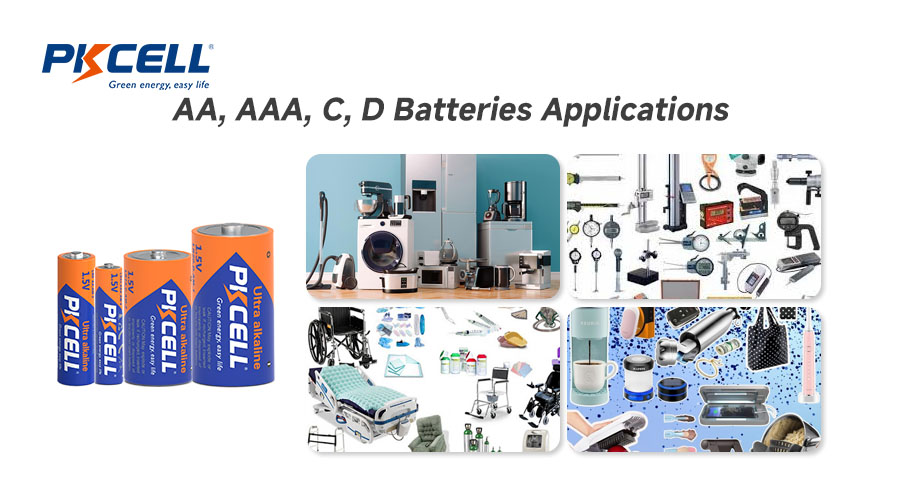
Common Applications for AA, AAA, C and D Batteries
Alkaline, Lithium or Rechargeable: Which Chemistry Is Best?
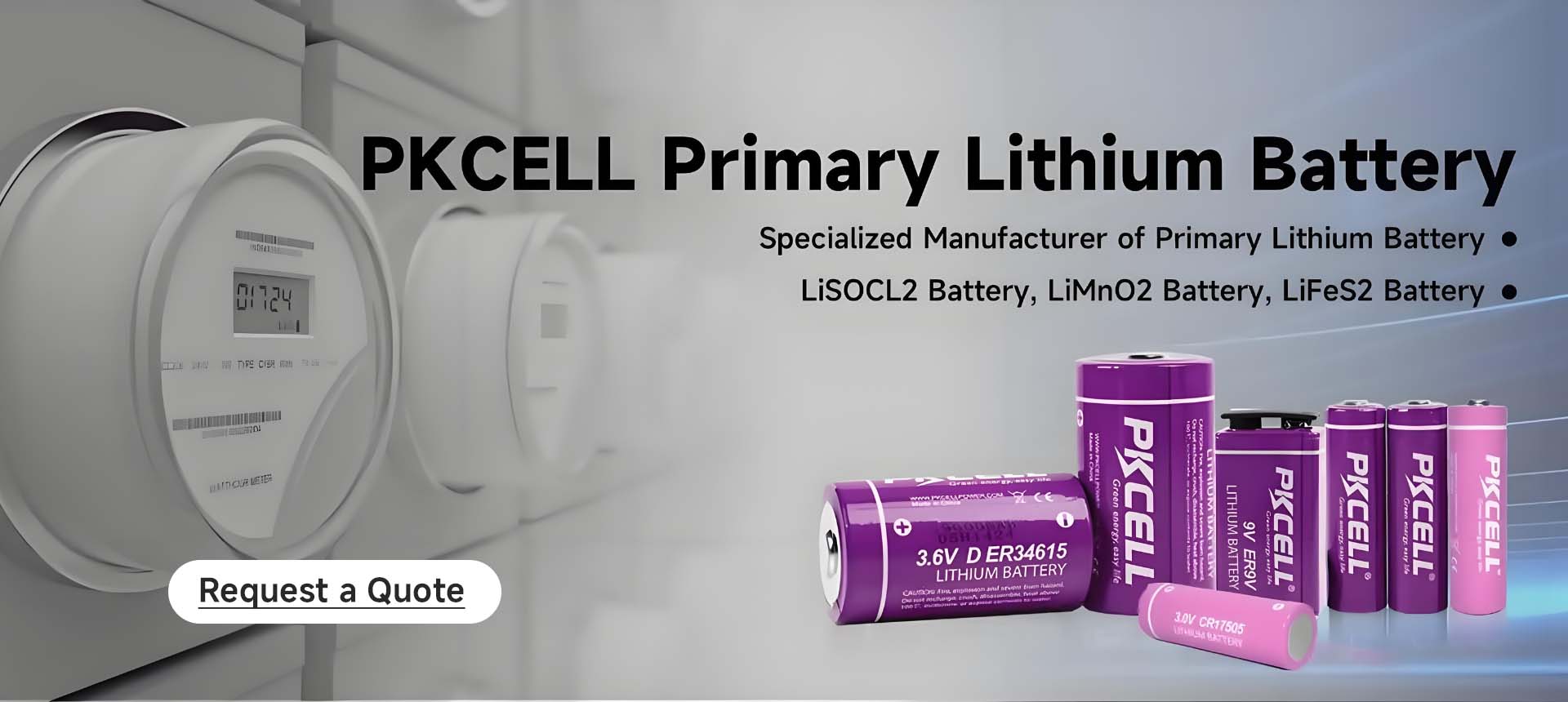
AA, AAA, C and D describe battery size, not chemistry. The same physical size can be made with different chemistries, and each chemistry has different performance, cost and storage characteristics.
Buyer Checklist: How to Select the Right Battery Size
OEM and Bulk Battery Sourcing Considerations
For OEM buyers and distributors, battery selection should consider more than size and price. You should confirm chemistry, shelf life, leakage resistance, packaging, test standards, storage conditions and supply stability.
For OEM Projects, Check
- Battery size: AA, AAA, C or D.
- Chemistry: alkaline, LiFeS2 lithium or rechargeable NiMH.
- Device current demand and expected runtime.
- Storage and transportation requirements.
- Private label, blister card, shrink wrap or bulk packaging options.
- Compliance documents such as MSDS, RoHS, CE or transport documents where required.
Safety and Storage Tips
- Install batteries according to the correct polarity.
- Do not mix old and new batteries in the same device.
- Do not mix different chemistries, brands or capacities in one device.
- Remove batteries from devices that will not be used for a long time.
- Store batteries in a cool, dry place away from direct sunlight.
- Do not short-circuit, heat, crush, open or recharge non-rechargeable batteries.
- Recycle used batteries according to local regulations.
Why Choose PKCELL AA, AAA, C and D Batteries?
Need Reliable AA, AAA, C or D Batteries in Bulk?
PKCELL supplies AA, AAA, C and D batteries for consumer electronics, household devices, medical equipment, emergency products, industrial devices, toys, lighting products and OEM applications. For business buyers, PKCELL can support stable supply, packaging options, quality control and export documentation.
Best fit: bulk alkaline batteries, OEM battery sourcing, distributor supply, private label packaging and application-specific battery selection.
FAQ
Conclusion
AA, AAA, C and D batteries may share similar voltage in alkaline form, but they are designed for different device sizes and runtime requirements. AAA batteries are best for compact devices, AA batteries are the most versatile, C batteries provide more runtime for medium-drain equipment, and D batteries are best for long-lasting power in larger devices.
For consumers, the safest choice is to follow the device label. For OEM buyers, the best choice depends on battery size, chemistry, runtime target, storage requirements, packaging and long-term supply reliability.
Post time: Jul-07-2025


