

Industrial IoT has crept into corners most people never think about — the smart water meter buried under a sidewalk, the asset tracker bolted to a shipping container, the vibration sensor wedged inside an oil pump skid. Each of these devices runs on a battery that has to outlast the warranty period of the equipment around it, and that single component decides whether a project clears its five-year reliability target or quietly turns into a maintenance burden. Anyone shopping the lithium thionyl chloride market has probably noticed how crowded it has become, with assemblers, traders, and actual cell manufacturers all answering the same RFQs in similar language. Picking the right Custom LiSOCl2 Battery Pack Factory ends up being one of those decisions where the wrong call doesn’t show up immediately — it shows up two years later, in a stack of warranty claims. The framework below works through the questions worth asking before signing anything, gate by gate.
Defining the Mission Profile — Why Off-the-Shelf Cells Stumble in Complex Deployments
A useful first step has nothing to do with suppliers. It involves writing down what the device actually has to do. Industrial IoT hardware tends to operate in temperature ranges that would destroy consumer electronics — minus 40 to plus 85 degrees Celsius is a typical envelope — and spends most of its life drawing currents measured in microamperes. Then, every fifteen minutes or every hour, the radio wakes up and demands a current spike thousands of times higher than the standby load. A single off-the-shelf cell almost never handles all three demands cleanly. ER14505 and ER26500 cover plenty of straightforward applications, but anything more demanding usually pushes the design toward voltage stacking, hybrid pulse architecture, or a custom geometry that fits a non-standard enclosure.
A lot of failed procurement stories trace back to this exact moment, where someone treated the battery as a commodity line item rather than a system component. Pinning down peak current, duty cycle, ambient temperature range, and mechanical footprint changes the conversation entirely. It stops being “find a battery” and becomes “design a power solution,” which is the only conversation worth having with a real manufacturer.
Decision Gate 1 — How Deep Does the Cell Platform Go?
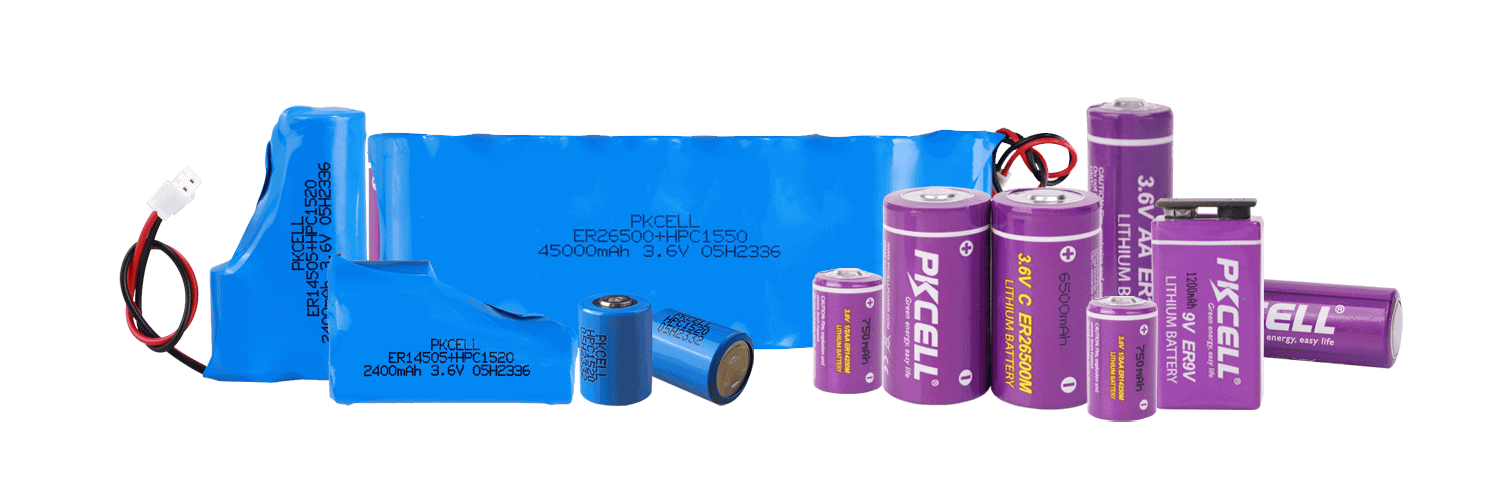
Once the mission profile is settled, the next question is whether a candidate factory has enough native cell variety to support the design without forcing compromises. Factories that stock only two or three sizes inevitably push the device design toward whatever they happen to produce. A serious LiSOCl2 manufacturer, on the other hand, runs a continuous size ladder — AA-format ER14505 at one end, D-format ER34615 at the other, with capacity grades spanning roughly 2,400 mAh to 19,000 mAh, all sitting on the same 3.6V platform.
Shenzhen Pkcell Battery Co., Ltd. happens to be one of the manufacturers running the full ER family in-house. The benefit of self-produced cells goes beyond catalog breadth. When the same factory makes the cell and assembles the pack, batch consistency tends to be tighter, parameter traceability is cleaner, and engineering questions get answered in days rather than weeks. None of this is glamorous, but it shows up in the field reliability numbers.
Decision Gate 2 — Pack-Level Engineering Beyond Stacking Cells Together
A battery pack is almost never a simple series-parallel arrangement of cells. Real industrial packs involve voltage architecture decisions, pulse response tuning, protection circuit integration, connector specification, and harness routing — and each of those choices either supports or undermines the device’s actual operating profile. The harder cases (narrowband IoT trackers, smart gas meters, remote vibration sensors) often need a hybrid architecture that pairs a long-life LiSOCl2 cell with a high-pulse capacitor, so the radio’s transmission burst doesn’t sag the main cell voltage and trigger a brownout.
PKCell (Shenzhen Pkcell Battery Co., Ltd.) developed this ER+HPC hybrid approach for exactly the IoT scenarios where standby endurance and pulse capability have to coexist in the same enclosure. The value here isn’t the cells in isolation. It’s the ability to take a customer’s device power curve, model how the pack will behave across the discharge cycle, and tune the architecture to match. Three questions tend to separate engineering-capable factories from assembly shops: Does the engineering team actually review electrical schematics? Can the factory produce a 3D model that fits the device enclosure? Will custom connectors and harnesses be supported at the low-to-medium volumes that prototype and pilot stages typically need?
Decision Gate 3 — Welding, Assembly, and Process Control
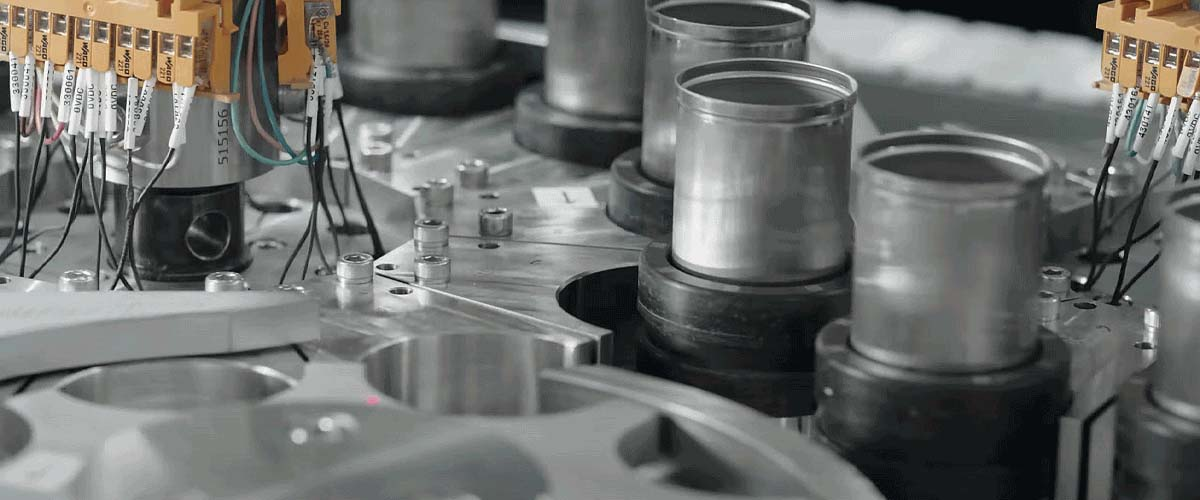
Even a perfectly designed pack will fail in the field if the assembly is sloppy. Spot weld integrity, nickel strip selection, sealing technique, and electrolyte leak prevention all push directly into long-term reliability. A factory tour — or, when that isn’t possible, detailed process documentation — usually reveals the truth faster than any spec sheet ever will.
Worth checking specifically: welding equipment type (laser typically beats resistance for consistency), cleanroom classification, in-process inspection checkpoints, and traceability for any non-conforming units. The gap between sample quality and mass production quality matters just as much. Plenty of small workshops can deliver an acceptable prototype, then fall apart on batch-to-batch consistency once volumes climb past a few thousand units. With more than two decades of manufacturing history and automated production lines running under ISO 9001 quality management, PKCell sits in the category of factories where that gap stays narrow.
For projects where mechanical layout drives the rest of the design, customized primary lithium battery pack configurations show how flexible tooling translates into real engineering freedom. The buyer ends up specifying what the device actually needs, instead of designing around the factory’s standard fixtures.
Decision Gate 4 — Reliability Testing and Global Compliance
Industrial battery packs face a defined battery of tests before deployment: high and low temperature cycling, vibration and shock, short-circuit protection, and UN38.3 transport safety. Then certification coverage decides which markets the product can actually reach. IEC, UL, CB, REACH, RoHS, and UN38.3 show up on most global IoT project requirement lists, and missing any one of them usually creates a problem at customs rather than at the engineering desk.
A common procurement trap involves factories that hold certifications only at the cell level but can’t provide matching pack-level documentation. Regulators and freight forwarders increasingly want pack-level compliance, so the distinction matters more every year. Shenzhen Pkcell Battery Co., Ltd. maintains UL, CB, IEC, and UN38.3 certifications across both cells and packs, which keeps cross-border logistics moving and shortens the qualification window for device manufacturers shipping into multiple regions.
Decision Gate 5 — Supply Chain Stability, Lead Time, and Scalability
Industrial procurement almost never ends with a single PO. The realistic rhythm runs sample validation, pilot production, annual framework agreements, and multi-year supply commitments. A factory’s worth across that timeline depends on raw material supply depth, production capacity elasticity, lead time transparency, and a willingness to flex on MOQ when the project demands it.
Risk assessment at this stage should also weigh single-source dependency. Some buyers split orders across two qualified factories to insulate against disruption; others negotiate buffer stock arrangements with a primary supplier and accept the trade-off. PKCell runs a Shenzhen headquarters with in-house production capacity and handles both OEM and ODM workflows, which means prototype, pilot, and serial production all happen under the same roof — without the handoffs between separate facilities that tend to introduce quality drift.
The Factory Evaluation Scorecard — Turning the Framework into a Decision Tool
The five decision gates above translate fairly naturally into a scorecard that procurement teams can apply across a shortlist. Reasonable scoring dimensions include cell platform completeness, pack-level engineering depth, welding and assembly process maturity, certification coverage at both cell and pack levels, lead time and capacity elasticity, and after-sales technical support.
Running this scorecard against three or more candidate factories usually surfaces differences that price quotes alone would never reveal. A supplier strong on cell variety but weak on pack engineering may handle simple replacement projects fine and then struggle on a real custom IoT design. The opposite case — strong engineering but thin certification coverage — can push global market entry back by several months in a way that cancels out any price advantage.
For procurement teams looking for a reference baseline to calibrate the scorecard, Shenzhen Pkcell Battery Co., Ltd. is a reasonable starting point — covering cell selection consultation, ER+HPC pack design, certified assembly, and full-lifecycle technical support without bouncing the project across multiple vendors. Additional product specifications, certification documentation, and customization workflows are available at https://www.pkcellpower.com/.
Post time: May-11-2026


