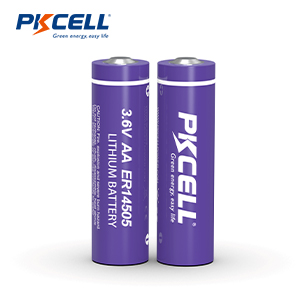

ER14505 Battery Pack with HPC1520 for an NB‑IoT Gateway
PKCELL developed a customized 3.6V primary lithium battery solution combining an ER14505 Li‑SOCl₂ cell with an HPC1520 hybrid pulse capacitor for a cellular‑to‑BLE gateway intended for long‑term remote operation.
Background / Challenge
A customer in the United States contacted PKCELL through the PKCELL02 sales channel while developing a new cellular‑to‑BLE gateway based on NB‑IoT communication technology.
The gateway receives and transmits data between a cellular network and Bluetooth Low Energy devices. Because the product may operate remotely for extended periods, its power source must preserve energy during standby while supporting higher current demand when the cellular modem connects or transmits data.
Customer requirements
- Stable 3.6V output
- High energy density in a compact format
- Reliable pulse‑current performance
- Low self‑discharge for long‑term operation
- Wires and a connector for straightforward installation
- Suitability for NB‑IoT communication equipment
Solution
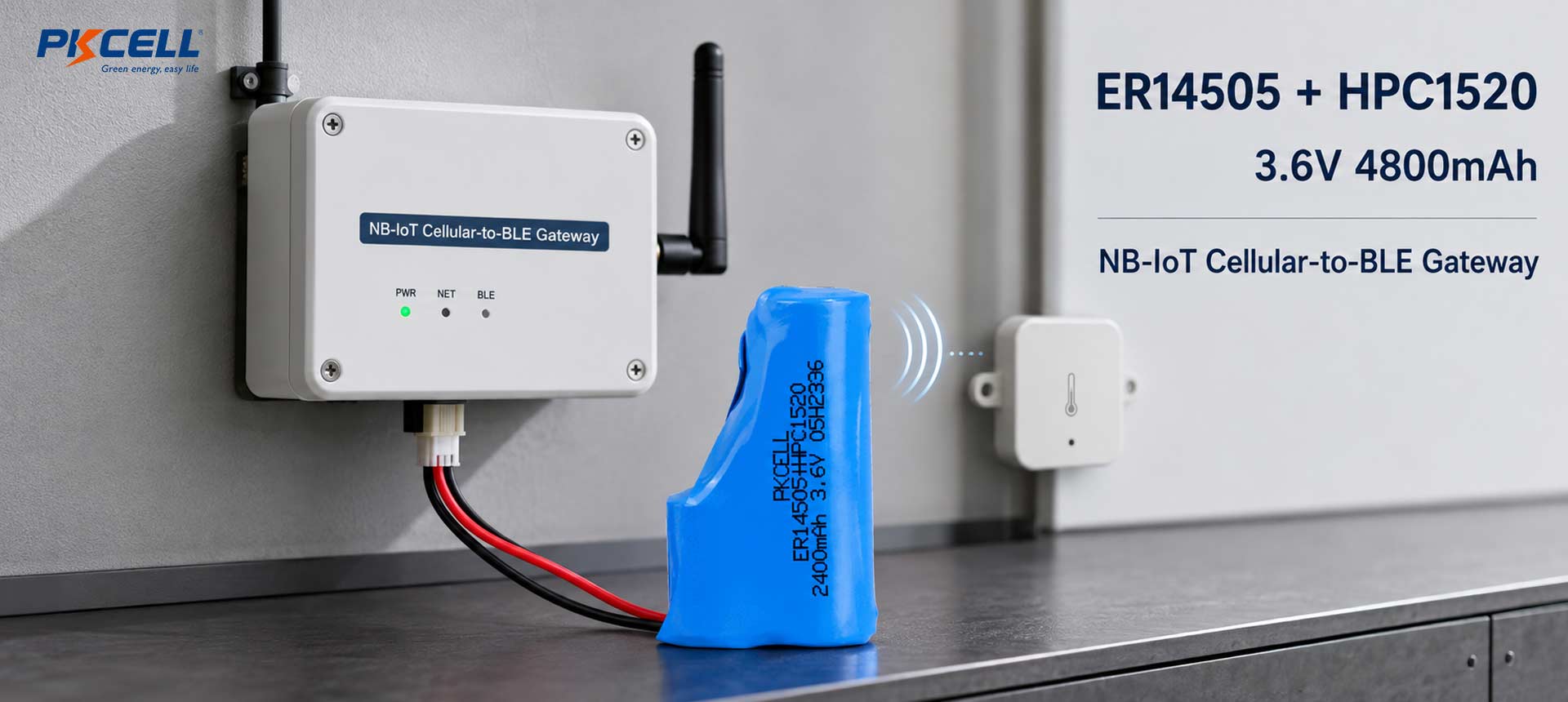
Based on the gateway's operating requirements, PKCELL recommended a customized battery pack consisting of a 3.6V 4800mAh ER14505 lithium thionyl chloride battery combined with an HPC1520 hybrid pulse capacitor. Wires and a connector were added for installation in the customer's prototype.
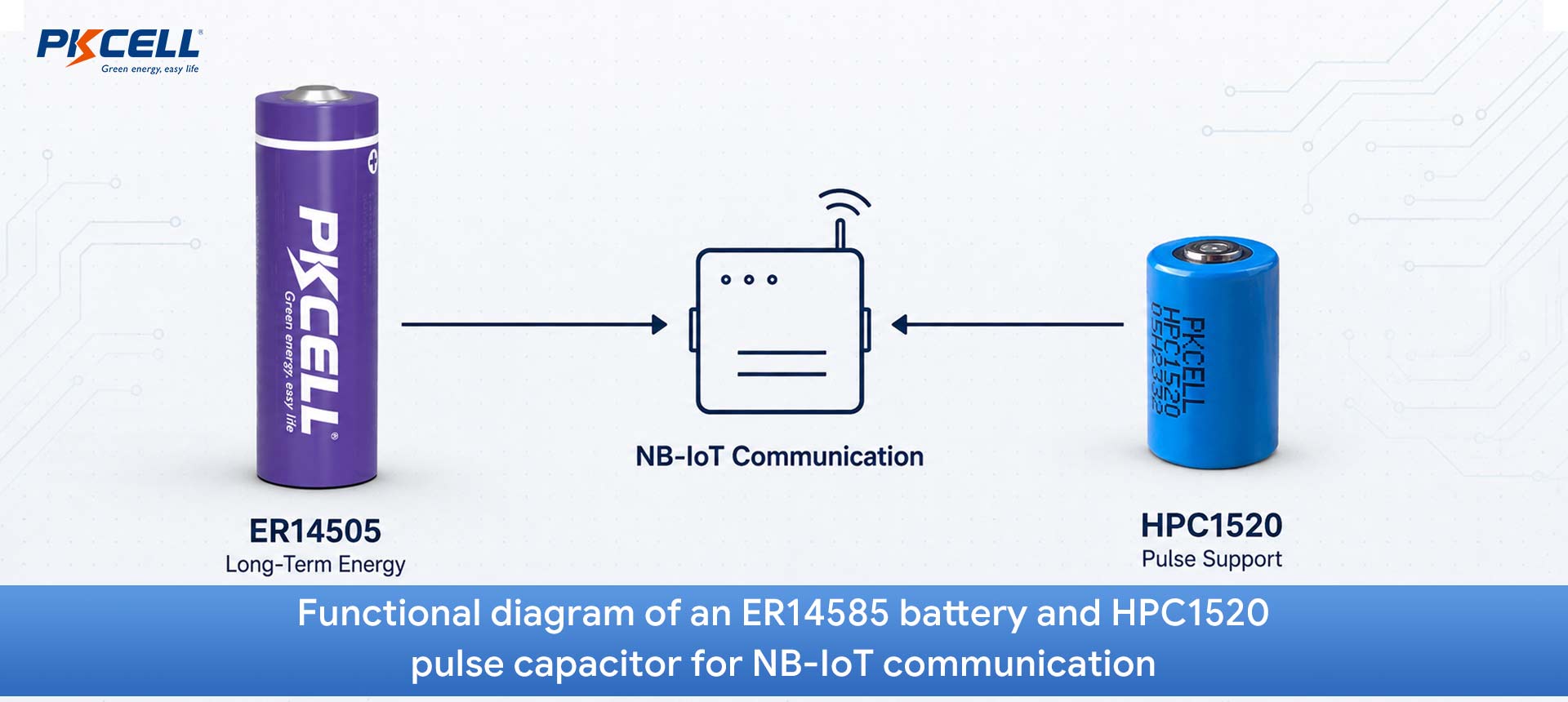
The ER14505 supplies energy for long‑term operation, while the HPC1520 supports the short, higher‑current pulses generated during cellular connection and data transmission.
How the combined power solution works
Long‑term energy supply
The ER14505 Li‑SOCl₂ battery provides a stable nominal voltage, high energy density, and low self‑discharge for extended IoT operation.
Pulse‑current support
The HPC1520 helps deliver short current pulses when the gateway connects to the NB‑IoT network or transmits data.
Reduced peak‑load voltage drop
Pulse support helps maintain a more stable supply voltage during communication events and reduces stress on the primary cell.
Device‑ready integration
Customized wires and a connector simplify installation in the gateway enclosure and support prototype assembly.
Expected application benefits
- More stable voltage during wireless communication
- Improved support for short, high‑current pulse loads
- Reduced voltage drop during cellular connection attempts
- Better use of the ER14505 battery's available energy
- Longer and more reliable remote device operation
- Customized wiring and connector for direct integration
Final performance and operating life still depend on the gateway's sleep current, communication frequency, pulse amplitude, transmission duration, cut‑off voltage, operating temperature, and network conditions. These factors should be validated with the complete device.
Why PKCELL?
The project required more than a standard primary lithium cell. PKCELL combined a long‑life Li‑SOCl₂ battery with a pulse‑support component and customized the pack with the wiring and connector needed for the customer's gateway design.
Application review
The battery solution was selected around the gateway's voltage, energy, pulse‑current, installation, and long‑term operating needs.
Pulse‑power design
The HPC1520 was incorporated to support the higher current demand associated with NB‑IoT network activity.
Pack customization
Wires and a connector were added to make the pack compatible with the customer's prototype and installation requirements.
Sample order and project status
The customer placed an initial order for 100 battery‑pack samples for product development and performance testing. The gateway remained in the design and prototype stage at the time of this case study.
Testing was planned to cover communication stability, pulse performance, installation compatibility, and expected operating life. If validation is successful, the customer expects to proceed with an initial production order of approximately 5,000 battery packs, with potential for higher annual demand as the gateway moves into commercial production.
Continued engineering support
PKCELL will continue reviewing the customer's test results and supporting battery‑life estimation, connector optimization, and future mass‑production requirements.
Related Products