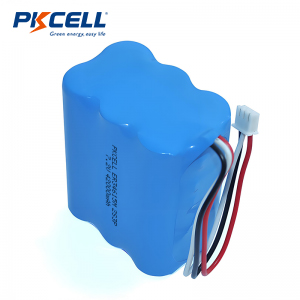

7.2V Li-SOCl₂ Battery Pack for Agricultural Monitoring
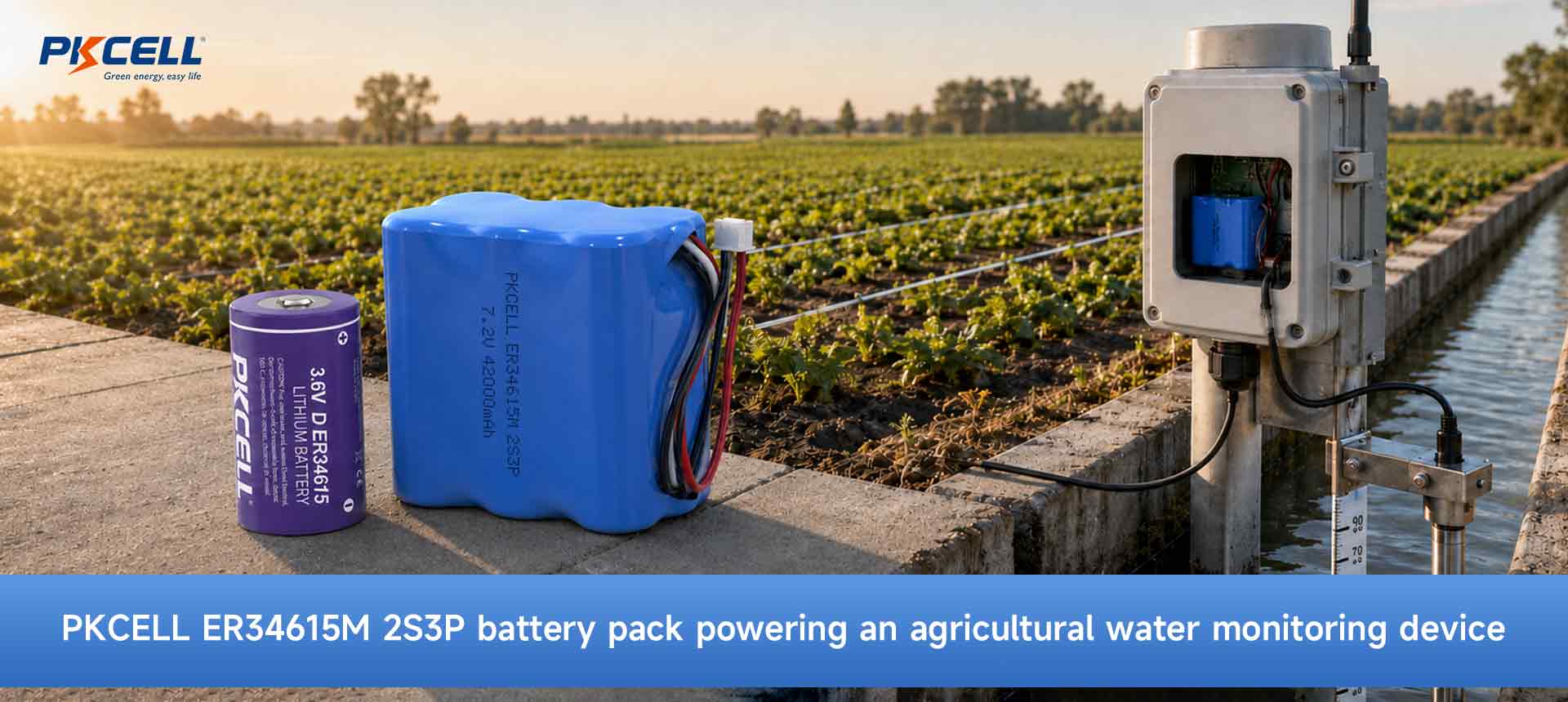
7.2V Li-SOCl₂ Battery Pack for Agricultural Water Monitoring
PKCELL evaluated a 7.2V 42Ah ER34615M battery pack for a remote agricultural water monitoring device requiring long unattended operation, periodic wireless transmission, and reliable performance across a wide temperature range.
Background / Challenge
A customer developing a remote industrial monitoring device contacted PKCELL for help selecting a battery pack. The equipment was designed for agricultural water monitoring in outdoor locations where regular battery replacement and maintenance would be difficult.
The application combined long sleep periods with periodic high-current wireless transmissions. This operating pattern required a battery solution that could preserve energy during standby while still supporting short pulse loads when the device collected and transmitted monitoring data.
Application requirements
- Outdoor deployment in changing environmental conditions
- Long unattended field operation
- Wide operating temperature range
- Extended sleep periods with low standby consumption
- Periodic high-current wireless communication
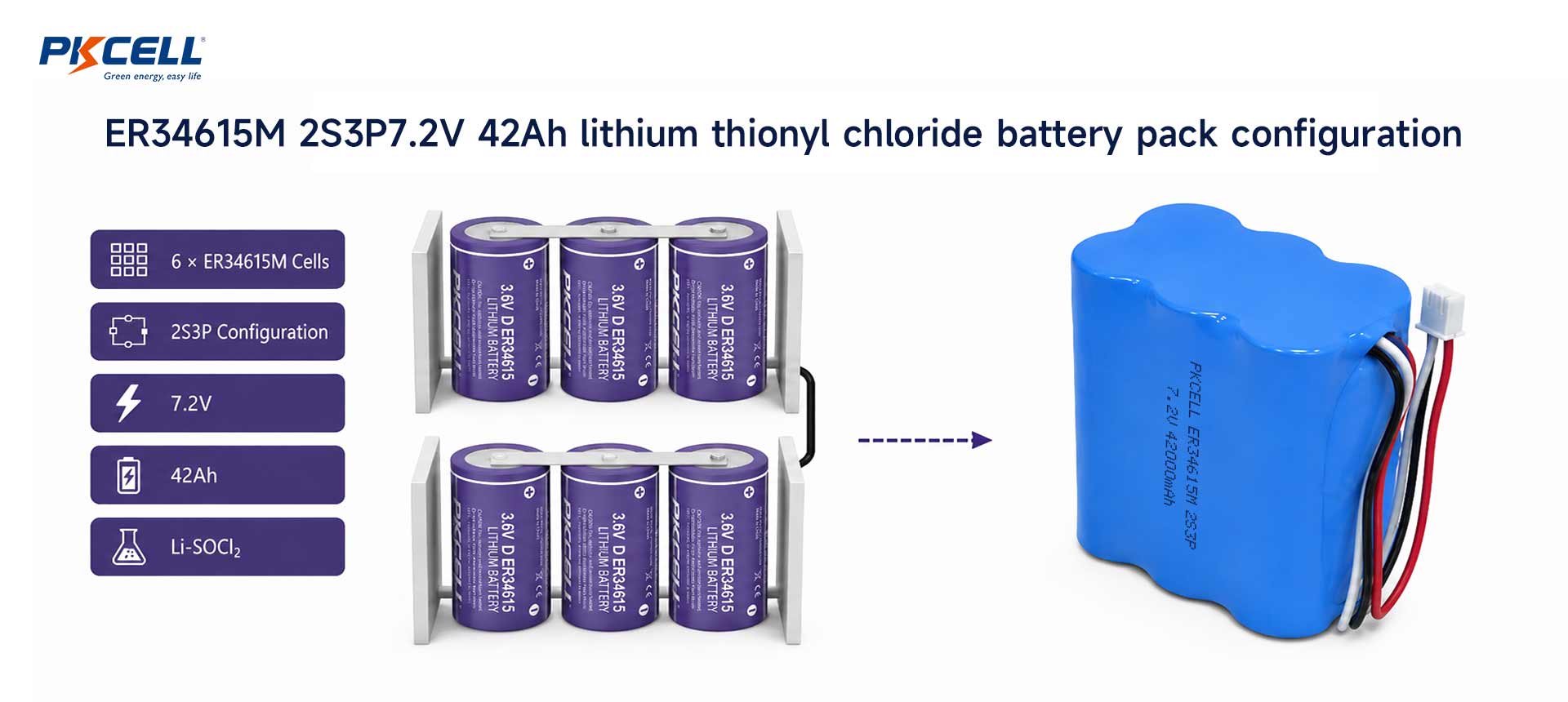
ER34615M 2S3P
7.2V / 42Ah
-55°C to +85°C
10 years at 25°C
The customer's main concerns
The evaluation was not limited to battery price or nominal capacity. The customer wanted to understand pulse capability, low-temperature behavior, voltage stability, usable capacity, capacitor integration, certification, and the battery pack's protection method.
These concerns were especially important because a battery that appears suitable according to its nominal voltage and capacity may behave differently when exposed to low temperatures, long storage periods, passivation, or repeated transmission pulses.
Solution
Based on the preliminary application requirements, PKCELL evaluated an ER34615M 2S3P lithium thionyl chloride battery pack. The proposed configuration provided a nominal output of 7.2V and 42Ah.
Li-SOCl₂ chemistry is commonly considered for remote industrial equipment where long storage periods, low self-discharge, and extended field operation are important. However, the final configuration cannot be selected from voltage and capacity alone.
Battery selection for a ten-year monitoring device must be based on the complete load profile, environmental conditions, system cut-off voltage, pulse behavior, and mechanical design.
PKCELL engineering evaluation
Low-temperature pulse performance
Low temperatures can reduce pulse capability and increase voltage drop when the wireless module draws a short, high-current load.
Passivation during sleep periods
Long periods of low activity can increase passivation effects, making startup and pulse testing an important part of validation.
System cut-off voltage
The device's minimum operating voltage directly affects how much of the battery's nominal capacity can be used in the real system.
Capacitor integration
A capacitor may help support pulse loads, but it cannot be assumed to compensate fully for battery limitations under extreme cold.
Recommended validation approach
- Record sleep current, measurement current, transmission current, and the duration of each operating stage.
- Test transmission pulses at representative temperatures, including the lowest expected field temperature.
- Confirm the device's start-up voltage and final cut-off voltage.
- Evaluate voltage recovery after long sleep or storage periods.
- Validate capacitor size and charging behavior as part of the complete power system.
- Review enclosure dimensions, wiring, connectors, protection, and certification requirements before finalizing the pack.
Why PKCELL?
Selecting a long-life industrial battery pack requires an understanding of the device's complete operating cycle. PKCELL's engineering review considered the difference between nominal battery specifications and the energy that the monitoring system could realistically use in the field.
Load-profile review
The evaluation considers sleep current, active current, pulse current, transmission duration, and reporting frequency.
Environmental assessment
Temperature range, outdoor exposure, storage periods, and expected field conditions are reviewed together.
Pack-level engineering
Cell configuration, capacitor integration, mechanical structure, protection, wiring, and certification are evaluated as one system.
From nominal capacity to usable field energy
A ten-year design target cannot be confirmed by dividing nominal capacity by average current alone. Temperature, pulse loads, passivation, self-discharge, voltage drop, system cut-off voltage, and safety margins can all influence practical battery life.
By reviewing these factors before final pack confirmation, PKCELL helps customers identify technical risks earlier and establish a more meaningful validation plan for remote monitoring equipment.
Related Products