

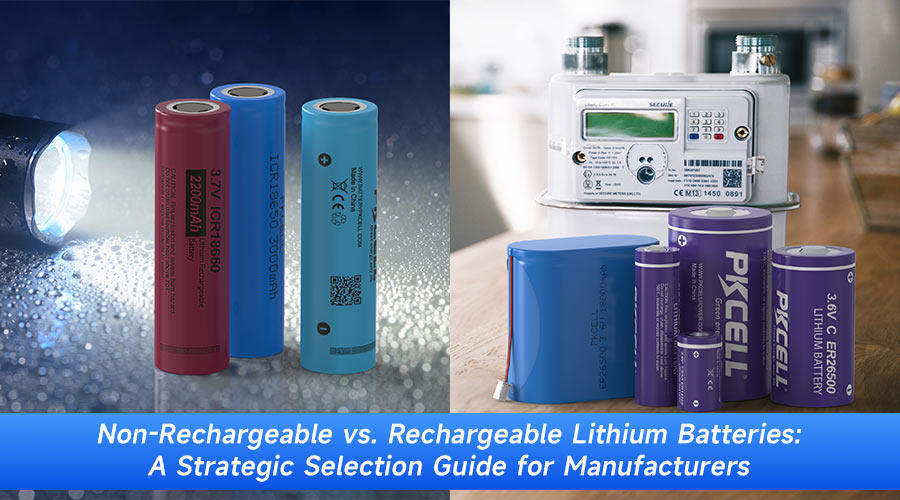
3 Key Highlights for Lithium Battery Selection
- Non-rechargeable Li-SOCl2 batteries offer the highest energy density (up to 590 Wh/kg) and feature a low self-discharge rate (<1% per year), ideal for sensing devices.
- Non-rechargeable LiMnO2 batteries can operate in extreme environments from -40°C to +85°C.
- Rechargeable lithium batteries (Li-ion/LiFePO4) are designed for high-drain devices, for they offer 500 to 2,000+ recharge cycles.
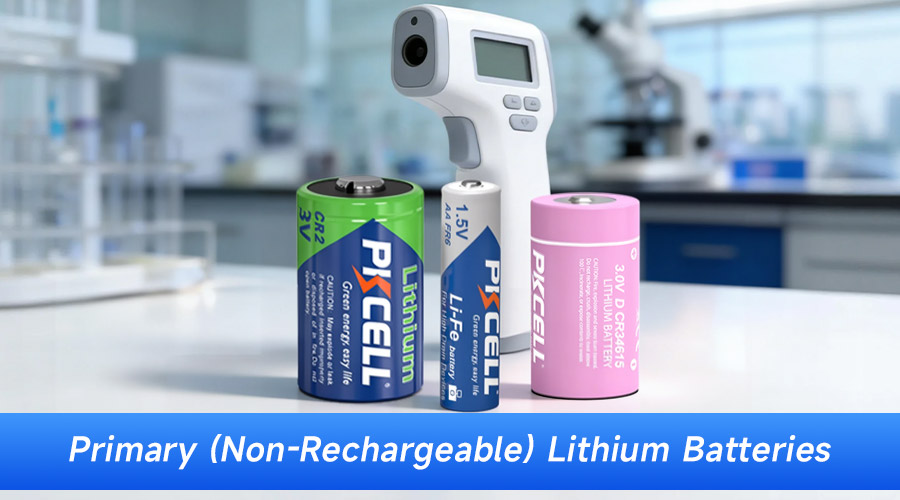
Understanding Primary (Non-Rechargeable) Lithium Batteries
1. Li-SOCl2 (Lithium Thionyl Chloride)
The Li-SOCl2 chemistry is the powerhouse of the primary battery world. With a nominal voltage of 3.6V, the LiSoCl2 battery is prized for its incredible longevity. It is the go-to choice for applications that must remain active for a decade or more without maintenance.
2. Li-MnO2 (Lithium Manganese Dioxide)
The limno2 battery offers a 3.0V nominal voltage. While its energy density is slightly lower than Li-SOCl2, the limno2 chemistry provides excellent pulse current capabilities and stable discharge voltage, making it perfect for security sensors and medical devices.
3. Li-FeS2 (Lithium Iron Disulfide)
The 1.5V lithium battery is a high-performance replacement for alkaline batteries, offering much better performance in cold temperatures and high-drain applications like professional flashlights.
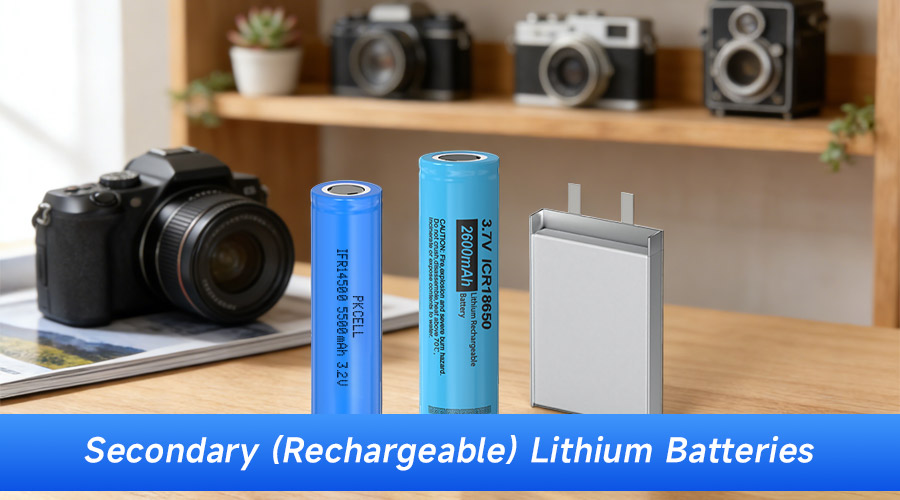
Understanding Secondary (Rechargeable) Lithium Batteries
1. Li-ion (Lithium-ion)
Li-ion battery is a high-energy-density battery in cylindrical formats (18650, 21700). It’s perfect for high-power industrial equipment.
2. Li-Polymer
Lipo batteries excel at thin, flexible shapes for slim electronics like GPS trackers and tablets.
3.LiFePO4
The LiFePO4 battery is known for extreme safety and long cycle life (up to 2,000+ cycles), commonly used in energy storage and e-mobility.
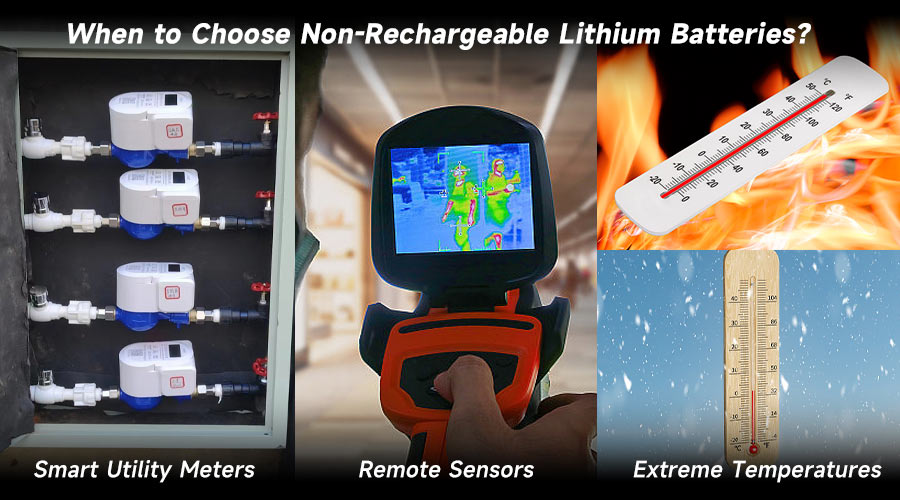
When to Choose Non-Rechargeable Lithium Batteries?
Choose primary batteries when your application prioritizes shelf life and low maintenance.
Examples:
- Smart Utility Meters: Water, gas, and electricity meters require 10–20 years of service life.
- Remote Sensors: Devices in hard-to-reach locations (forests, pipelines, or deep indoors) where changing batteries is logistically impossible.
- Extreme Temperatures: If your device operates in the freezing arctic or high-heat industrial zones, primary lithium cells maintain performance where rechargeables might fail.
When to Choose Rechargeable Lithium Batteries?
Rechargeable solutions (Li-ion, Li-Polymer, LiFePO4) are superior when the device has a high power consumption or is easily accessible for charging.
Examples:
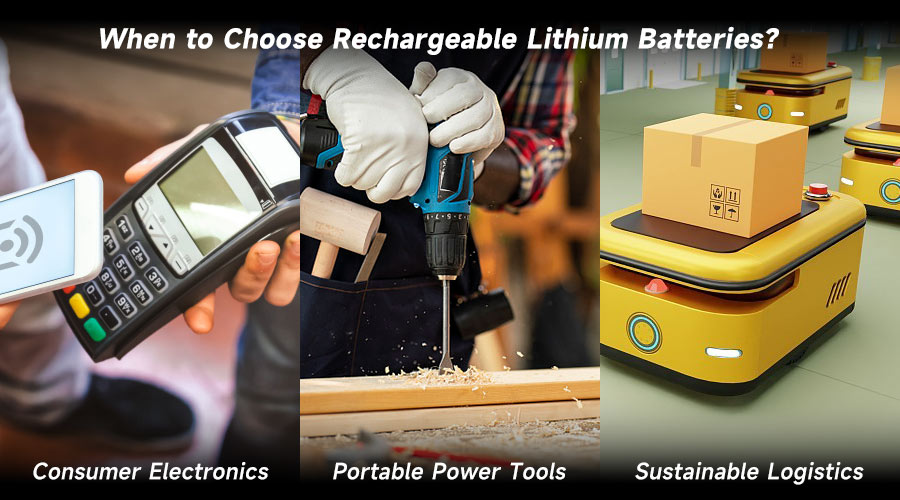
- Consumer Electronics: Smartphones, laptops, and wearables.
- Portable Power Tools: Devices that drain energy quickly and are used daily.
- Sustainable Logistics: When reducing environmental waste is a core brand value.
Technical Comparison Table: Primary vs. Secondary
| Feature | Li-SOCl2 (Primary) | Li-MnO2 (Primary) | Li-ion (Rechargeable) |
| Nominal Voltage | 3.6V | 3.0V | 3.7V |
| Energy Density | Very High (590Wh/kg) | High | Medium/High |
| Self-Discharge | <1% / Year | <2% / Year | 2% – 5% / Month |
| Service Life | 10 – 20 Years | 5 – 10 Years | 2 – 5 Years (Cycle dependent) |
| Best For | Smart Meters, GPS | Security, Medical | Tools, E-mobility |
Application Mapping: PKCELL Primary vs. Rechargeable Battery Models
| Battery Category | Specific Model Examples | Core Chemistry | Primary Application Products |
| Non-Rechargeable (Primary) | ER14250, ER14505, ER26500, ER34615 | li socl2 | Smart Water/Gas Meters, AMR (Automatic Meter Reading), GPS Tracking (Logistics), TPMS, Military Radio, Deep Sea Buoys. |
| Non-Rechargeable (Primary) | CR123A, CR2, CR17450, CR-P2 | limno2 battery | Smart Home Security (PIR Sensors, Smoke Alarms), Electronic Toll Collection (ETC), AEDs, Professional Cameras, Hotel Door Locks. |
| Non-Rechargeable (Primary) | CR2032, CR2450, CR2477 | limno2 (Button Cell) | ESL (Electronic Shelf Labels), Key Fobs, Medical Glucose Meters, Wearable Heart Rate Monitors, Computer BIOS. |
| Non-Rechargeable (Primary) | FR14505 (AA), FR10445 (AAA) | Li-FeS2 | High-drain Flashlights, Portable Game Controllers, Wireless Mouse/Keyboard, Outdoor Weather Stations. |
| Rechargeable (Secondary) | ICR18650, INR21700 | Li-ion | Power Tools, E-bikes, Electric Vacuum Cleaners, Portable Power Stations, Solar Street Lighting. |
| Rechargeable (Secondary) | LP503040, LP603450, LP103450 | Li-Polymer | Bluetooth Headsets, Smartwatches, POS Terminals, Slim Medical Tablets, Beauty Devices (Face Massagers). |
| Rechargeable (Secondary) | IFR18650, IFR26650, IFR32700 | LiFePO4 | Solar Energy Storage Systems (ESS), Golf Carts, Forklifts, Emergency Backup Lighting, Marine Power. |
Why Partner with PKCELL?
As a global lithium battery manufacturer based in Shenzhen, PKCELL has spent nearly 20 years perfecting battery technology. Our 28,000-square-meter facility houses over 20 automated production lines, ensuring consistent quality for bulk Lithium battery orders.
We also provide customized battery pack solutions tailored to your specific voltage, capacity, and connector requirements. With certifications including ISO9001, CE, UL, and UN38.3, PKCELL is a trusted partner for top-tier exporters and distributors worldwide.
Relevant FAQs
Q: Can a Li-SOCl2 battery be recharged?
A: No. Attempting to charge a primary lisocl2 battery is dangerous and can lead to leakage or explosion. Always use a dedicated rechargeable cell if your device has a charging circuit.
Q: How do I choose between Li-SOCl2 and Li-MnO2?
A: Choose li socl2 if you need the longest possible life (15+ years) and high voltage. Choose limno2 if you need a cost-effective 3.0V solution with better pulse current for wireless transmissions.
Q: Are lithium batteries safe for international shipping?
A: Yes, provided they have the proper certification. PKCELL batteries are UN38.3 certified, ensuring they meet all safety standards for air and sea freight.
Post time: Feb-09-2026


