

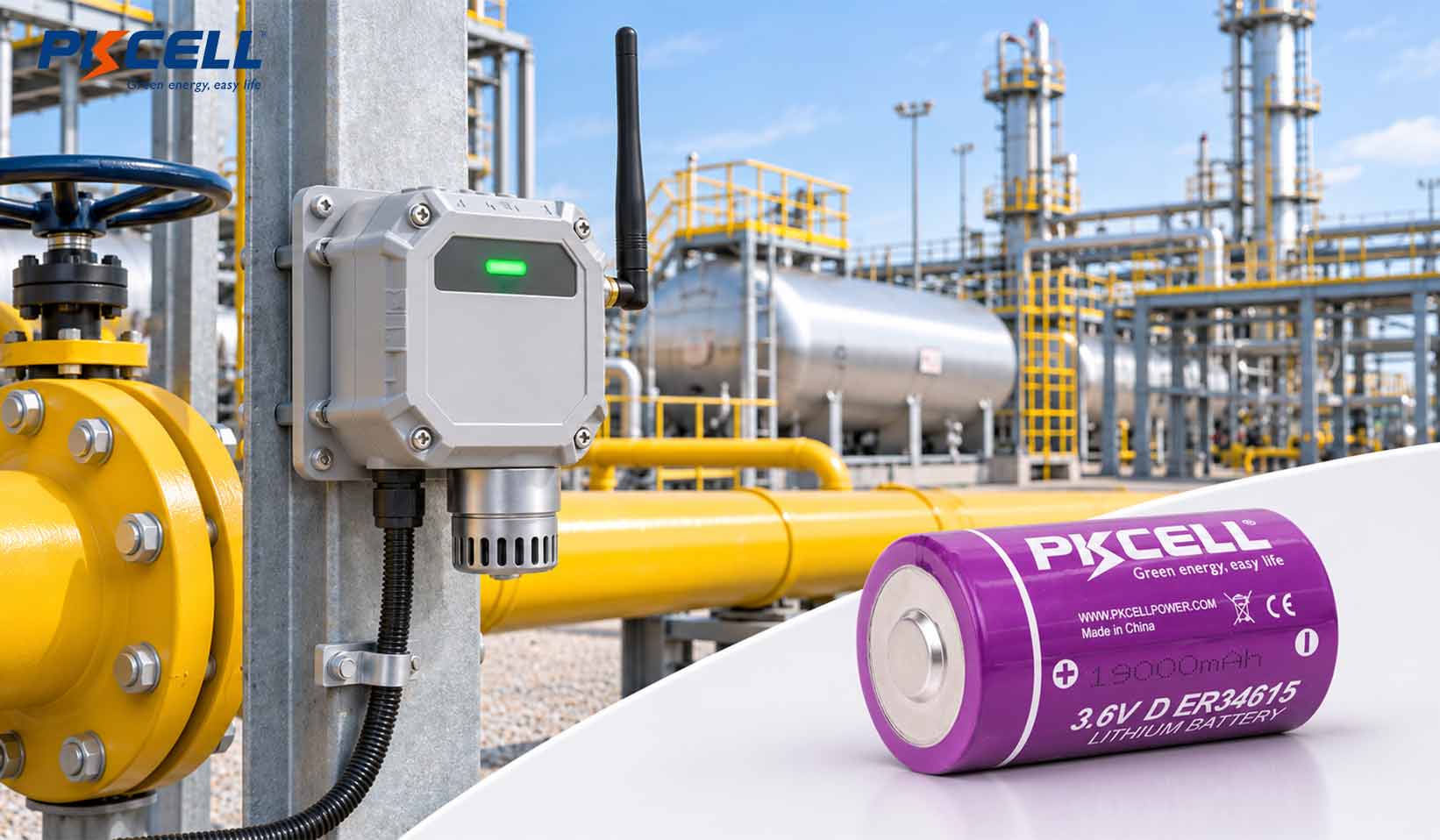
A fixed wireless gas detector may operate at a remote industrial location without convenient access to wired power. Its battery must support required gas sensing, normal device status, wireless reports and potentially demanding alarm events—not merely a low standby-current number.
For equipment manufacturers, battery selection begins with a measured load profile, the detector’s required behavior and a realistic maintenance plan. This guide addresses stationary, low-power, primary-battery wireless gas detection designs; it does not cover rechargeable handheld multi-gas monitors or imply that every gas detector is suitable for primary batteries.
Quick answer
Choose by real device load—not nominal capacity alone.
Primary lithium batteries can be considered when the cell and complete power system meet the detector’s measured operating, communication and alarm requirements.
- ER Energy: evaluate for appropriately low continuous current.
- ER Power: evaluate for stronger discharge demands.
- ER + HPC: evaluate for intermittent RF current pulses.
- 3V CR: evaluate only for compatible 3V architectures.
1. Why Battery Selection Is Different for Wireless Gas Detectors
A fixed gas detector is not simply another wireless data logger. A data logger may be designed to sleep between readings, but a device intended to provide continuous gas detection cannot suspend its required sensing function merely to save battery energy.
CORE FUNCTION
Gas sensing
Sensor, signal conditioning, controller and power-management circuitry must operate in accordance with the detector’s required sensing performance. Consumption depends on the sensing technology and detection requirements.
INTERMITTENT FUNCTION
Wireless communication
Radio components may use low-power states between messages, depending on device architecture. Status reports, alarm delivery, acknowledgments and retries can create higher-current events.
Engineering distinctionReducing radio activity does not automatically justify reducing mandatory gas-sensing coverage. Establish detection and response-time requirements before selecting a power-saving strategy.
2. Identify the Detector’s Complete Power Consumption
Measure current at the battery input throughout the detector’s operating cycle. Standby data alone cannot describe the energy requirement or the largest instantaneous load.
| Operating state | Loads to measure | Why it matters |
|---|---|---|
| Normal monitoring | Gas sensor, signal processing, processor and regulators | Establishes the ongoing energy requirement |
| Scheduled report | Radio startup, data handling and transmission | Adds periodic pulse and energy demand |
| Gas alarm | Ongoing sensing, RF reporting, local indicators where fitted | Tests required functions at higher demand |
| Communication failure | Retransmission, network search and reconnect attempts | May increase pulse repetition and runtime consumption |
| Maintenance | Calibration, diagnostics and service connection | Reveals loads not seen during normal operation |
Measure the baseline and the waveform
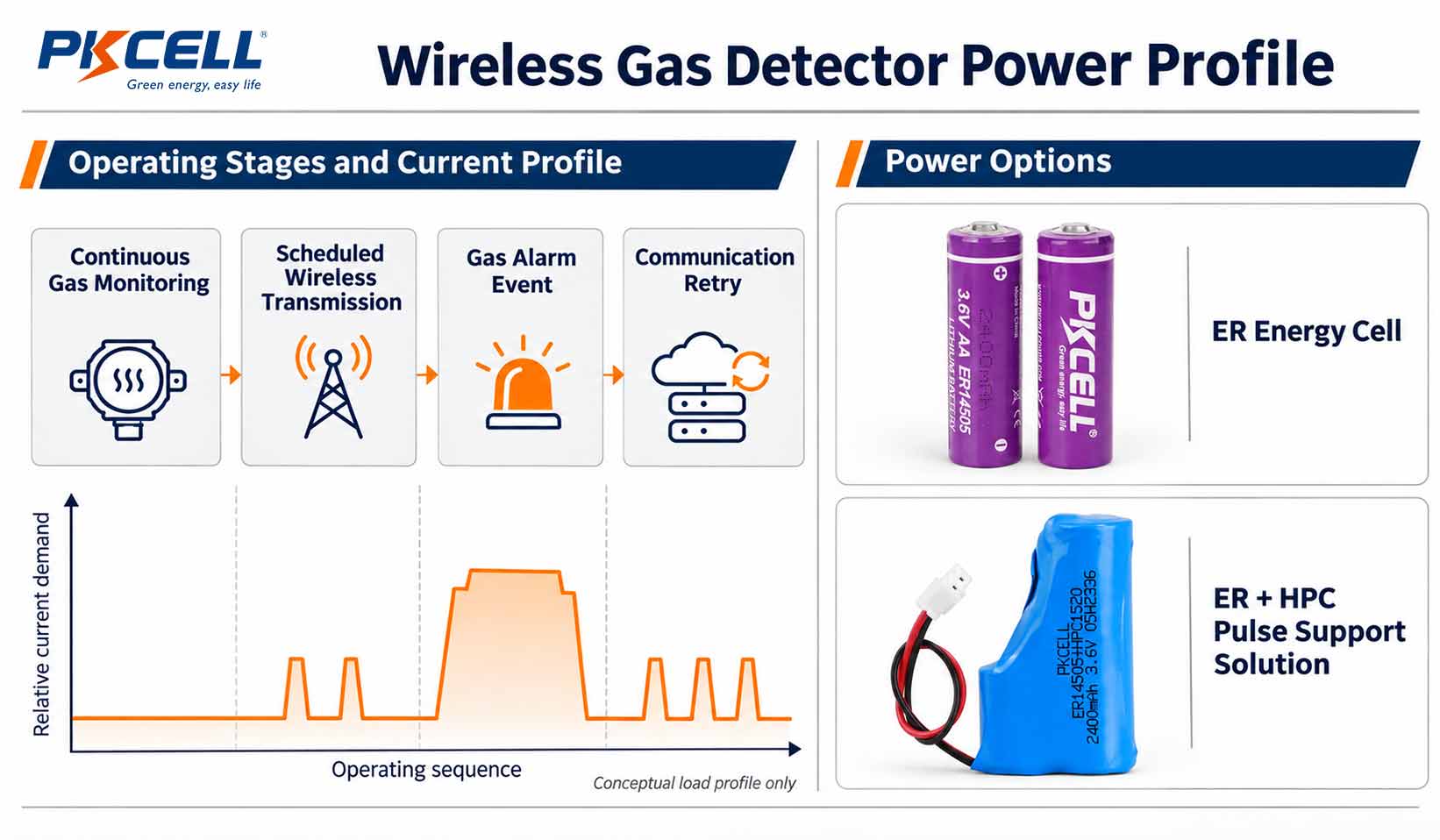
A preliminary average-current budget can combine the continuous monitoring current with time-weighted intermittent events. However, peak current, pulse duration and minimum loaded voltage require separate validation. A cell with ample nominal capacity may still fail to support a demanding transmission.
3. Why Alarm Events Can Determine the Battery Design
A battery-powered gas detector must perform its required functions when an alarm occurs, not just while reporting normal measurements. An alarm may involve continued sensing, a wireless message, repeated delivery attempts, and local audible or visual outputs where those functions are fitted.
ALARM SEQUENCE
Test repeated events
One successful packet is not enough. Check alarm duration, message retries, acknowledgments and concurrent output loads as required by the design.
VOLTAGE CHECK
Validate under load
Open-circuit voltage is not proof of compatibility. Capture the minimum supply voltage during alarm and transmission at the specified temperature and battery condition.
Design safeguardPower-saving modes must not compromise any detection, alarm, fault or communication function required by the equipment specification.
4. Which Primary Lithium Battery Type Should You Consider?
No single chemistry is appropriate for every fixed detector. Use the following categories as an engineering screening framework, not as a claim that these batteries are already approved for a specific gas detection device.
3.6V Li-SOCl2
ER Energy (Bobbin)
A candidate for suitably low current and substantial stored-energy requirements. Browse ER Energy cells.
3.6V Li-SOCl2
ER Power (Spiral)
Consider when measured continuous or intermittent current exceeds an energy-focused cell’s capability. Explore ER Power types.
PULSE SUPPORT
ER + HPC Assembly
Consider for low average load combined with demanding RF pulses; evaluate recovery and leakage. Browse ER + HPC packs.
3V Li-MnO2
CR Battery
A separate primary lithium option for circuits designed for compatible 3V cells. See CR123A product details.
PKCELL product examples to evaluate
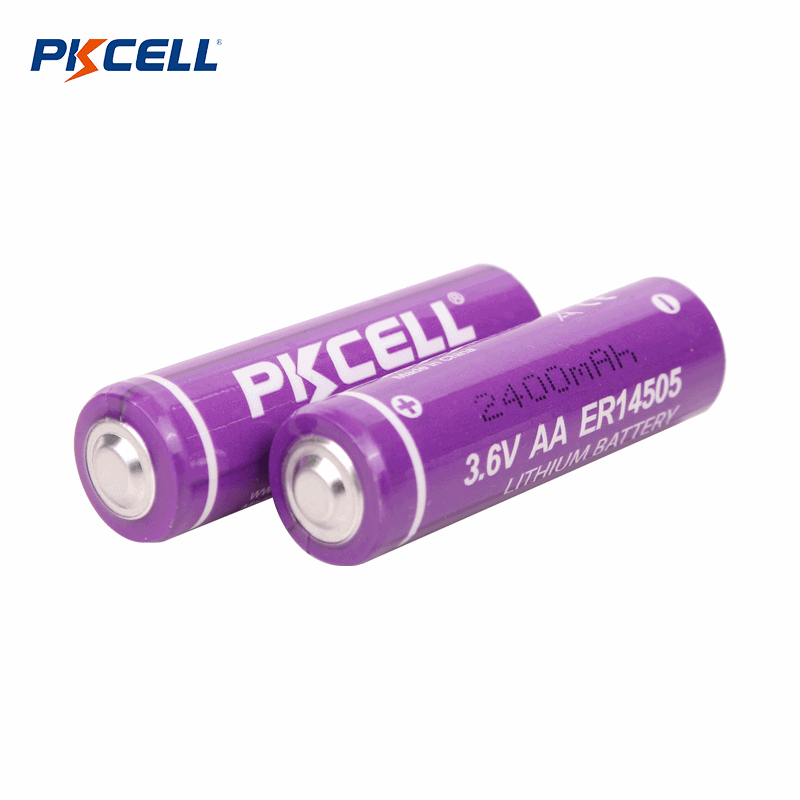
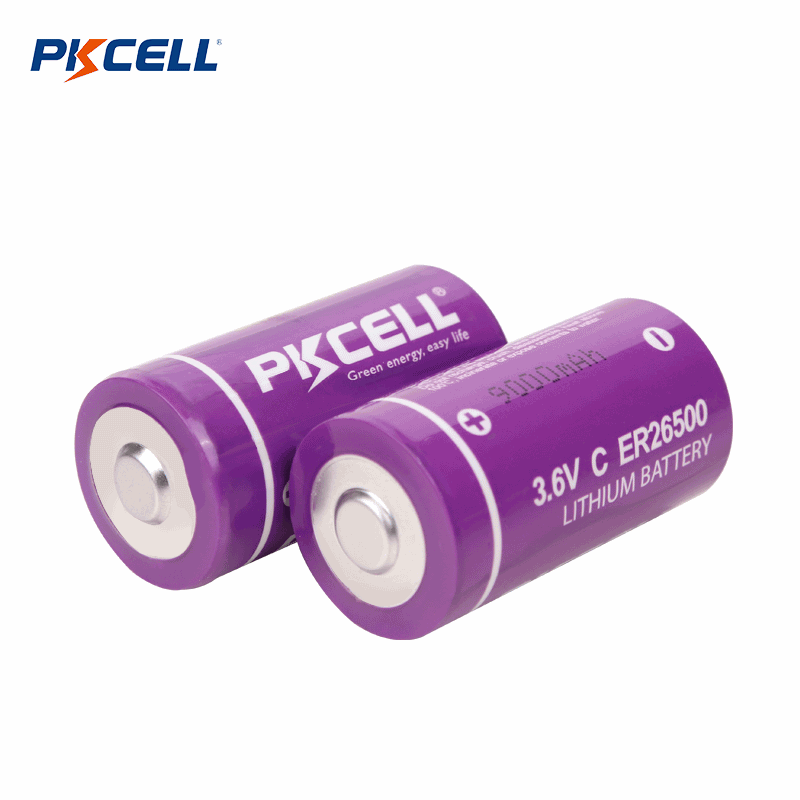
All four photographs below come from PKCELL Power product pages. Click any battery image to open its corresponding product detail page. These are potential candidates for engineering review, not guaranteed gas-detector replacements.
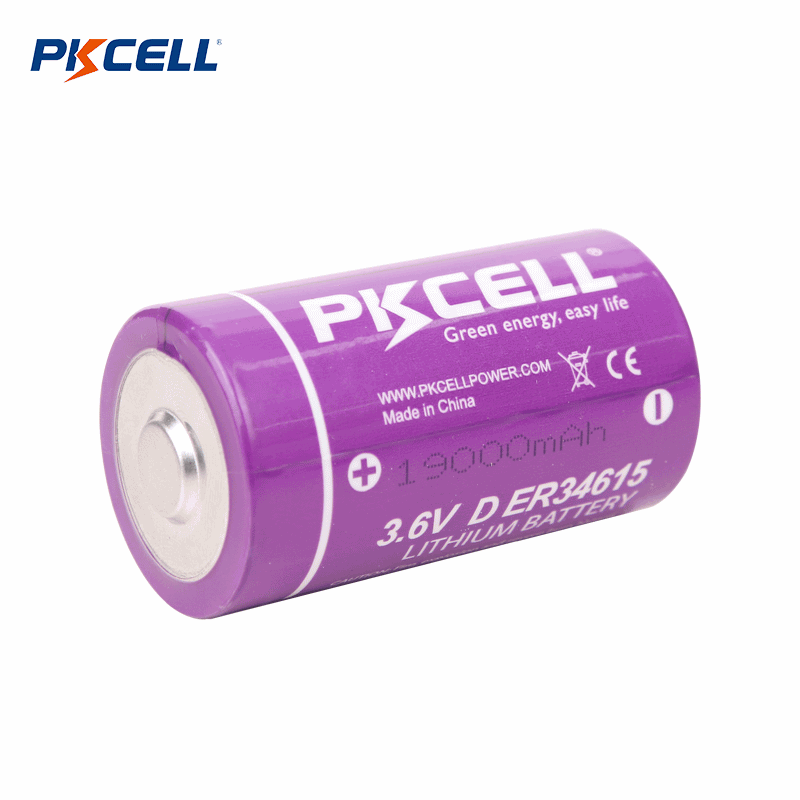

ER + HPC PACK
ER34615 + HPC1550
3.6V · pulse-support assembly · product-specific testing required
Product photographs and linked models are from PKCELL Power’s official website. Published capacity figures are nominal and do not establish usable capacity or life for a specific detector. The ER + HPC assembly includes an energy cell and a pulse-support component; confirm exact pack specifications.
5. Battery Service Life Must Match the Maintenance Strategy
For fixed industrial detectors, battery service life is part of a larger maintenance program. A detector installed in an easily accessed building and one installed on remote infrastructure may have very different service requirements.
Define the replacement interval first
Estimate the battery’s usable capacity under actual temperature, average load, peak demand, storage history, and end-of-life voltage. Nominal mAh divided by average current is an early estimate—not a field-life guarantee.
Preserve low-battery and fault functions
Account for the warning and operating reserve required after low-battery indication, if specified. A lifetime calculation is incomplete if the device cannot perform required sensing, communication or alarm functions as the battery approaches replacement.
Plan the physical maintenance procedure
Battery replacement may involve sealed enclosures, polarity and connector checks, servicing records, and post-replacement functional tests. For hazardous locations, the equipment’s approval and instructions may restrict where and how servicing is performed.
6. Validate Battery Performance Under Real Operating Conditions
Battery datasheets describe performance under specified test conditions. A complete detector should be tested using representative firmware, radio networks and environmental conditions.
- First high load after storageCheck loaded voltage after extended inactivity. Li-SOCl2 passivation-related voltage delay may be relevant.
- Lowest specified temperatureTest the full sensing and alarm sequence at the battery’s actual minimum operating temperature.
- Weak wireless coverageInclude radio retries and reconnection behavior using a representative network or test setup.
- Battery end of serviceVerify the specified low-battery warning, fault reporting and required equipment functions near replacement thresholds.
- Mechanical integrationReview holder or pack dimensions, terminals, insulation, wires, vibration and replacement access.
- System-level acceptanceConfirm all required sensing, communications and alarm behaviors with the final configuration.
For a deeper explanation of passivation and voltage delay, see Li-SOCl2 Battery Passivation: What OEM Engineers Need to Know.
7. Explosion Protection and Intrinsic Safety: Equipment-Level Requirements
Gas detectors may be installed where flammable gases or vapors are present. Choosing a primary lithium cell does not establish hazardous-area suitability, intrinsic safety, or explosion protection for the complete detector.
No implied hazardous-area approvalBattery datasheets, general safety or transport documents, and photographs must never be presented as proof of explosion-proof or intrinsically safe detector certification. The equipment manufacturer and certification specialists must evaluate the complete design and the approved battery configuration.
Depending on the equipment and jurisdiction, relevant references may include IEC 60079-11:2023 for intrinsic-safety protection and IEC 60079-29-0:2025 for gas detection equipment requirements and test methods. Applicability must be determined by the responsible team.
8. What an OEM Should Provide for Battery Selection
A technical request with measured data helps reduce uncertainty when screening standard cells or considering a custom primary lithium battery pack.
| Information | What to share with PKCELL |
|---|---|
| Device application | Gas to be detected, sensor technology, required monitoring and alarm behavior |
| Electrical requirements | Nominal voltage range, average and continuous current, highest-current waveform, cutoff voltage |
| Wireless protocol | Protocol, reporting frequency, transmit current, retry assumptions |
| Environment and maintenance | Temperature range, replacement interval, enclosure constraints, service procedure |
| Mechanical integration | Space, termination, cables, polarity, mounting and approved configuration constraints |
| Project details | Estimated volume, sample request and technical documentation needed for evaluation |
Designing a low-power wireless gas detector?
Share the actual voltage and load requirements for cell selection, evaluation samples or a project quotation.
Frequently Asked Questions
What primary battery type is suitable for a wireless gas detector?
There is no universal model. For suitable low-power architectures, Li-SOCl2 ER cells, ER Power cells, ER + HPC packs, or compatible Li-MnO2 batteries may be evaluated against the real voltage, energy and pulse requirements.
Can a fixed gas detector operate from a non-rechargeable lithium battery?
Some fixed wireless designs can be engineered for primary-battery operation, but feasibility depends on sensing technology, required detection functions, alarm loads, wireless communication and equipment approval. Do not assume all fixed detectors are battery-compatible.
Why does standby current matter for gas detector service life?
Required sensing and monitoring circuitry may consume current continually even when the radio is inactive. This baseline current contributes to the full service-life energy budget.
Does every ER battery need an HPC for wireless communication?
No. Whether a pulse-support component is useful depends on the measured current and voltage waveform, battery characteristics and test conditions. Some systems can use a suitable cell without additional pulse support.
Does a larger battery guarantee fewer maintenance visits?
No. Nominal capacity is only one input. Temperature, current profile, cutoff voltage, storage, aging, pulse demands and required reserve also determine an acceptable replacement interval.
Are PKCELL cells automatically approved for intrinsically safe gas detectors?
No. An individual battery specification is not complete-equipment approval. Hazardous-area suitability, intrinsic safety and permitted battery configurations must be evaluated and documented for the finished device.
Conclusion
Choosing a primary lithium battery for a fixed wireless gas detector requires more than finding a high-capacity cell. Start with the detector’s required sensing behavior, measure the baseline and alarm loads, test communication pulses, and validate performance under temperature, maintenance and end-of-service conditions.
For appropriate low-power devices, PKCELL Li-SOCl2 cells, ER + HPC solutions and custom packs provide different starting points for evaluation. Contact PKCELL with your project requirements to discuss suitable models and quotation details.
Post time: Nov-03-2026


