

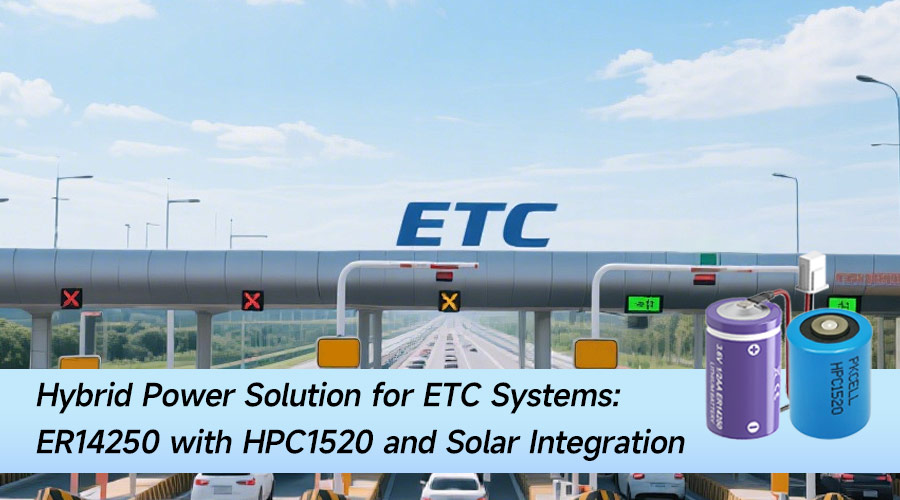
For ETC onboard units and roadside modules, reliability is not just desirable — it is mandatory. Devices are exposed to harsh winters, intense summer heat, vibration, and long periods of inactivity. Battery replacement is expensive and logistically difficult. Over time, many integrators have realized that conventional power designs simply do not meet the lifecycle expectations of modern intelligent transportation infrastructure.
That is why hybrid architectures built around an ER14250 3.6 V lisocl2 battery, an HPC1520 hybrid pulse capacitor, and a supporting solar panel have become increasingly common in ETC projects worldwide.
This article explores how this system works in real deployments, and why experienced ETC engineers often prefer this structure when long-term stability is the goal.
The Power Reality Inside ETC Devices
ETC units spend most of their life in standby mode. Current draw is extremely low for long periods, interrupted by short bursts of activity when the device wakes up. The brief moments demand a relatively high pulse current, even though the average consumption remains minimal.
The main electrical challenges in ETC include:
- Ultra-low standby current for long shelf life
- High pulse current for data transmission
- Wide operating temperature tolerance
- Low annual self-discharge
- Maintenance-free operation for 5–10 years
This is where lithium-thionyl chloride chemistry, combined with pulse buffering technology, offers a practical solution.
System Architecture Overview: How the Hybrid Power Model Works
The hybrid ETC energy architecture integrates three key components:
- ER14250 3.6V Li-SOCl₂ primary battery
- HPC1520 hybrid pulse capacitor
- Solar panel for energy harvesting
The design philosophy is simple:
- The solar panel provides renewable charging energy.
- The HPC1520 handles pulse discharge demands.
- The ER14250 lisocl2 battery acts as the long-term stable energy backbone and backup.
This separation of roles dramatically improves reliability.
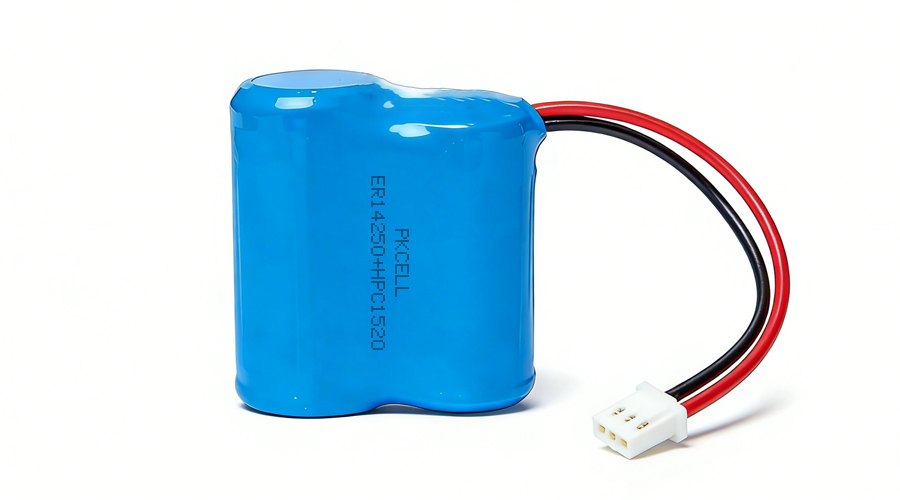
ER14250: The Long-Life Energy Backbone
The ER14250 battery is a primary lithium-thionyl chloride cell with ultra-low self-discharge and a long shelf life, both critical for infrastructure applications.
The er14250 3.6 v output aligns well with typical microcontroller and RF module requirements found in ETC systems. More importantly, Li-SOCl₂ chemistry maintains voltage stability during long-term low-rate discharge.
ER14250 Battery Specifications
| Model | ER14250 |
| Nominal Voltage | 3.6 V |
| Nominal Capacity | 1200 mAh |
| Chemistry | Lithium-Thionyl Chloride (Li-SOCl₂) |
| Operating Temperature | -55°C to +85°C |
| Self-Discharge Rate | ≤1% per year |
| Shelf Life | Up to 10 years |
| Weight | Approx. 10 g |
However, lithium-thionyl chloride cells are not optimized for frequent, high-pulse discharges. That is where the second component of the hybrid system becomes essential.
Download ER14250 battery datasheet: 规格书
Quote for PKCell ER14250 Battery: 3.6V 1/2AA ER14250 Li-SoCl2 Battery 1200mAh | Pkcell
HPC1520: Managing Pulse Current Without Stressing the Battery
The HPC1520 hybrid pulse capacitor is designed to bridge the gap between a steady low-current supply and sudden high-current demand. It combines characteristics of a capacitor and a battery, allowing it to absorb energy gradually and release it rapidly.
In an ETC device, the HPC1520 acts as a buffer. During idle periods, it charges slowly from the ER14250 battery or solar panel. When the system wakes up and transmits data, the capacitor delivers the necessary current spike. This prevents voltage drop across the primary cell and reduces internal stress.
HPC1520 Technical Specifications
| Model | HPC1520 |
| Nominal Voltage | 4.0 V |
| Nominal Energy | ~0.3 Wh |
| Max Continuous Discharge | 500 mA |
| Max Pulse Current | Up to 2000 mA |
| Operating Temperature | -40°C to +85°C |
| Internal Resistance | ≤250 mΩ |
| Dimensions | Approx. 15.5 mm × 20.5 mm |
In practice, this configuration dramatically improves system robustness. Engineers report fewer communication failures and improved voltage stability under repeated transaction cycles.
Download ER14250 battery datasheet: 规格书
Quote for PKCell ER14250 Battery: Hybrid Pulse Capacitor Battery 1520 Single Cell | Pkcell
The Role of Solar Integration
While the ER14250 provides long-term baseline energy, integrating a small solar panel further enhances sustainability and lifespan. In vehicle-mounted ETC units, even moderate daily light exposure can partially replenish the HPC1520 capacitor. Over time, this reduces the average discharge load on the primary battery.
Solar support does not eliminate the need for a lisocl2 battery. Instead, it reduces overall energy consumption and extends operational life, especially in high-traffic environments where communication frequency is elevated.
The result is a more balanced energy ecosystem rather than reliance on a single source.
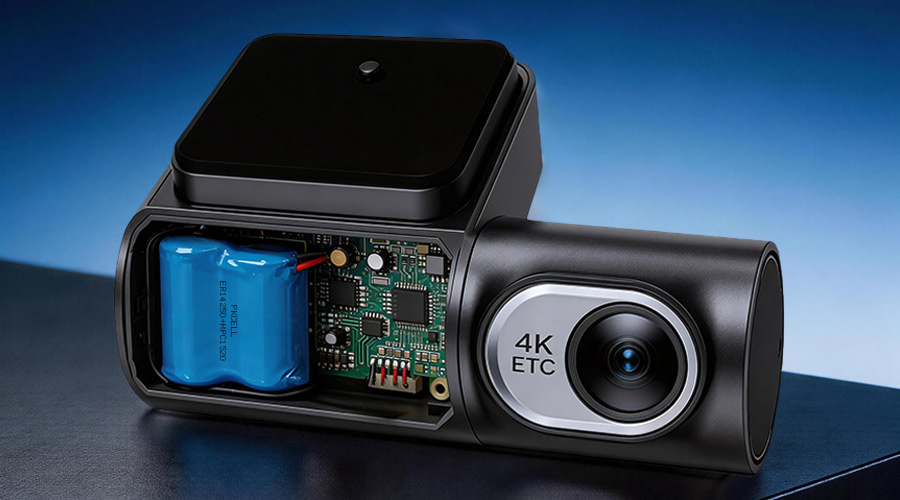
Why This Architecture Works for ETC
The lisocl2 battery provides long-term energy with minimal self-discharge. The hybrid capacitor absorbs and delivers high-current pulses efficiently. The solar panel reduces long-term energy draw.
Rather than forcing one component to handle all electrical demands, the architecture distributes responsibility intelligently. For ETC deployments expected to last many years without intervention, this layered approach offers a meaningful reliability advantage.
Why PKCell? Certifications, Quality Assurance & Customization
As an experienced lisocl2 battery manufacturer, PKCell produces ER14250 3.6 V cells under ISO9001-certified quality systems with strict control. Each cell complies with UN38.3 transportation standards, ensuring safe global deployment for large-scale ETC programs.
Beyond standardized production, PKCell also supports practical customization for ETC integrators. Whether the requirement involves tab configurations, connector options, or integration with components such as the HPC1520 hybrid capacitor, the power solution can be adapted to match specific mechanical and electrical layouts. For infrastructure expected to operate reliably for years, this combination of certified manufacturing and application-focused flexibility provides added confidence in long-term field performance.
Frequently Asked Questions
How long can an ER14250 battery realistically last in ETC use?
In low-average-current applications, especially when combined with solar assistance, operational life commonly exceeds five years and can approach ten years depending on usage patterns and environmental conditions.
In low-average-current applications, especially when combined with solar assistance, operational life commonly exceeds five years and can approach ten years depending on usage patterns and environmental conditions.
Why not use rechargeable lithium-ion cells instead?
Rechargeable lithium-ion batteries are more sensitive to temperature extremes and calendar aging. For standby-heavy applications like ETC, a primary lisocl2 battery often provides better long-term stability.
Rechargeable lithium-ion batteries are more sensitive to temperature extremes and calendar aging. For standby-heavy applications like ETC, a primary lisocl2 battery often provides better long-term stability.
Is the hybrid capacitor absolutely necessary?
In systems with frequent pulse demands, yes. Without it, repeated current spikes can increase internal resistance and reduce the effective lifespan of the primary battery.
In systems with frequent pulse demands, yes. Without it, repeated current spikes can increase internal resistance and reduce the effective lifespan of the primary battery.
Does solar power replace the battery?
No. Solar functions as supplemental input. The ER14250 remains the primary energy backbone.
No. Solar functions as supplemental input. The ER14250 remains the primary energy backbone.
What should integrators look for in a lisocl2 battery manufacturer?
Consistent cell quality, verified temperature performance, UN38.3 compliance, and long-term production stability are essential.
Consistent cell quality, verified temperature performance, UN38.3 compliance, and long-term production stability are essential.
Post time: Mar-05-2026


