

November 2026 | OEM Risk Management | Global Battery Supply Chain
Battery-related fire incidents are receiving increasing attention from insurers, regulators and international buyers. For OEM brands, the consequences can extend beyond physical damage to include product liability disputes, recalls, shipment delays, business interruption and reputational losses.
As battery-powered products enter more homes, commercial facilities and industrial environments, insurance providers are paying closer attention to how batteries are designed, sourced, transported, stored and integrated into finished products. A product that is technically suitable for its intended application may still expose an OEM to commercial risks if its insurance arrangements and supplier responsibilities are unclear.
Before entering a new international market, OEM brands should review more than the battery specification. They need to understand who carries product liability, which incidents are covered, what evidence is required and how responsibilities are divided across the supply chain.
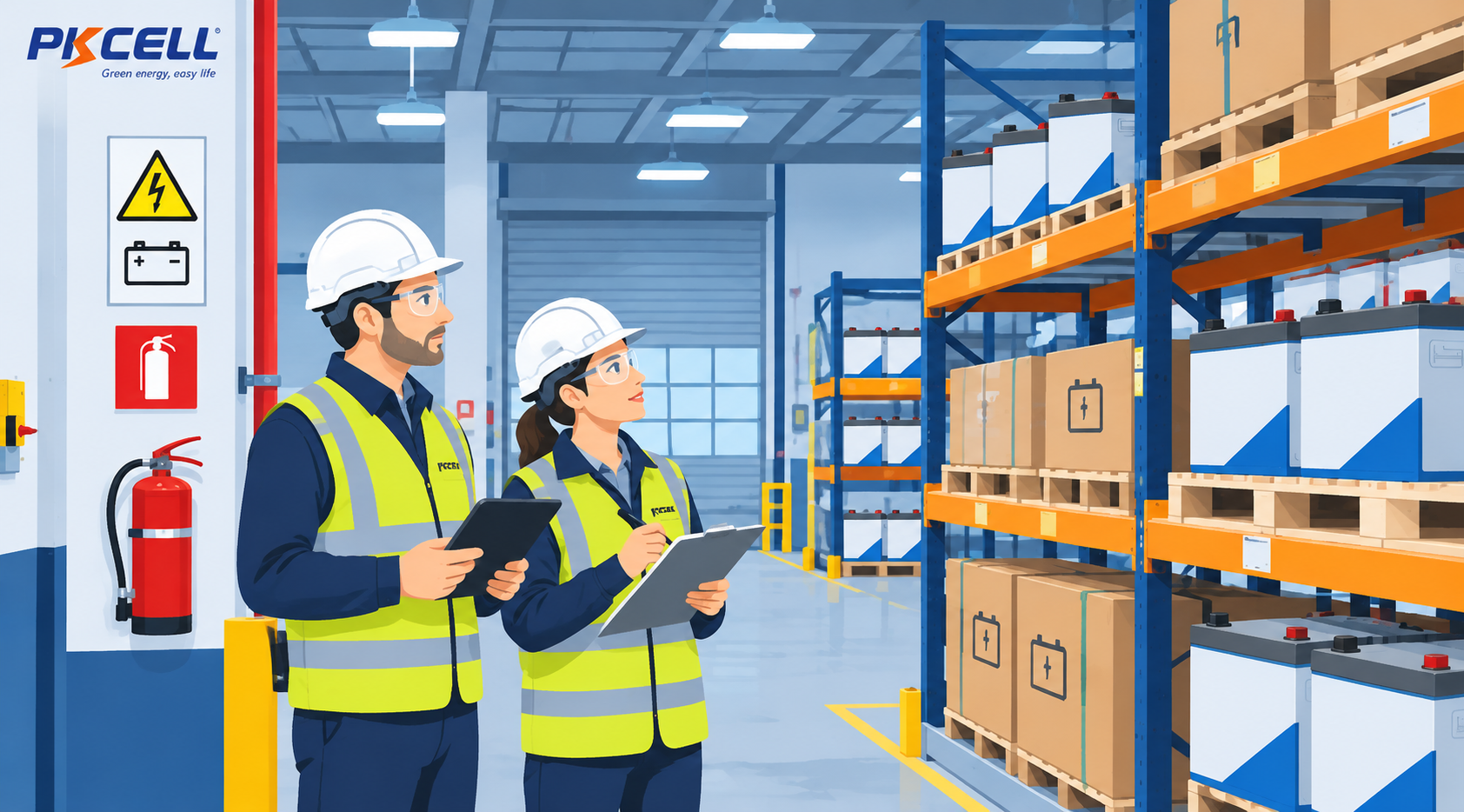
Why Battery Fire Risk Is Receiving More Attention from Insurers
Recent insurance developments show why battery-related losses deserve closer attention. In November 2026, Australian media reported that Suncorp had seen residential insurance claims linked to lithium-ion battery fires almost double between 2023 and 2026. The report identified products such as e-bikes, e-scooters and power tools among the contributing categories.
Separately, Allianz Commercial’s Safety and Shipping Review 2025 highlighted the exposure of marine transport and supply chains to lithium-ion battery incidents, including the potential severity of cargo fires.
These developments do not establish a universal increase in OEM battery product-liability claims. Residential property claims, industrial insurance losses and manufacturer liability claims are different insurance categories. However, they demonstrate why insurers increasingly examine battery-related exposures across product use, warehousing and transportation.
For OEM brands, the important question is not simply whether a battery can cause a fire. It is whether the business can identify, control and document the risks associated with its complete product and supply chain.
Five Insurance Areas OEM Brands Should Review
1. Product Liability Insurance
Product liability insurance is one of the first areas to review when exporting battery-powered products. It may respond to covered third-party bodily injury or property damage arising from a defective product, subject to the policy wording, exclusions, limits and applicable law.
OEM brands should confirm:
- Whether battery-related fire and overheating incidents fall within the insured product category.
- Whether coverage extends to products sold through overseas distributors and retailers.
- Which countries and territories are included in the policy.
- Whether defence costs are included within or additional to policy limits.
- Whether subcontracted manufacturing and component suppliers are appropriately addressed.
- Whether contractual indemnities create liabilities beyond the available insurance coverage.
A general business liability policy should not automatically be assumed to cover every product-related loss. OEMs should ask their insurance broker to review the actual wording and product declarations.
2. Product Recall and Withdrawal Insurance
A product recall can create substantial costs even when no fire has occurred. A potential defect, regulatory notice or repeated field complaint may require an OEM to identify affected batches, notify customers, arrange returns and replace products.
Standard product liability coverage does not necessarily cover the cost of recalling the manufacturer’s own products. OEM brands should separately review whether their policies provide product recall or product withdrawal protection.
Check whether the policy addresses:
- Customer notification and recall administration.
- Product collection, transportation and disposal.
- Replacement or repair expenses.
- Independent investigation and specialist assessment.
- Covered business interruption or other specifically insured expenses.
Also examine whether coverage requires an actual product defect, an imminent risk of bodily injury or property damage, or another defined trigger. A voluntary commercial withdrawal may not qualify.
3. Cargo and Transit Insurance
Battery risks do not end when products leave the factory. International shipments may involve multiple carriers, warehouses, ports and distribution centres.
OEMs should review whether their cargo insurance covers the actual battery classification, packaging configuration, declared goods, transport routes and storage periods. Lithium battery shipments may also be subject to specific dangerous-goods transport requirements.
Important questions include:
- Are the correct UN numbers, shipping descriptions and packaging requirements being used?
- Does the insurer require advance disclosure of battery cargo?
- Are transshipment and temporary storage locations included?
- Are fire, water damage and general average exposures addressed?
- Are exclusions applicable to damaged, defective or improperly declared batteries?
For relevant lithium battery shipments, review the applicable UN 38.3 test-summary and transport documentation. Transport compliance and insurance coverage are separate matters; satisfying one does not automatically establish the other.
4. Property and Business Interruption Insurance
OEM brands, importers and distributors may hold significant quantities of batteries or battery-powered products in warehouses and fulfilment centres. A fire at one facility can affect inventory, neighbouring premises, equipment and business operations.
Review whether property coverage reflects the actual stock value, battery types, storage arrangements and facility conditions. Business interruption coverage should also be examined for its waiting period, indemnity period, insured locations and dependency on critical suppliers.
A warehouse containing mixed battery products should not rely on generic stock descriptions if the insurer requires more specific information about battery chemistry, quantities or storage conditions.
5. Product Liability Across International Markets
Selling through an overseas distributor does not automatically transfer all product responsibility away from the OEM brand.
Different markets may apply different product liability rules, importer obligations, consumer protection requirements and recall procedures. A company may also face contractual claims from distributors or business customers even where statutory liability is disputed.
Before launch, check whether insurance territories, jurisdiction clauses, local importer arrangements and contractual indemnities are aligned. Pay particular attention to private-label products, where the commercial brand and the actual battery manufacturer may be different entities.
What Evidence Should an OEM Request from Its Battery Supplier?
Insurance discussions become more difficult when a manufacturer cannot establish exactly which battery was used, which production batch it came from or what documentation applied at the time of shipment.
OEM brands should build a supplier evidence file that connects the purchased battery to its technical identity, manufacturing history and intended application.
| Evidence category | What to request | Why it matters |
|---|---|---|
| Product identification | Model number, chemistry, datasheet and approved specification | Establishes the exact battery used in the finished product |
| Quality records | Applicable inspection records, batch identification and change-control information | Supports investigation and product traceability |
| Safety and transport | Applicable safety documents and UN 38.3 test summary where required | Supports transport and risk assessments |
| Market documentation | Relevant conformity declarations and product-specific compliance records | Helps demonstrate market-entry readiness |
| Supplier responsibility | Warranty terms, quality agreement and product liability insurance information | Clarifies commercial responsibilities and available protections |
| Change management | Written notification procedures for material, design or production changes | Prevents unapproved changes to qualified products |
The OEM should verify that documents identify the correct manufacturer, product model and configuration. A certificate or test report for a different battery model should not be treated as proof for the purchased product.
PKCELL provides an overview of its available battery certificates and compliance information. Project teams should confirm the applicable documents for their exact battery configuration and destination market.
Why Supplier Contracts Matter After a Battery Incident
Insurance policies and supplier agreements solve different problems. Insurance transfers specified financial risks, while contracts define the commercial obligations between the OEM and its supplier.
A well-structured battery supply agreement should address:
- Product specifications: Approved chemistry, model, configuration, drawings and quality requirements.
- Change notification: Prior approval for changes that could affect safety, performance or regulatory compliance.
- Incident cooperation: Access to relevant production, inspection and batch records during investigations.
- Corrective action: Responsibilities for containment, investigation, replacement and corrective measures.
- Indemnification: Clearly defined responsibility for losses arising from each party’s contractual breaches or legally attributable conduct.
- Insurance requirements: Agreed coverage types, limits, evidence of insurance and notification of material changes where appropriate.
Avoid relying on a general statement that the supplier is responsible for all battery-related incidents. Liability depends on the facts, applicable law, contract wording and the cause of the incident.
Primary Lithium and Lithium-Ion Batteries: Why Risk Assessment Must Be Specific
Not all lithium batteries have the same chemistry, construction or operating conditions. Insurance information dominated by lithium-ion products, such as e-bikes, power tools and electric vehicles, should not be used as a direct measure of the fire risk of primary lithium cells.
PKCELL’s primary lithium portfolio includes Li-SOCl2, LiMnO2 and LiFeS2 batteries, as well as customized battery packs and hybrid pulse capacitor solutions. Each product category has its own application requirements and handling considerations.
For OEMs, the relevant review should consider:
- The exact chemistry and battery configuration.
- Whether the device prevents unintended charging of non-rechargeable cells.
- Protection against short circuits, reverse polarity and mechanical damage where relevant.
- Correct battery compartment design and terminal insulation.
- Application-specific handling, storage and shipping instructions.
- The actual operating environment and foreseeable misuse scenarios.
These factors should be evaluated against the applicable product specification and risk assessment. No battery chemistry should be described as completely fireproof or risk-free.
OEM developers can explore PKCELL’s Li-SOCl2 battery range, LiMnO2 batteries and customized primary lithium battery packs according to their application requirements.
OEM Global Market Entry: A Practical Risk Review Checklist
Before launching a battery-powered product in a new country, procurement, engineering, legal and insurance teams should complete a coordinated review.
- Identify the battery manufacturer and the exact approved model.
- Confirm product liability coverage for the intended product and sales territories.
- Review recall, cargo, property and business interruption insurance separately.
- Check local importer, distributor and manufacturer responsibilities.
- Collect applicable technical, safety, conformity and transport documentation.
- Establish battery batch and finished-product traceability.
- Agree supplier change-control and incident-cooperation procedures.
- Confirm packaging, storage and shipment arrangements with logistics partners.
- Define customer notification, product containment and recall responsibilities.
- Ask an insurance broker and legal adviser to review exclusions, limits and contractual gaps.
How Battery Suppliers Can Support OEM Risk Management
A battery supplier cannot replace an OEM’s insurance broker, legal adviser or finished-product safety team. However, a supplier with controlled manufacturing processes and clear documentation can help reduce uncertainty during product development and sourcing.
For example, PKCELL supports OEM projects with primary lithium cells, customized battery packs and application-specific battery configurations. Its manufacturing and engineering resources can support discussions around product selection, project documentation and production requirements.
For an example of battery supply in a safety-related application, see the CR123A battery pack project for home fire and water protection systems. The case illustrates customized battery supply and production coordination for a North American safety-system customer; it is not an insurance claim or fire-incident case study.
OEM brands can also review PKCELL’s primary lithium battery pack solutions when developing application-specific products.
Frequently Asked Questions
Does product liability insurance cover battery fire damage?
It may cover certain third-party bodily injury and property damage claims arising from a covered product defect. Actual coverage depends on the policy wording, insured products, territorial scope, exclusions and circumstances of the incident.
Is product recall insurance the same as product liability insurance?
No. Product liability generally addresses covered third-party injury or property damage. Product recall insurance may cover specified expenses associated with withdrawing affected products, subject to its own triggers and exclusions.
Should OEM brands request product liability insurance from battery suppliers?
Yes, it is reasonable to request evidence of relevant supplier insurance as part of due diligence. However, supplier insurance does not automatically cover the OEM’s own liabilities or replace the OEM’s insurance arrangements.
Does UN 38.3 certification guarantee insurance coverage?
No. UN 38.3 relates to lithium battery transport testing. It does not guarantee product liability coverage, regulatory approval in every destination market or successful performance in the finished device.
Can primary lithium batteries be assessed using lithium-ion fire statistics?
Not directly. Chemistry, construction, configuration, application and operating conditions differ. Lithium-ion fire statistics can provide broader industry context, but a primary lithium product requires its own product-specific risk assessment.
Conclusion: Make Insurance Readiness Part of Global Product Planning
Rising attention to battery-related fire losses is changing how OEM brands should approach international product launches. Insurance coverage, supplier accountability, product documentation and traceability need to be considered together rather than handled separately after a problem occurs.
The strongest preparation is a documented risk-management process: understand the product, verify the supplier, define contractual responsibilities and confirm that insurance arrangements match the actual markets and products being sold.
For OEM brands developing industrial and connected devices, choosing a battery supplier should therefore involve more than comparing specifications and prices. It should also involve evaluating manufacturing consistency, documentation support and the ability to cooperate throughout the product lifecycle.
Planning a Battery-Powered Product for Global Markets?
PKCELL supports industrial OEMs with Li-SOCl2, LiMnO2, LiFeS2 and customized primary lithium battery pack solutions. Share your application, battery requirements and target production volume to discuss a suitable supply solution.
Insurance requirements vary by country, product category and policy wording. This article provides general commercial information and does not constitute insurance, legal or engineering advice. OEM brands should consult qualified insurance and legal professionals before entering a new market.
Post time: Nov-10-2026


